Love this? Pin it for later! 📌
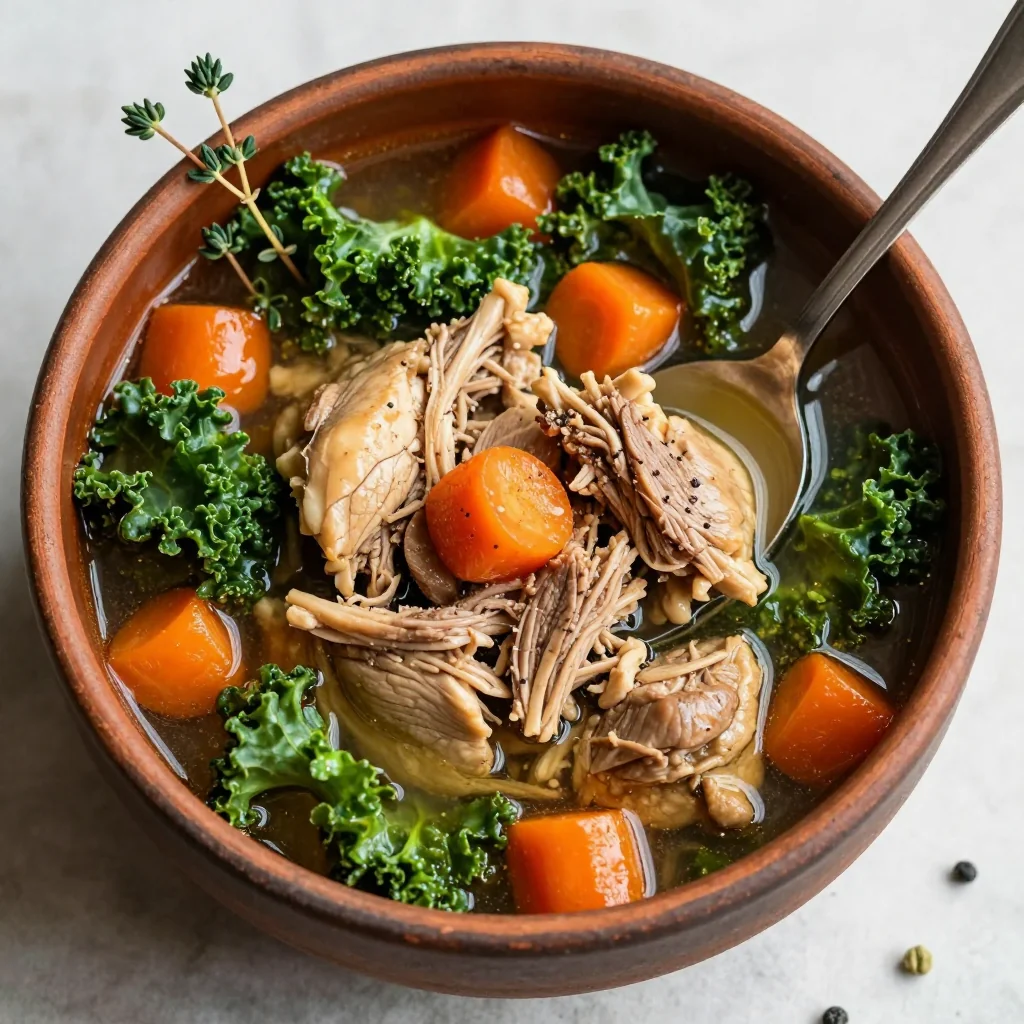
Batch-Cooked Chicken & Winter Vegetable Soup with Carrots & Kale
When the first frost paints the windows and the daylight fades before dinner, I reach for my largest pot and start building this soup. It’s the recipe that carried me through graduate-school winters in Vermont, sustained me through new-mom exhaustion, and now greets my teenagers after cold Friday-night football games. The aroma—sweet carrots, earthy kale, and thyme-scented broth—drifts through the house like a promise that everything will feel better after one steaming bowl.
What makes this soup my perennial favorite is its quiet reliability. While trendy soups come and go, this one simply delivers: tender shreds of chicken that taste like Sunday supper, carrots that keep a gentle bite, and kale that wilts into silky ribbons. I make a double batch every other Sunday from November through March, stash half in the freezer, and still find myself looking forward to the next pot before the last ladle is gone. If you’ve never tried batch-cooking soup, let this be your gateway recipe—it’s forgiving, freezes beautifully, and reheats like it was born for leftovers.
Why This Recipe Works
- One-pot wonder: Everything—from searing the chicken to wilting the kale—happens in the same heavy Dutch oven, meaning deeper flavors and fewer dishes.
- Layered flavor base: A quick 8-minute caramelization of onions, carrots, and tomato paste creates a sweet-savory foundation that tastes like it simmered all day.
- Nutrient-dense & balanced: Two full bunches of kale, four large carrots, and 2½ lb of chicken deliver protein, beta-carotene, and iron in every ladle.
- Freezer hero: The broth stays silky after thawing because we simmer the kale only long enough to soften, preventing the grainy texture that overcooked greens can impart.
- Budget-smart: Using bone-in thighs costs roughly half the price of breast meat and yields a richer stock; removing bones after cooking is faster than trimming fat from breasts.
- Weeknight savior: Reheating from frozen takes 6 minutes on the stove or 4 in the microwave—weekday lunch solved.
Ingredients You'll Need
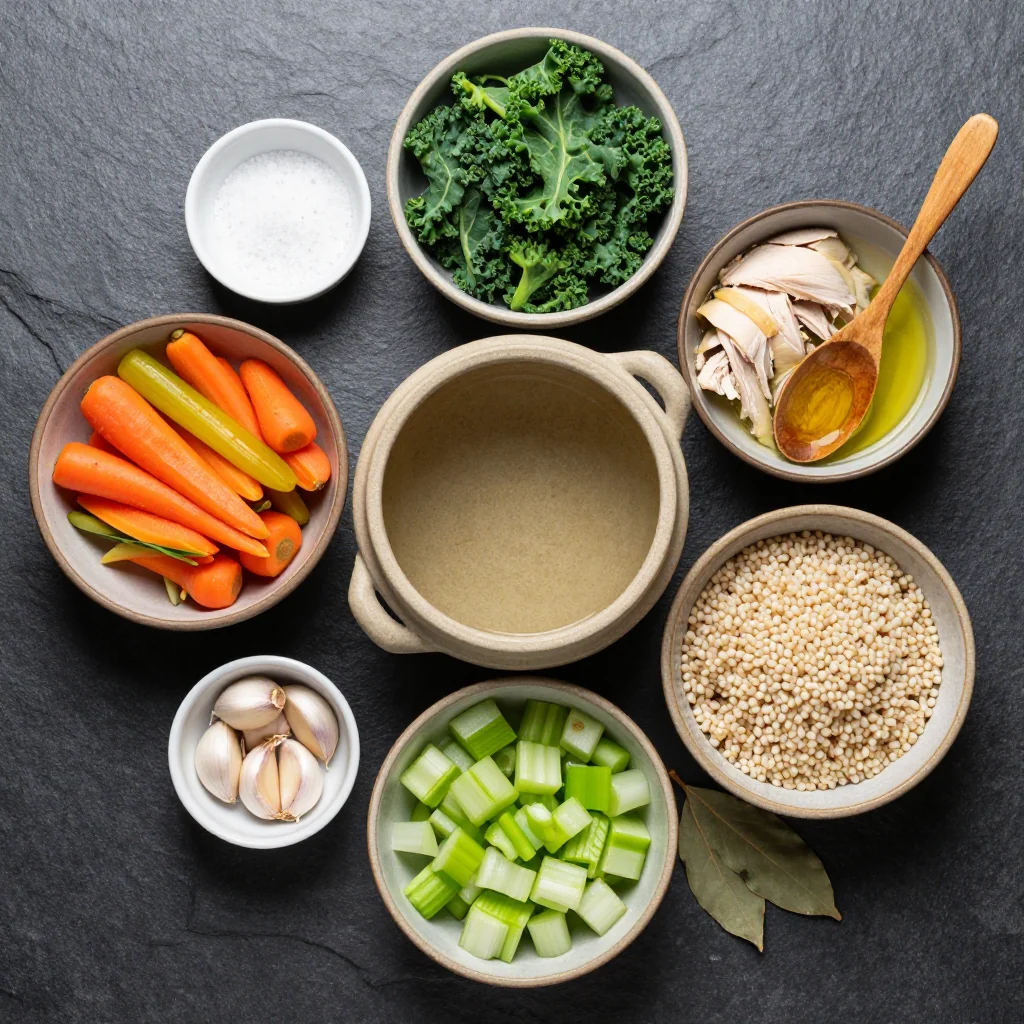
Great soup starts at the grocery store. Look for carrots with smooth skin and bright tops—those greens signal freshness and translate to sweeter roots. Buy kale bunches that feel crisp and cold; avoid any with yellowing edges. For chicken, I prefer organic bone-in thighs for flavor, but conventional works if that’s what fits the budget.
Chicken: 2½ lb (1.1 kg) bone-in, skin-on chicken thighs. The skin renders flavorful schmaltz for sautéing vegetables; bones create a quick stock while the soup simmers. Substitute with boneless thighs—reduce initial simmer by 10 min.
Carrots: 4 large (about 1 lb), peeled and sliced ¼-inch thick on the bias. The angled cut exposes more surface area, helping them cook evenly and catch the broth. Rainbow carrots add color but taste identical.
Kale: 2 bunches (about 12 oz each) lacinato (dinosaur) or curly. Lacinoto wilts faster and holds a silky texture; curly is heartier and reheats with more bite. Strip leaves from stems by pinching and sliding upward.
Aromatics: 1 large yellow onion, diced medium; 3 cloves garlic, smashed; 2 bay leaves; 3 sprigs fresh thyme plus 1 tsp leaves for finishing. Onion sweetens the broth; garlic gives a gentle hum rather than a punch.
Tomato paste: 2 Tbsp double-concentrated from a tube. Browning the paste creates umami depth; do not skip this step—sun-dried tomato purée (1:1) is the best sub if you’re out.
Broth & seasoning: 8 cups low-sodium chicken stock, 1 tsp kosher salt (plus more to taste), ½ tsp freshly ground black pepper, and optional pinch of red-pepper flakes for quiet heat.
How to Make Batch-Cooked Chicken & Winter Vegetable Soup with Carrots & Kale
Sear the Chicken
Pat chicken thighs dry with paper towels—moisture is the enemy of browning. Heat 1 Tbsp olive oil in a heavy 7-quart Dutch oven over medium-high until shimmering. Place thighs skin-side down; resist moving them for 5–6 minutes until the skin releases easily and is deep golden. Flip and cook 2 minutes more. Transfer to a plate; leave the rendered fat behind (about 2 Tbsp). This fond equals free flavor.
Build the Flavor Base
Reduce heat to medium. Add diced onion and carrots to the pot; sauté 4 minutes until edges soften and onion turns translucent. Stir in tomato paste; cook 2 minutes, scraping the brown bits, until the paste darkens to brick red. The paste’s natural sugars caramelize, giving the broth a subtle sweetness and rosy color.
Deglaze & Simmer
Pour in 1 cup of the stock; use a wooden spoon to lift every speck of fond. Return chicken plus any juices, garlic, bay, thyme, remaining stock, salt, and pepper. Bring to a gentle simmer—never a rolling boil or the meat turns stringy—then reduce heat to low, cover partially, and cook 25 minutes.
Shred the Chicken
Transfer chicken to a rimmed plate; discard skin and bones (they’ve given their all). Use two forks to shred meat into bite-size pieces—roughly ½-inch strands so they cling to the vegetables. Return meat to the pot; keep the broth at a gentle simmer.
Add Kale & Finish
Stir in kale a handful at a time, letting each addition wilt so the pot doesn’t overflow. Once all kale is submerged, simmer uncovered 5 minutes more until just tender but still vibrant green. Fish out bay leaves and thyme stems. Taste; adjust salt and add optional red-pepper flakes. Serve hot with crusty bread.
Expert Tips
Control the Salt
Because stocks vary in sodium, season at the end. Add ½ tsp salt, simmer 2 minutes, then taste again. Palate fatigue is real—cleanse with a sip of water between tastes.
Cool Before Freezing
Ladle soup into shallow containers so it cools within 2 hours, preventing bacteria growth. Freeze up to 3 months for peak flavor; label with blue painter’s tape—it peels off cleanly.
Skim Smart
If you prefer a clearer broth, skim fat with a wide spoon while the soup simmers. Alternatively, chill overnight; fat solidifies and lifts off in sheets.
Double-Duty Greens
If kale isn’t your thing, stir in 5 oz baby spinach during the last 30 seconds—it wilts instantly and keeps the bright color kids love.
Variations to Try
- White-Bean & Rosemary: Swap chicken for two cans of cannellini beans and add 1 tsp chopped fresh rosemary with the garlic for a vegetarian version that’s still protein-rich.
- Lemon & Dill: Finish with zest of 1 lemon and ¼ cup chopped fresh dill for a Scandinavian twist that brightens gray afternoons.
- Spicy Chorizo: Replace chicken with 12 oz crumbled Spanish chorizo; brown it first and skip the skin-rendering step. Add smoked paprika for extra depth.
- Coconut-Ginger: Swap 2 cups stock for full-fat coconut milk and add 1 Tbsp grated fresh ginger with the onion. Use sweet potatoes instead of carrots for a creamy, dairy-free version.
Storage Tips
Refrigerator: Cool soup completely, transfer to airtight containers, and refrigerate up to 4 days. Reheat gently over medium-low, thinning with a splash of stock or water if it thickens.
Freezer: Ladle cooled soup into quart-size freezer bags, press out excess air, and lay flat to freeze—saves space and thaws quickly. Use within 3 months for best flavor, though safe indefinitely. To thaw, refrigerate overnight or submerge sealed bag in cold water for 1 hour, then heat on stove.
Batch-Cooking Strategy: Double the recipe but use two pots; crowding one pot lowers the temperature and mutes flavors. Freeze in single-serve silicone muffin molds; pop out frozen pucks and store in a bag—perfect for solo lunches.
Frequently Asked Questions
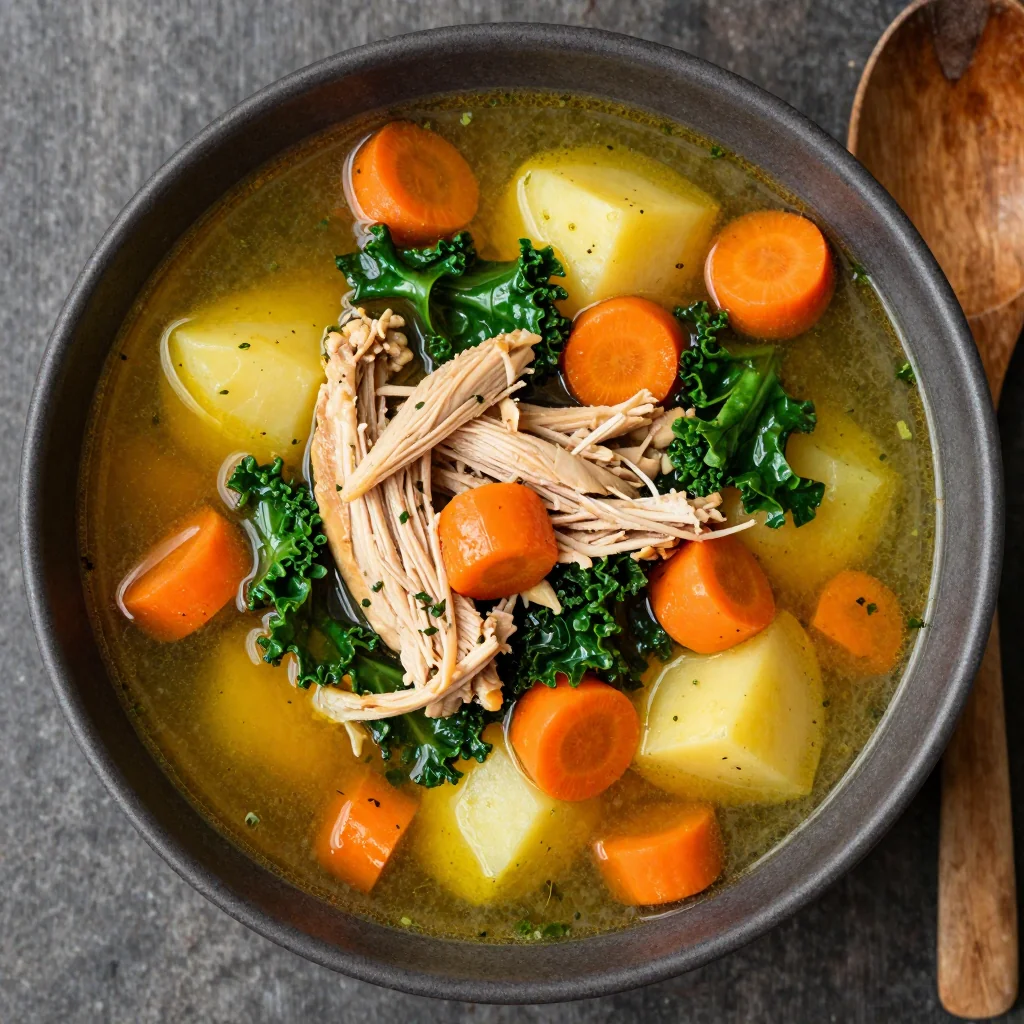
Batch-Cooked Chicken & Winter Vegetable Soup with Carrots & Kale
Ingredients
Instructions
- Sear Chicken: Heat oil in Dutch oven over medium-high. Brown chicken skin-side down 5–6 min, flip 2 min. Remove.
- Sauté Base: In rendered fat, cook onion & carrots 4 min. Stir in tomato paste; cook 2 min until darkened.
- Deglaze: Add 1 cup stock, scrape bits. Return chicken, add garlic, bay, thyme, remaining stock, salt, pepper. Simmer 25 min.
- Shred: Remove chicken; discard skin/bones. Shred meat, return to pot.
- Finish: Add kale; simmer 5 min until wilted. Remove bay & stems. Adjust seasoning; serve hot.
Recipe Notes
Soup thickens as it stands; thin with stock when reheating. For vegetarian version, sub beans & veg stock—see article above.