I still remember the sticky July afternoon when I accidentally melted an entire carton of raspberries on the counter and decided—rather than toss the slumped, jewel-red puddle—to whip it into something frozen and fabulous. My kitchen smelled like a berry-patch in full sun: warm, jammy, almost boozy. The cherries I’d bought for snacking were rolling around in their wooden bowl like glossy marbles, winking at me to join the party. One thing led to another, and suddenly I was folding barely-sweetened cream into a custard that smelled like vanilla clouds, thinking, “If this works, I’m throwing away every other ice-cream recipe I own.” Spoiler: it worked, and this Cherry Raspberry Semifreddo has haunted my dreams—and every dinner-party menu—ever since.
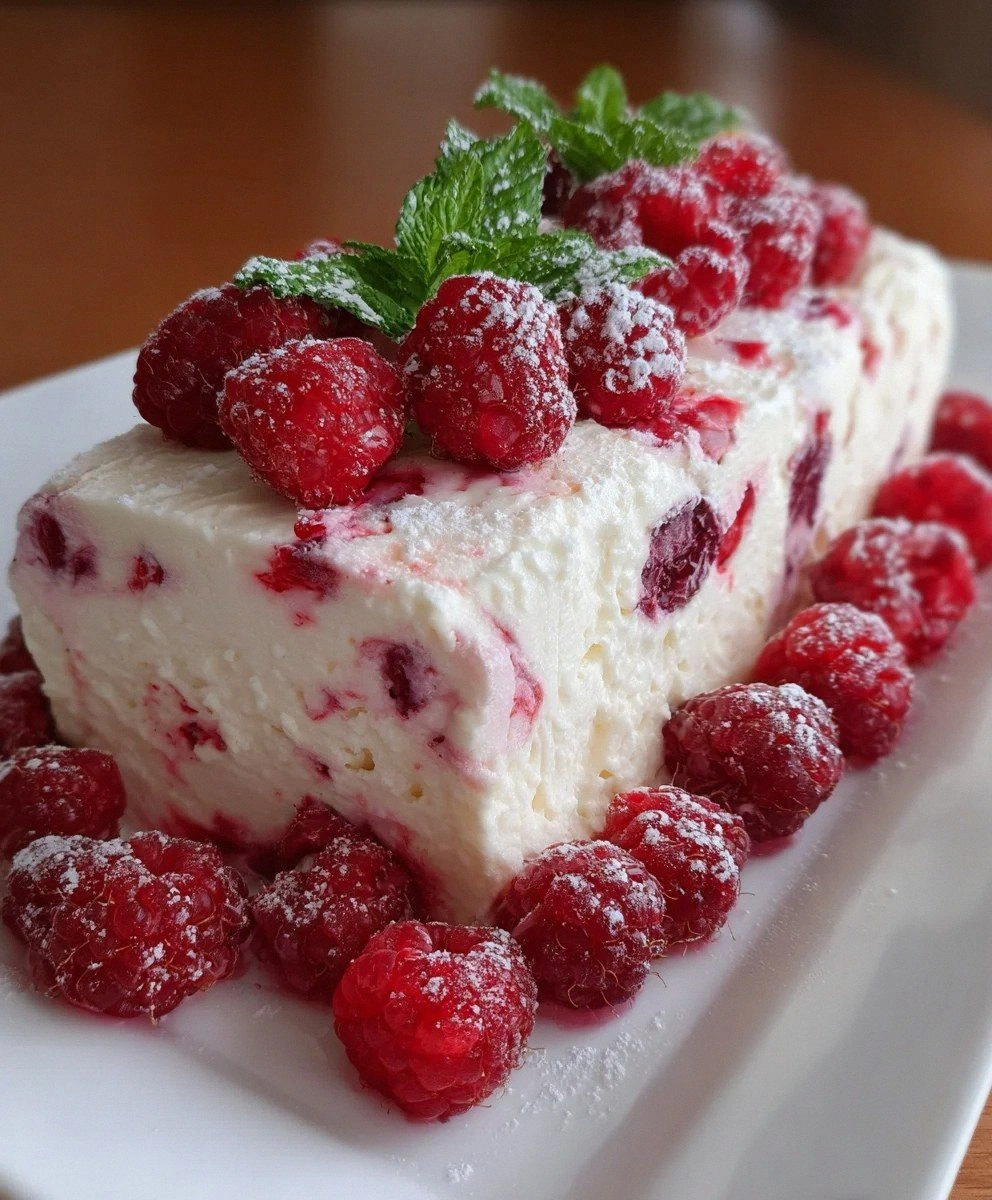
Picture this: you slide a loaf-shaped cloud of pastel fuchsia from the freezer, unmold it onto a chilled board, and watch the surface frost into tiny sugar crystals under the kitchen lights. You slice through layers that alternate between berry-streaked silk and pure, snowy cream. The first bite is a temperature trick—cold enough to refresh, airy enough to melt on your tongue like late-season snow, but packed with fruit flavor so intense it feels almost electric. The cherries hit first, dark and wine-like, followed by the cheek-pinching brightness of raspberry that lingers just long enough for the elderflower to float in on a floral whisper. I dare you to taste this and not go back for seconds; I personally polished off three slices standing at the counter “testing” texture like a responsible adult.
Most semifreddo recipes skate by on plain vanilla or coffee, maybe a lonely ribbon of store-bought jam if the author is feeling zesty. This version? It’s a Technicolor opera of summer fruit, balanced by a whisper of floral liqueur and the tiniest pinch of salt that makes the sweetness sing. It’s also dead-simple: no ice-cream machine, no frantic churning over a rock-salt graveyard. You cook a quick berry jam, whisk eggs and sugar over gentle heat until they puff like marshmallow fluff, fold in billowy cream, freeze, and—patience, friend—wake up to dessert royalty. If you’ve ever struggled with icy, rock-hard homemade ice cream, you’re not alone—and I’ve got the fix.
Let me walk you through every single step—by the end, you’ll wonder how you ever made it any other way.
What Makes This Version Stand Out
- Double-Fruit Power: Most semifreddos settle for one star; we throw cherries and raspberries into the ring together for a sweet-tart tug-of-war that keeps each bite interesting. The colors swirl like sunset on a Greek island, and the flavor feels like drinking sangria while eating a bowl of fresh cream.
- Floral Whisper: A tablespoon of elderflower liqueur lifts the dessert out of the ordinary without screaming “I’m boozy!” It’s subtle—like wearing perfume that only reveals itself when someone leans in close.
- No Machine, No Tears: You don’t need counter-hogging gadgets. A bowl, a whisk, and a hand mixer are the entire tech stack. Translation: dorm rooms, rental cabins, and tiny apartments are all semifreddo-approved.
- Make-Ahead Magic: This dessert wants to sit overnight, meaning you can prep on Thursday, forget about it, and look like a pastry wizard on Saturday. Stress-free entertaining? Yes, please.
- Texture Playground: Layers of fruit ripple mean every forkful has pockets of jammy chew against frozen mousse. The edges firm up like nougat, the interior stays cloud-soft. Contrast junkies, rejoice.
- Year-Round Flexibility: Fresh berries in July, frozen in February—both work because we cook half the fruit into a glossy compote. Out-of-season blues officially cancelled.
- Crowd Gasps Guaranteed: Slice it at the table and watch faces light up. There is something about a loaf of striped, frozen mousse that makes even jaded foodies pull out their phones for photos.
Alright, let's break down exactly what goes into this masterpiece...
Inside the Ingredient List
The Flavor Base
Granulated sugar does far more than sweeten here—it controls ice crystals and keeps the texture spoonable straight from the freezer. Skimp on it and you’ll land closer to a berry popsicle that shatters under the knife. If coconut sugar is your thing, go ahead, but know the color will swing toward earthy mahogany. Kosher salt is the unsung hero; just a pinch amplifies the tart berries and makes the floral notes feel three-dimensional. Skip the salt and the dessert tastes flat, like a pop song missing its bass line.
The Texture Crew
Cornstarch thickens our quick jam so the fruit ripple won’t bleed into the cream and turn everything baby-pink mush. Arrowroot works if you’re gluten-free, but it sets clearer, so your swirl will gleam like stained glass. Heavy cream—whipped to soft peaks—supplies the airy lift; fat content matters, so don’t grab the “light” stuff unless you want icy shards. Egg yolks enrich the custard base, emulsifying air bubbles for that mousse-like interior. Brave enough to try whipped coconut cream? Expect a faint coconut breeze and a slightly quicker melt.
The Unexpected Star
Fresh or frozen cherries bring a buttery sweetness that cooked raspberries alone can’t achieve. Pit them with a paperclip if you lost your cherry-pitter—works like a charm and doubles as a party trick. Sweet cherries give dessert vibes; sour ones add a lip-smacking tang reminiscent of summer camp sodas. Either way, taste a few before cooking—if they’re bland, bump the lemon juice. Nobody wants a one-note swirl.
The Final Flourish
Elderflower liqueur is the secret handshake of this recipe. It bridges the gap between fruit and cream with a perfume that smells like dusk in an English garden. No booze? Swap in elderflower syrup and drop the sugar by a tablespoon. Fresh lemon juice is non-negotiable; it brightens everything the way a window flings open a dark room. Bottled juice tastes like furniture polish in comparison—trust your taste buds, not the expiration date.
Everything's prepped? Good. Let's get into the real action...
The Method — Step by Step
- Start by making the fruit swirl: in a small saucepan combine 1 cup pitted cherries, 1 cup raspberries, ⅓ cup sugar, 1 teaspoon cornstarch, and a pinch of salt. Mash lightly with a potato masher—just enough to jump-start the juices—and set over medium heat. The sugar will pull magenta syrup from the berries within two minutes; that sizzle when it hits the pan? Absolute perfection. Stir until it thickens to the texture of loose pie filling, about 5 minutes. Remove from heat, stir in 1 tablespoon lemon juice and 1 tablespoon elderflower liqueur, then scrape into a bowl and chill completely; warm jam will melt your cream later and sabotage the loft.
- While the jam cools, line a 9×5-inch loaf pan with two sheets of plastic wrap, leaving generous overhang on all sides. Smooth the plastic into the corners so no air pockets lurk—creases will emboss your semifreddo like wrinkles on silk. Pop the pan into the freezer; we want it icy-cold when we layer. This next part? Pure magic.
- For the custard base, fill a medium saucepan with 2 inches of water and bring to a gentle simmer. In a heatproof bowl whisk 2 whole eggs plus 3 egg yolks with ½ cup sugar until the mixture lightens to the color of lemon chiffon. Set the bowl over the simmering water (double-boiler style) and whisk constantly until thickened and foamy, roughly 8 minutes. The custard should coat your whisk like velvet and register 170°F on an instant-read thermometer—hot enough to pasteurize, cool enough to stay silky. Watch out: walk away and you’ll scramble eggs into breakfast rather than dessert.
- Remove the bowl from heat, whisk in another tablespoon of elderflower liqueur, and set the bowl into a larger bowl filled halfway with ice water. Stir gently until the custard is cool to touch; this prevents carry-over cooking and keeps that sunshine-yellow hue. Once cooled, fold in 1 cup of the chilled berry mixture to create a rippled ribbon—don’t overmix or you’ll lose contrast.
- In a separate chilled bowl, whip 2 cups cold heavy cream to soft peaks—when the whisk leaves faint trails that disappear quickly. The cream should mound like whipped Greek yogurt, not stand in stiff spikes; over-whipping creates butter pockets that freeze chalky. Fold one-third of the cream into the custard to lighten, then gently fold the lightened custard back into the remaining cream. Use a balloon whisk and rotate the bowl like a slow-motion roulette wheel; the goal is to maintain as much loft as possible.
- Retrieve your frozen loaf pan and spoon in half the mousse, smoothing to the edges. Dot with half the remaining fruit jam and use a skewer to marble—think Jackson Pollock, not kindergarten fingerpaint. Repeat with the rest of the mousse and jam, finishing with artistic swirls on top. Tap the pan on a towel-covered counter to expel sneaky air bubbles.
- Fold the plastic wrap overhang to seal the surface airtight; this prevents freezer burn and blocks rogue odors from infiltrating your dessert. Freeze at least 6 hours or up to 3 days. If you’re the impatient sort, 4 hours will give you slices that hold shape but still feel custardy in the center—perfect for late-night cravings.
- To serve, invert the semifreddo onto a chilled platter, peel off the plastic, and use a hot knife (dip in hot water, wipe dry) to slice. The knife will glide like a skater on fresh ice, leaving café-worthy cut faces. Plate with extra fresh berries, a drizzle of honey, or nothing at all—this beauty is self-sufficient.
That's it—you did it. But hold on, I've got a few more tricks that'll take this to another level...
Insider Tricks for Flawless Results
The Temperature Rule Nobody Follows
Your freezer should sit at –6°F (-21°C), not the usual 0°F, for the first two hours. The faster the semifreddo freezes, the smaller the ice crystals and the smoother the texture. After two hours, return the dial to 0°F. Most people overlook this detail and wonder why their dessert feels sandy. Future pacing: picture yourself pulling out a loaf that’s as velvety as a boutique gelato, all because you tweaked a dial.
Why Your Nose Knows Best
Smell the custard base once it cools. If you catch a faint sulfur whiff, the eggs overheated. Whisk in a teaspoon of cold milk and let it rest five minutes; dairy proteins rebalance the aroma. I learned this after turning my first batch into something reminiscent of hard-boiled sadness. A friend tried skipping this step once—let’s just say it didn’t end well.
The 5-Minute Rest That Changes Everything
After unmolding, let the semifreddo stand at room temperature for exactly 5 minutes before slicing. The outer layer softens to the texture of whipped mousse while the center stays firm. Miss the window and it melts into a puddle; slice immediately and you’ll fight rock-hard edges. Set a timer—your phone is already in your hand for photos anyway.
Creative Twists and Variations
This recipe is a playground. Here are some of my favorite ways to switch things up:
Black Forest Semifreddo
Swap half the cherries for chopped dark cherries soaked in kirsch, fold in mini chocolate chips, and top with shaved chocolate. The result tastes like the cake but feels like eating frozen truffle filling.
Lemon-Raspberry Ripple
Replace cherries with more raspberries and add two teaspoons of finely grated lemon zest to the custard. The bite is brighter, almost sherbet-like, and perfect for people who claim they “don’t like overly sweet desserts.”
Coconut-Lime Vacation
Sub full-fat coconut cream for heavy cream, add 1 tablespoon lime zest, and swap elderflower for Malibu rum. Close your eyes and you’re on a beach towel somewhere tropical—sunscreen not included.
Stracciatella Style
Drizzle 2 ounces of melted bittersweet chocolate into the mousse during the last fold; it seizes into delicate shards that crackle between teeth like chocolate fireworks.
Strawberry-Basil Garden
Use strawberries instead of cherries, add ¼ cup finely chopped basil to the jam, and steep the cream with basil leaves for 30 minutes before whipping. It’s summer in a loaf pan, herbaceous and romantic.
Spiced Plum & Port
In winter, sub pitted plums and simmer with 2 tablespoons port, ½ teaspoon cinnamon, and a pinch of black pepper. The color turns deep amethyst and the flavor tastes like plum pudding wearing velvet.
Storing and Bringing It Back to Life
Fridge Storage
Once sliced, press plastic wrap directly onto cut surfaces and return to the freezer. It keeps up to one week with no quality loss; after that, ice crystals grow and the texture dulls. Do not store in the fridge—it will slump into soup faster than you can say “semifreddo.”
Freezer Friendly
Wrap the entire loaf pan in a second layer of foil to prevent freezer odors. For long-term storage (up to a month), unmold the semifreddo, wrap tightly in plastic, then foil, and stash inside a zip-top bag. Label it or risk a mystery brick situation in six weeks.
Best Serving Method
If you’ve frozen the dessert solid, transfer to the fridge for 15 minutes before slicing; any longer and edges melt while the core stays icy. For individual portions, pre-slice the whole loaf, separate slices with parchment, and refreeze; grab and serve like gourmet ice-cream cards. Add a tiny splash of water to the plate before setting down the slice—it forms a micro-puddle that prevents the semifreddo from gluing itself to the dish as it softens.