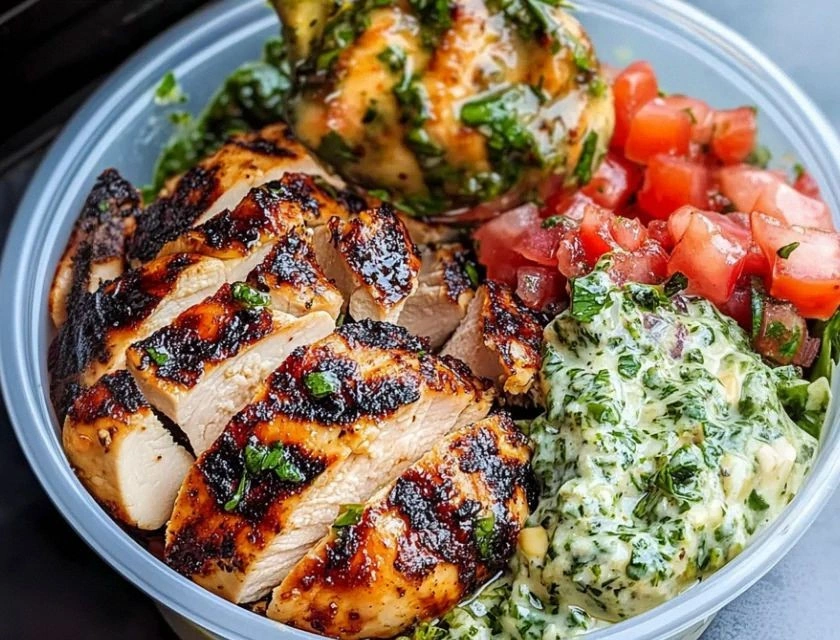
Picture this: you pull the chicken off the grill, the edges blistered and smoky, the center still audibly juicy. You slice it on the bias and those perfect cross-hatches catch the chimichurri like tiny emerald rivers. Steam rises, carrying the scent of parsley, oregano, and garlic that makes your neighbors lean out their windows. You fluff the rice—each grain distinct, glossy, and fragrant—and you can't help but sneak a forkful before the bowl is even assembled. The garlic sauce gets a final whisk, thick enough to ribbon but loose enough to cascade. One taste and you're hooked; I dare you to taste this and not go back for seconds. By the time you snap the perfect overhead shot for Instagram, half the bowl is gone, and you're already plotting tomorrow's lunch.
Most recipes treat chimichurri like a last-minute green drizzle, but that approach is criminal. The secret lies in a double-hit system: a quick marinade to season the meat from the inside out, and a fresh, uncooked batch that wakes everything up at the end. I'll be honest — I ate half the batch before anyone else got to try it. The garlic sauce isn't some sad afterthought either; it's a velvety emulsion that clings to every grain of rice and transforms humble vegetables into showstoppers. If you've ever struggled with dry chicken, bland rice, or sauces that separate into an oily mess, you're not alone — and I've got the fix.
Okay, ready for the game-changer? Stay with me here — this is worth it. We're going to reverse-sear the chicken so the outside caramelizes while the inside stays silkier than a politician's promise. We'll bloom the spices in hot fat so they taste three-dimensional. We'll whip the garlic sauce in the same warm pan to catch every last flavor fond. By the end, you'll wonder how you ever made it any other way.
What Makes This Version Stand Out
Double-Dunk Flavor: First, the chicken lounges in a punchy chimichurri bath that seasons it all the way to the bone. After grilling, it gets a second coat of fresh, uncooked sauce that tastes like spring exploded on your cutting board. Most recipes get this completely wrong — they either marinate and skip the final hit, or they dump bottled dressing on naked meat.
Reverse-Sear Magic: We start the chicken over gentle heat so the proteins relax, then crank the grill to blistering for a final char. That means no leathery edges, no raw centers, just a rosy, juicy interior encased in smoky stripes.
One-Pan Garlic Sauce: While the meat rests, the same skillet (loaded with browned bits) becomes the base for a glossy garlic sauce that tastes like you spent hours reducing stock. Picture yourself pulling this out of the oven, the whole kitchen smelling incredible, and you only dirty one pan.
Rice That Earns Its Place: Instead of sad, clumpy grains, we toast the rice in garlicky butter, steam it in herb water, then fluff it with a splash of lemon so every bite is light, fragrant, and addictive.
Make-Ahead Hero: The chimichurri can live happily in the fridge for five days (flavor actually improves), the garlic sauce holds for three, and both chicken and rice reheat like champs. Future pacing: Monday you grill, Tuesday you assemble in under three minutes.
Crowd-Pleasing Flexibility: Gluten-free, low-carb friendly (swap rice for cauliflower), dairy-free, and the vegetables can rotate with the seasons. I've served this to toddlers, teenagers, and triathletes — universal silence followed by plate scraping.
Inside the Ingredient List
The Flavor Base
Fresh flat-leaf parsley is non-negotiable; curly parsley tastes like damp newspaper and will ruin your sauce faster than you can say "herbaceous." You want vibrant, perky bunches that smell like a summer lawn after rain. Rinse thoroughly—grit is the enemy—and spin dry so the oil emulsifies instead of turning swampy. Skip the bottled pre-chopped stuff; oxidation kills brightness.
Garlic should be fresh and firm, with no green shoots. Those central sprouts taste bitter and will haunt your sauce for days. Smash each clove under the flat of your knife, peel, then mince fine for the marinade and leave it chunkier for the finishing sauce so you hit bursts of garlicky heat.
Quality olive oil matters more than your college degree here. Choose a peppery, green-hued extra-virgin oil that makes the back of your throat tingle. Cheap oil tastes flabby and will mute the herbs instead of carrying them.
The Texture Crew
Chicken thighs trump breasts every single time. They stay juicy even if you get distracted by a group text about weekend plans. Look for air-chilled, skin-on, bone-in thighs if you want to level up; otherwise, boneless skinless work fine—just trim excess fat so the marinade can hug every surface.
Long-grain rice like basmati or jasmine gives you those distinct, fluffy grains. Short rice turns gummy and Spanish rice varieties overpower the chimichurri. Rinse under cold water until it runs clear; the starch you wash away is what causes kindergarten-level glueiness.
Red wine vinegar adds the essential tang to cut through rich chicken and oil. Balsamic is too sweet, white vinegar too harsh. If you're in a pinch, half lime juice and half apple-cider vinegar gets close.
The Unexpected Star
Oregano is the quiet genius. Use fresh if you can find it—its peppery perfume marries perfectly with parsley—but dried works as long as you bloom it in warm oil first. Mexican oregano is even better if you like a citrusy punch.
Crushed red-pepper flakes add a gentle, humming heat. I dare you to taste this and not go back for seconds—those flakes are why. Start conservative; you can always stir more into the final sauce.
The Final Flourish
Flaky sea salt finishes the chicken after grilling. Regular table salt dissolves on contact and disappears; crunchy crystals hit your tongue in pops, waking up every other flavor like a splash of cold water.
Lemon zest in the rice brightens the whole bowl. Use a microplane and only the yellow skin—white pith tastes like aspirin.
Everything's prepped? Good. Let's get into the real action...
The Method — Step by Step
- Start the chimichurri by dropping parsley, oregano, garlic, red-pepper flakes, salt, and black pepper into a food processor. Pulse until everything is chopped fine but still has texture—think confetti, not baby food. With the motor running, stream in the olive oil and red wine vinegar until you have a loose, spoonable sauce that coats the back of a spoon. Taste. It should make your tongue buzz with garlic, herbs, and tang. Scoop out half for the marinade and keep the rest in the fridge, covered, for the final drizzle.
- Pat the chicken thighs dry with paper towels; moisture is the arch-enemy of browning. Slide them into a zip-top bag, pour in the reserved marinade, squeeze out excess air, and massage so every nook is painted green. Refrigerate at least 30 minutes, but overnight is where the magic happens. That sizzle when it hits the pan? Absolute perfection. If you're rushed, 15 minutes will still beat 90% of bland chicken recipes out there.
- While the chicken lounges, rinse the rice under cold water until the water runs clear—usually three changes. Drain well. Melt butter in a saucepan over medium heat, add a smashed garlic clove, and toast until the butter foams and smells nutty. Stir in the rice so each grain glistens like a tiny pearl. Pour in water, add salt, bring to a boil, then cover and drop to the lowest simmer for 12 minutes. Resist peeking; steam is shy.
- Preheat your grill or grill pan to medium-low on one side and high on the other (two-zone fire). Remove chicken from the bag, letting excess marinade drip off—too much and it will burn before the chicken cooks through. Season lightly with salt; the marinade already carries some. Place thighs skin-side-down (or smooth-side-down if boneless) on the cooler zone, close the lid, and walk away for 12 minutes. This gentle start renders fat and starts building that coveted smoky depth without flare-ups.
- After 12 minutes, the top will look opaque and the bottom should sport gentle caramel marks. Flip the chicken, move it to the hot zone, and crank the lid closed for another 3-4 minutes. This is the moment of truth—those marks should darken into smoky stripes, but don't wander off. Watch out for flare-ups from dripping fat; if flames kiss the meat too long, you'll taste acrid carbon instead of char.
- Transfer chicken to a warm plate, tent loosely with foil, and let rest 5 minutes. This is when juices redistribute; skip the rest and you'll have a puddle on the board instead of moisture in the meat. While resting, finish the rice: remove lid, fluff grains with a fork, fold in lemon zest and a knob of butter for sheen. The aroma should hit you like a citrusy pillow.
- Make the garlic sauce in the same grill pan (or a small skillet) while it's still hot. Lower heat to medium, add butter, and scrape those browned bits with a wooden spoon—those are liquid gold. When the butter foams, stir in minced garlic for 30 seconds; it should smell like you've entered an Italian grandmother's kitchen. Whisk in flour to make a quick roux, then splash of chicken stock, then milk, whisking until thick and glossy. Season with salt, pepper, and a squeeze of lemon. The sauce should coat the back of a spoon and taste like garlicky velvet.
- Assemble bowls while everything is still warm. Spoon a mound of rice slightly off-center (Instagram loves asymmetry), fan sliced chicken on top, drizzle with fresh chimichurri, and add a generous spoonful of garlic sauce. Add quick-pickled onions or grilled veggies if you're feeling fancy. Serve immediately, passing extra chimichurri and garlic sauce because people will want to swim in them.
- Clean-up is mercifully minimal: one grill pan, one rice pot, one cutting board. Future pacing: imagine tomorrow's lunch assembled in under three minutes because you prepped everything tonight. That's it — you did it. But hold on, I've got a few more tricks that'll take this to another level...
Insider Tricks for Flawless Results
The Temperature Rule Nobody Follows
Most home cooks either blast chicken on high the entire time or baby it on low until it turns rubbery. The two-zone method—gentle heat first, hot sear second—keeps the meat relaxed and juices locked in. A friend tried skipping this step once; let's just say it didn't end well. She ended up with charcoal outside, bubblegum inside, and a smoke alarm that wouldn't quit. Use an instant-read thermometer and treat 160°F (carry-over to 165°F) as gospel.
Why Your Nose Knows Best
When the garlic hits the butter for the sauce, count slowly to 30. If it smells sweet and nutty, you're golden. If it smells sharp and acrid, the heat is too high or you've crossed the 45-second line. Lower the flame immediately and splash a tablespoon of water to cool the pan. Your nose is more reliable than any timer app.
The 5-Minute Rest That Changes Everything
Resting the chicken isn't optional. Tent loosely, don't wrap tightly—tight foil steams the crust you worked for. Five minutes is the sweet spot; longer and the chicken cools too much, shorter and juices run like a river. Use the downtime to finish the rice and sauce; multitasking keeps you from hovering like an anxious parent.
Herb Storage for Maximum Punch
Wash and spin-dry herbs as soon as you bring them home. Store parsley and oregano upright in a jar with an inch of water, like flowers, covered loosely with a produce bag. They'll last a week instead of wilting into slime. Crisp herbs equal brighter sauce, and brighter sauce equals compliments you'll get sick of hearing.
Creative Twists and Variations
This recipe is a playground. Here are some of my favorite ways to switch things up:
Spicy Mango Chimichurri
Swap half the parsley for cilantro, blend in a ripe mango, and double the red-pepper flakes. The result is tropical, fiery, and perfect over grilled shrimp if you want to surf-and-turf the bowl.
Smoky Paprika Chicken
Add two teaspoons of smoked paprika to the marinade and finish with a drizzle of maple syrup for a sweet-smoky profile that tastes like summer campfires.
Cauliflower Rice Power Bowl
For a low-carb punch, pulse cauliflower florets in a food processor until rice-sized, sauté in olive oil, and fold in the same lemon-butter treatment. You cut carbs but keep the soul of the dish.
Breakfast-for-Dinner Edition
Top the finished bowl with a sunny-side-up egg. When the yolk breaks and mingles with chimichurri and garlic sauce, you'll understand why breakfast is acceptable at 8 p.m.
Surf-and-Surf Salmon Swap
Replace chicken with salmon fillets—skin-on, please—and grill skin-side-down until crispy. Salmon's richness loves the acidity of chimichurri; you'll feel like you're in a coastal bistro.
Roasted Root Veg Winter Bowl
In January, when tomatoes taste like cotton, toss cubed beets, carrots, and parsnips with olive oil and roast at 425°F until caramelized. Pile them over the rice and chicken for a cozy, earthy upgrade.
Storing and Bringing It Back to Life
Fridge Storage
Store rice, chicken, chimichurri, and garlic sauce in separate airtight containers. Rice and chicken keep up to four days, chimichurri up to five, garlic sauce up to three. The next level move: pack components in glass jars so you can see what's left and avoid the dreaded science-experiment-in-the-back scenario.
Freezer Friendly
Freeze chicken slices in a single layer on a sheet pan, then transfer to a zip-top bag—no clumps, no tears. Rice freezes in muffin tins for perfect single portions; pop two rice "pucks" into a bowl, cover, and microwave. Chimichurri can be frozen in ice cube trays; drop a cube onto hot chicken and watch it melt into green velvet. Garlic sauce doesn't love the freezer—it can split—so make it fresh if possible.
Best Reheating Method
Add a tiny splash of water to the rice before reheating—it steams back to fluffy life. Warm chicken covered at 325°F for 10 minutes or in a skillet over medium with a lid; both methods preserve juiciness better than the microwave, but if you're at work, 60-second microwave bursts with a damp paper towel on top work fine. Bring garlic sauce to room temp and whisk; if it's thickened, thin with a teaspoon of warm water, not milk, to maintain silkiness without dulling flavor.