Love this? Pin it for later! 📌
Why This Recipe Works
- Single-Sheet Convenience: Protein, veg, and sauce cook together, meaning fewer dishes and more couch time.
- Even Heat, Even Flakes: Pre-heating the pan ensures the salmon sears on contact, keeping it moist inside.
- Emulsified Lemon Butter: Melted butter meets lemon juice and garlic; the residual fish juices thicken it into a glossy sauce—no whisking required.
- Asparagus Timing Hack: Stalks roast exactly as long as the salmon needs, so everything finishes together.
- Flavor Layering: Zest goes on before roasting for perfume, juice goes on after for brightness.
- Meal-Prep Royalty: Hold perfectly in a 200 °F oven for 30 minutes without drying out—ideal for entertaining.
Ingredients You'll Need
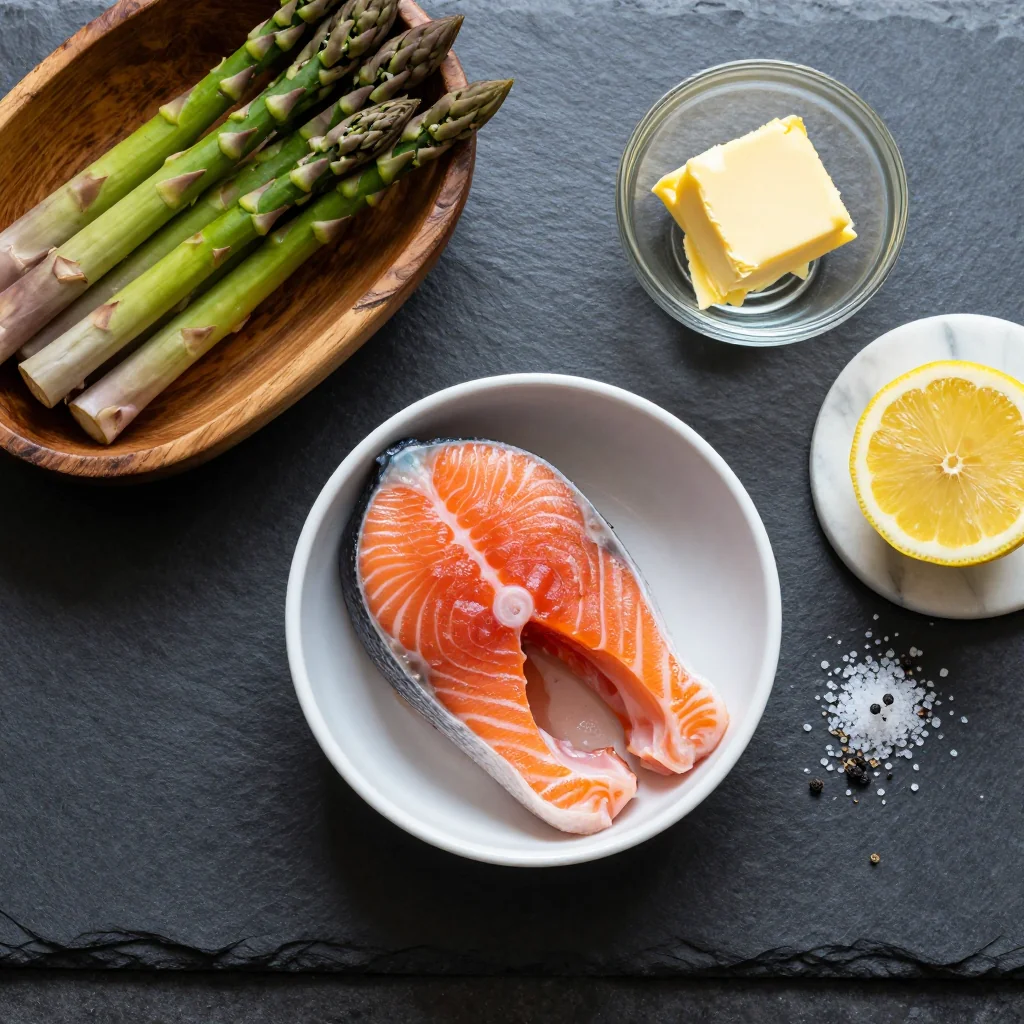
Great salmon starts at the fish counter. Look for fillets that are vibrantly pink with no fishy smell—just a faint ocean breeze. If the flesh springs back when pressed and the edges aren’t browning, you’ve got a winner. I prefer a center-cut side of salmon (about 1¼ lb) so the thickness is uniform; this keeps thin tail pieces from overcooking. Skin-on or skin-off both work here—skin crisps into a savory cracker if you leave it, but the butter sauce will be just as luxurious without.
Asparagus spears should squeak when you bundle them together; that squeak means freshness. Thin stalks roast in a flash, while chubby ones stay snappy—choose whichever texture you love, just aim for uniformity so they finish at the same moment. If asparagus isn’t in season, green beans, broccolini, or even zucchini ribbons are excellent understudies.
Butter is the silent workhorse. I use unsalted so I can control seasoning, but if salted is what’s in your fridge, simply ease back on the kosher salt. Lemons should feel heavy for their size; that heft signals thin skins and more juice. Before zesting, scrub the wax off under warm water—your future sauce will taste brighter than morning.
Garlic gets micro-planed so it melts instantly in the hot butter, leaving no acrid bites. If you’re out of fresh, ½ tsp of garlic powder mixed into the melted butter works in a pinch. For herbs, parsley is classic, but dill, tarragon, or chives all play beautifully with salmon. Pick one and be generous; herbs are the confetti of weeknight cooking.
How to Make Easy Sheet Pan Salmon with Asparagus and Lemon Butter Sauce
Heat the Sheet Pan
Place your rimmed sheet pan in the oven and preheat to 425 °F (220 °C). A screaming-hot surface prevents sticking and jump-starts caramelization. Let it heat for at least 10 minutes while you prep everything else.
Prep the Lemon Butter
In a small saucepan, melt 4 Tbsp unsalted butter over medium heat. Swirl in 1 Tbsp freshly squeezed lemon juice, 1 tsp zest, and 1 small clove grated garlic. Remove from heat; the residual warmth will perfume the butter without browning it.
Season the Salmon
Pat the salmon very dry—excess moisture is the enemy of browning. Brush lightly with 1 Tbsp olive oil, then sprinkle with ¾ tsp kosher salt, ½ tsp black pepper, and another ½ tsp lemon zest. Let it rest so the salt can start dissolving; this helps form a light crust.
Toss the Asparagus
Trim woody ends by bending each spear until it snaps naturally—nature’s built-in guide for tenderness. In a bowl, toss asparagus with 1 Tbsp olive oil, ½ tsp kosher salt, and a few cracks of pepper. Arrange in a single layer so air can circulate; overcrowding causes steam.
Assemble on the Hot Pan
Carefully remove the blistering pan (oven mitts, please). Drizzle 1 tsp olive oil across the surface; it should shimmer instantly. Lay salmon skin-side-down in the center, then scatter asparagus around like loyal courtiers. Any rogue oil may smoke—this is normal and will subside.
Roast to Perfection
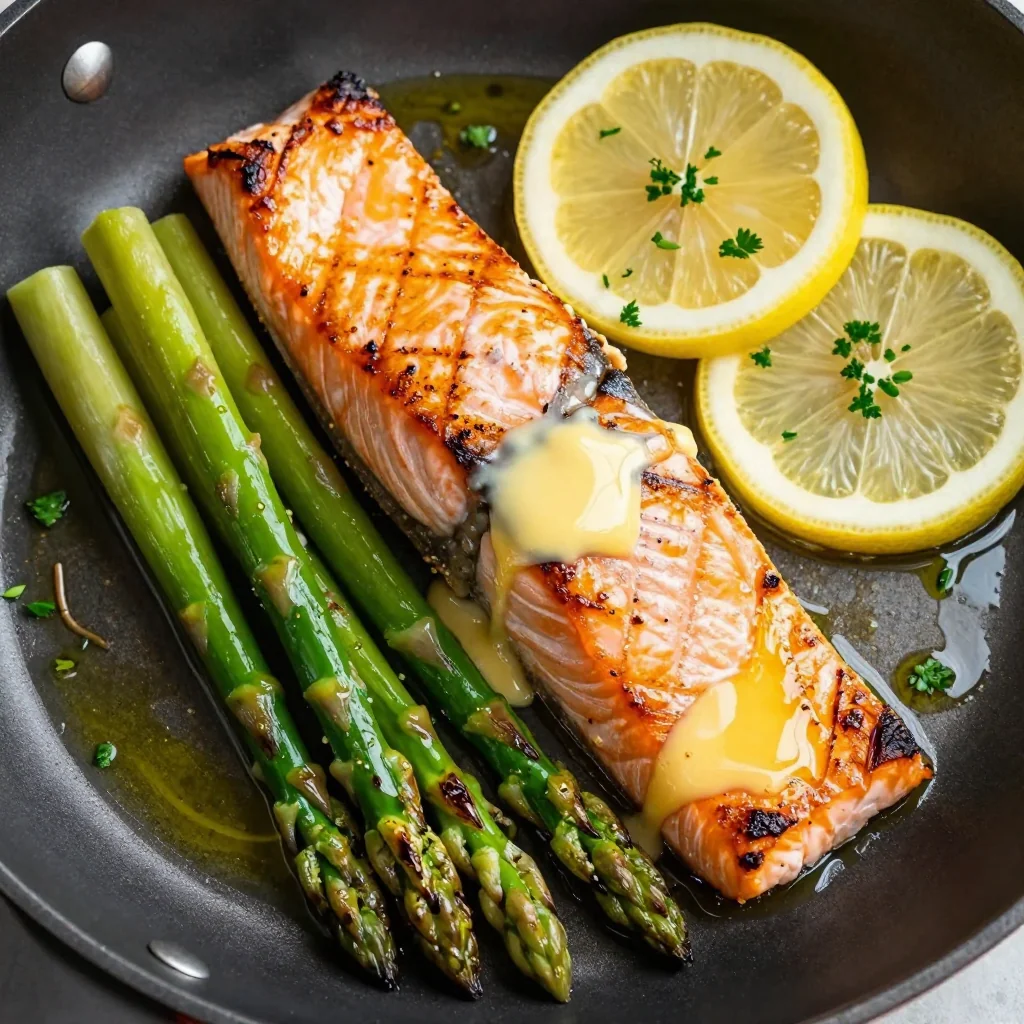
Slide the pan back into the oven and roast 11–14 minutes, depending on thickness. Salmon is done when the center registers 125 °F for medium-rare (my sweet spot) or 135 °F for well-done. Asparagus should be tender-crisp with charred tips.
Finish with Lemon Butter
Immediately drizzle the warm lemon-butter sauce over the salmon; residual heat will bubble it into a glossy emulsion. Squeeze an extra lemon half for brightness, then shower with chopped parsley or dill. Serve straight from the pan for rustic charm.
Expert Tips
Check Early
Salmon keeps cooking from residual heat. Pull it when the center is still slightly translucent; it will finish as it rests.
Dry = Crispy
A paper-towel pat-down is the difference between flaking flesh and rubbery steamed salmon.
Pan Rotation
Halfway through roasting, rotate the pan 180 °F for even browning—ovens have hot spots.
Resting Rule
Let the salmon rest five minutes on the pan; juices reabsorb, preventing the dreaded white albumin leak.
Bright Finish
Add fresh lemon zest after roasting; heat dulls citrus oils, so a final kiss of zest keeps flavors vivid.
Reuse the Sauce
Any leftover lemon butter is liquid gold over rice, noodles, or tomorrow’s scrambled eggs.
Variations to Try
-
Garlic-Herb Compound Butter: Swap plain butter for a log of herb-flecked compound butter; let it melt tableside for restaurant drama.
-
Spicy Cajun: Dust salmon with 1 tsp Cajun seasoning and add sliced bell peppers alongside asparagus for a Louisiana twist.
-
Asian-Inspired: Replace lemon juice with lime, stir 1 tsp soy sauce and ½ tsp sesame oil into the butter, and sprinkle with sesame seeds and scallions.
-
Mediterranean Medley: Add a handful of cherry tomatoes and olives to the pan; finish with crumbled feta and oregano.
-
Winter Comfort: Trade asparagus for broccoli florets and add a sprinkle of everything-bagel seasoning over the salmon.
Storage Tips
Refrigerate: Cool leftovers within two hours, then transfer to an airtight container. Salmon keeps up to three days; asparagus can turn mushy after two, so consume it first. Reheat gently in a 275 °F oven, covered with foil, until just warmed through—about 10 minutes. Microwaves work in a pinch, but they’ll overcook the fish and turn your kitchen into a sauna of seafood aroma.
Freeze: Place individual salmon fillets in freezer-safe bags with a spoonful of the lemon-butter sauce to guard against freezer burn. Asparagus doesn’t freeze well here; its high water content turns it limp upon thawing. Use within two months for best flavor. Thaw overnight in the fridge, then reheat as above.
Make-Ahead: You can prep the lemon-butter sauce up to five days ahead and refrigerate; reheat just until liquefied. Season the salmon and trim the asparagus up to 24 hours ahead, storing each separately on a paper-towel-lined plate. When dinner calls, all that’s left is the sheet-pan shuffle.
Frequently Asked Questions
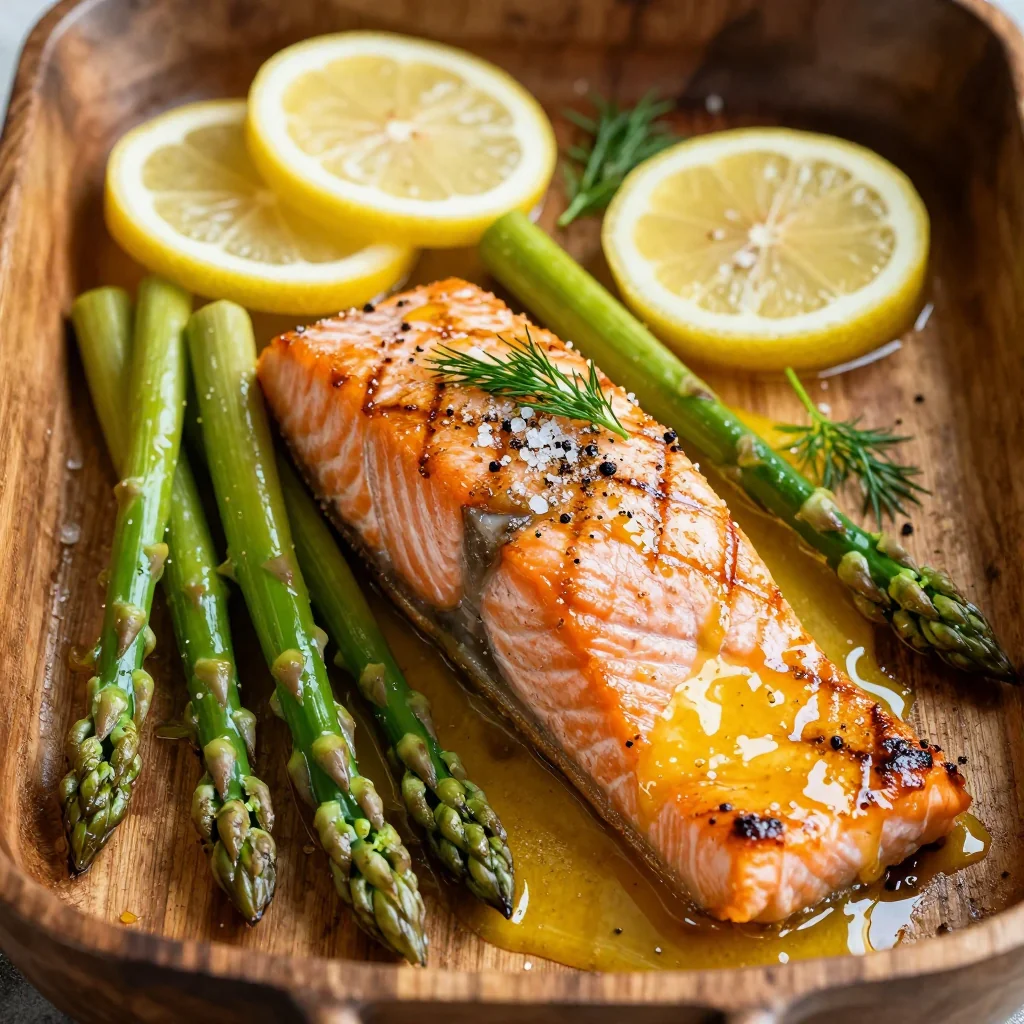
Easy Sheet Pan Salmon with Asparagus and Lemon Butter Sauce
Ingredients
Instructions
- Preheat: Place a rimmed sheet pan in oven and preheat to 425 °F (220 °C) for 10 minutes.
- Make sauce: Melt butter in a small saucepan; stir in lemon juice, 1 tsp zest, and garlic. Set aside.
- Prep salmon: Pat salmon dry, brush with 1 Tbsp olive oil, season with ¾ tsp salt, pepper, and ½ tsp zest.
- Prep asparagus: Toss asparagus with remaining 2 Tbsp olive oil and ½ tsp salt.
- Roast: Remove hot pan, arrange salmon skin-side-down, scatter asparagus around. Roast 11–14 minutes.
- Finish: Drizzle lemon-butter sauce over salmon, sprinkle with herbs, and serve hot.
Recipe Notes
Salmon is perfectly cooked at 125 °F for medium-rare. Adjust asparagus timing if spears are very thin or thick.