I was standing in my tiny kitchen, the oven humming like a lazy cat, when a friend dared me to bring the taste of a Greek taverna to my apartment. I stared at a half‑opened bag of phyllo dough, feeling like a magician about to pull a rabbit out of a hat, but instead I was about to pull a golden, flaky masterpiece out of the oven. The air was already humming with the scent of garlic sautéing in olive oil, and I could hear the faint crackle of butter melting on the stove—an orchestra of anticipation that made my heart beat a little faster. I swear, that moment was the culinary equivalent of a lightning strike; I knew I was about to create something unforgettable.
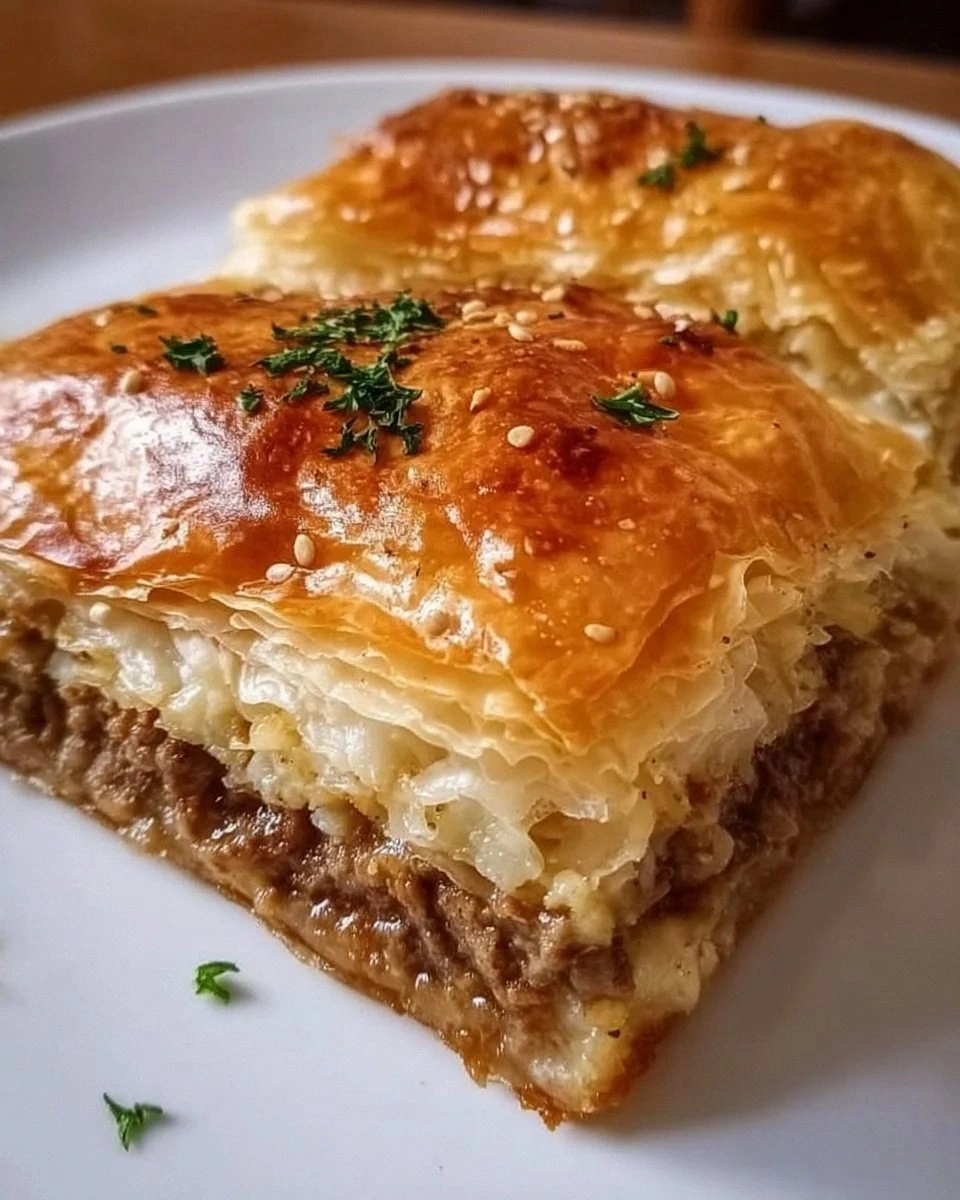
Picture this: the first bite delivers a buttery crunch that shatters like thin ice, followed by a warm, spiced meat filling that coats your palate like velvet. The feta crumbles melt into the sauce, adding a salty tang that dances with the cinnamon and nutmeg, while fresh parsley pops up like green fireworks. Every sense is on fire—the golden hue of the baked phyllo, the aromatic perfume wafting from the tray, the satisfying sound of the crust giving way under your fork, the silky texture of the meat, and the comforting warmth that spreads through your chest. It’s not just food; it’s an experience that makes you feel like you’re sitting on a sun‑kissed balcony overlooking the Aegean Sea.
Most recipes I’ve tried either drown the meat in a soggy sauce or leave the phyllo as a brittle, dry sheet that crumbles at the slightest touch. This version, however, strikes a perfect balance by layering the dough with just enough butter to achieve that glossy, buttery sheen while keeping the interior moist and flavorful. I’m daring you to taste this and not go back for seconds—trust me, you’ll be begging for the leftovers. And yes, I’ll be honest—I ate half the batch before anyone else got a chance to try it, because once you get a taste, the temptation is real.
The secret? A splash of butter brushed onto every sheet of phyllo, a pinch of cinnamon that adds an unexpected warmth, and a quick rest period that lets the flavors meld like old friends catching up. Let me walk you through every single step — by the end, you’ll wonder how you ever made it any other way.
What Makes This Version Stand Out
- Flavor Explosion: The combination of cinnamon, nutmeg, and fresh parsley creates a Mediterranean‑Mediterranean symphony that you won’t find in the average meat pie.
- Texture Harmony: Each layer of phyllo is brushed with butter, giving you a crisp, flaky exterior that shatters delightfully while the interior stays tender and juicy.
- Simplicity Meets Sophistication: Only a handful of pantry staples are needed, yet the result feels like a dish you’d order at a high‑end restaurant.
- Unique Spice Twist: A teaspoon of cinnamon in a savory pie is the game‑changer that makes this recipe unforgettable.
- Crowd‑Pleaser: Whether it’s a family dinner or a potluck, this pie disappears faster than you can say “opa!”
- Ingredient Quality: Using Halal‑friendly ground beef or chicken ensures the meat is lean, flavorful, and ethically sourced.
- One‑Pan Wonder: All the magic happens on a single baking sheet, minimizing cleanup and maximizing flavor.
- Make‑Ahead Magic: You can assemble the pie a day ahead, refrigerate, and bake it fresh for a stress‑free dinner.
Inside the Ingredient List
The Flavor Base
The ground beef or chicken is the heart of this pie, providing a rich, meaty foundation that absorbs the aromatics beautifully. I recommend using a lean 80/20 blend for beef or a thigh‑meat blend for chicken to keep the filling juicy without excess grease. If you skip the meat, you lose the essential umami depth that makes the pie sing; a vegetarian version would need a hearty bean or lentil substitute, but it won’t have the same melt‑in‑your‑mouth quality.
Onions and garlic are the classic duo that builds the savory backbone. Finely chopping the onion ensures it dissolves into the meat, creating a sweet, caramelized undertone. Garlic, minced just before adding, releases allicin that adds a pungent kick—don’t overcook it, or it turns bitter.
The Texture Crew
Olive oil does double duty: it sautés the aromatics and adds a subtle fruitiness that complements the meat. Three tablespoons are enough to coat the pan without making the filling greasy. Butter, melted and brushed on every phyllo sheet, is the secret to that golden, flaky crust that shatters like thin ice when you bite into it.
Eggs act as a binding agent, holding the filling together while also enriching the flavor. Two large eggs are whisked into the mixture just before the final seasoning, giving the pie a silky texture that’s unmistakable.
The Unexpected Star
Cinnamon and a pinch of nutmeg might sound like dessert spices, but in this savory context they add warmth and depth that elevate the meat to a whole new level. A teaspoon of cinnamon is enough to perfume the filling without overwhelming it. The nutmeg, used sparingly, adds a whisper of earthiness that rounds out the flavor profile.
Fresh parsley brings a bright, herbaceous lift that cuts through the richness. A quarter cup, chopped fine, is folded in at the end to preserve its fresh flavor and vivid green color.
The Final Flourish
Feta cheese brings a salty tang that contrasts beautifully with the sweet spices and buttery crust. One cup, crumbled, is mixed into the filling, allowing it to melt slightly and create pockets of creamy goodness. If you’re not a fan of feta, a blend of mozzarella and ricotta works well, but you’ll miss the characteristic briny bite.
Phyllo dough is the canvas of this masterpiece. One 16‑ounce package typically contains 12‑15 sheets; you’ll need about eight sheets for a medium‑sized pie. Handle it gently, keep it covered, and brush each layer with melted butter to achieve that luminous, flaky finish.
Everything's prepped? Good. Let's get into the real action...
The Method — Step by Step
Heat your oven to 375°F (190°C) and position the rack in the middle. While the oven preheats, melt the butter in a small saucepan over low heat, letting it turn a light golden color—watch that sizzle when it hits the pan? Absolute perfection. Set the melted butter aside in a wide bowl so you can brush each phyllo sheet quickly.
In a large skillet, heat three tablespoons of olive oil over medium heat. Add the finely chopped onion and sauté until translucent, about three minutes, then toss in the minced garlic and cook for another 30 seconds—be careful not to let it burn. This aromatic base is the foundation of your flavor.
Add the ground beef or chicken to the skillet, breaking it up with a wooden spoon. Cook until the meat loses its pink hue and starts to brown, roughly five to seven minutes. Season with salt, black pepper, and a pinch of nutmeg at this stage; the nutmeg should be barely noticeable but will add that subtle depth later on.
Stir in the cinnamon and chopped parsley, letting the spices toast lightly for about a minute. This is where the magic happens—if you can smell the warm spice mingling with the meat, you’re on the right track. Remove the skillet from heat and let the mixture cool for two minutes.
In a separate bowl, whisk the two large eggs until they’re just blended. Fold the crumbled feta cheese into the meat mixture, then gently pour the whisked eggs over everything, stirring just enough to combine. The eggs act as a binder, ensuring the filling holds together when sliced.
Prepare a 9x13‑inch baking dish by brushing the bottom with a generous layer of melted butter. Lay the first phyllo sheet on the dish, letting the edges hang over the sides. Brush the sheet with butter, then repeat the process, layering and buttering each sheet. Use eight sheets for a balanced crust—more sheets give extra crunch, fewer sheets can lead to gaps.
Spread the meat filling evenly over the layered phyllo, smoothing it with a spatula. Fold the overhanging phyllo edges over the filling, creating a rustic border. Brush the top layer with the remaining butter, ensuring every crevice is coated for an even golden color.
Slide the dish into the preheated oven and bake for 30‑35 minutes, or until the phyllo is a rich, buttery gold and the filling is bubbling at the edges. Halfway through, rotate the pan to ensure even browning. When you see the edges pulling away from the pan and the top shimmering, you’ve hit the sweet spot.
Remove the pie from the oven and let it rest for ten minutes before cutting. This short rest allows the filling to set, making slicing cleaner and preventing the phyllo from collapsing. Serve warm, and watch as the steam rises, carrying the scent of cinnamon, garlic, and melted feta.
That's it — you did it. But hold on, I've got a few more tricks that'll take this to another level...
Insider Tricks for Flawless Results
The Temperature Rule Nobody Follows
Never bake phyllo at a temperature lower than 350°F. Anything less will leave the layers soggy, while a hotter oven (up to 400°F) can give you a crispier edge in less time. I once tried 325°F and ended up with a pie that felt more like a soggy sandwich than a flaky masterpiece.
Why Your Nose Knows Best
Your sense of smell is a more reliable indicator than a timer. When the buttered layers start to emit a nutty, toasted aroma, you’re close to perfection. If you catch that sweet, buttery scent early, pull the pie out a minute or two before the timer hits.
The 5‑Minute Rest That Changes Everything
Allowing the pie to rest for five minutes after baking lets the juices redistribute and the phyllo settle. Skipping this step is like cutting a cake before it sets—messy and disappointing. The rest also gives the butter a chance to solidify slightly, enhancing that satisfying crunch.
Butter Brush Technique
Instead of using a spoon, dip a pastry brush into the melted butter and swipe each sheet in a single, fluid motion. This ensures an even coating and prevents excess butter from pooling, which can make the crust greasy. A thin, even layer is the key to that glossy, golden finish.
Layering Strategy
Alternate between buttered and unbuttered sheets if you prefer a slightly lighter crust. The first and last sheets should always be buttered for maximum color and crunch. I once tried a completely butter‑free top layer and ended up with a pale, floppy crust—lesson learned.
Creative Twists and Variations
This recipe is a playground. Here are some of my favorite ways to switch things up:
Mediterranean Veggie Delight
Swap the meat for a mixture of sautéed zucchini, eggplant, and bell peppers. Add a handful of Kalamata olives for briny depth and use goat cheese instead of feta for a tangier finish. Perfect for a lighter, vegetarian-friendly version.
Spicy Souvlaki Twist
Incorporate a teaspoon of harissa paste into the meat mixture and sprinkle crushed red pepper flakes on top before baking. The heat pairs beautifully with the cool feta, creating a bold contrast that will wow spice lovers.
Cheesy Overload
Mix shredded mozzarella and grated Parmesan into the filling alongside feta. The extra cheese creates a gooey, stretchy interior that feels like a Greek‑Italian fusion—think pizza meets spanakopita.
Herb‑Infused Butter
Blend fresh rosemary, thyme, and a touch of lemon zest into the melted butter before brushing the phyllo. This aromatic butter adds a fragrant herbaceous note that elevates the crust to restaurant quality.
Mini Hand‑Pies
Cut the phyllo into squares, fill each with a spoonful of the meat mixture, fold into triangles, and bake on a sheet pan. These bite‑size versions are perfect for parties and make the pie feel more approachable for kids.
Storing and Bringing It Back to Life
Fridge Storage
Allow the pie to cool completely, then cover it tightly with aluminum foil or a reusable silicone lid. It will keep in the refrigerator for up to three days. When ready to eat, reheat in a 350°F oven for 15‑20 minutes, uncovered, to revive the crispness.
Freezer Friendly
Wrap the fully assembled, unbaked pie tightly in plastic wrap, then in a freezer‑safe bag. It freezes well for up to two months. To bake from frozen, let it thaw overnight in the fridge, then bake as directed, adding an extra five minutes to the baking time.
Best Reheating Method
For leftover slices, place them on a baking sheet, brush lightly with melted butter, and heat in a 375°F oven for 8‑10 minutes. Add a tiny splash of water (about a tablespoon) to the pan before reheating; the steam revives the flaky layers without drying them out.