I was halfway through a week of bland, store‑bought sauces when my friend dared me to whip up a classic Italian dish that would make the entire house smell like a trattoria. I stared at the pantry, felt the familiar hum of the fridge, and thought, “If this is how you do it, then I’m in for a treat.” That night, I cracked open a can of crushed tomatoes, sliced guanciale into thin strips, and let the aroma of olive oil sizzling in a pan paint the air with promise. The moment the guanciale browned, it released a savory perfume that made my kitchen feel like a secret family gathering. I knew then that this was not just another pasta recipe; it was a culinary revelation that would become the comfort food you’ll love.
Picture this: the pan crackles as the fat renders, the guanciale edges crisping into golden specks that shatter like thin ice, and the tomatoes mingle with the sizzling meat to form a sauce that coats the pasta like velvet. The sound is a satisfying sizzle, the smell is a rich, meaty umami, and the sight of the bubbling red sauce is a visual promise of indulgence. The texture is a harmonious blend of silky tomato and crunchy pork, and the flavor is a bold, slightly smoky depth that lingers on the tongue. Every bite is a reminder that simple ingredients, when treated with respect, can produce extraordinary results. This isn’t just another recipe; it’s the kind of dish that turns a regular dinner into a memorable experience.
What makes this version stand out is not just the authenticity of the ingredients, but the precise balance of technique and timing. I’ve refined the process to ensure the sauce reaches a silky consistency without becoming watery, while the guanciale retains its crispness. The use of crushed tomatoes instead of whole ones allows the sauce to develop a deeper color and richer flavor profile. I’ve also added a touch of fresh basil at the end to provide a bright counterpoint to the robust meatiness. The result is a dish that feels both indulgent and approachable, making it perfect for week‑night dinners or special occasions alike.
If you’ve ever struggled with the classic Amatriciana, you’re not alone — and I’ve got the fix. Most recipes get this completely wrong, either by over‑cooking the pasta or under‑rendering the guanciale. I dare you to taste this and not go back for seconds. Picture yourself pulling this out of the oven, the whole kitchen smelling incredible, and sharing it with friends who will immediately ask for the recipe. Let me walk you through every single step — by the end, you'll wonder how you ever made it any other way.
What Makes This Version Stand Out
- Authenticity: I use guanciale, the traditional pork cheek, for its distinct, melt‑in‑your‑mouth texture and deep flavor. The sauce is built around it, allowing the meat’s natural fat to mingle with the tomatoes. This creates a depth that canned sauces simply can’t match.
- Texture: The guanciale is sliced thin and rendered until its edges are crisp, providing a satisfying crunch that contrasts with the silky tomato base. The sauce coats the spaghetti like velvet, creating a mouthfeel that feels luxurious yet familiar. The result is a harmonious play between smooth and crunchy.
- Flavor Balance: I keep the seasoning simple, letting salt and freshly cracked pepper do the heavy lifting. The tomatoes are allowed to reduce slowly, concentrating their natural sweetness. The basil added at the end offers a fresh, aromatic lift that balances the richness.
- Speed: This dish takes less than an hour from start to finish. The sauce cooks quickly while the pasta boils, meaning you can serve a hot plate of pasta without waiting for a long simmer. It’s a perfect solution for busy evenings.
- Make‑Ahead Potential: The sauce actually improves after resting, as the flavors meld further. You can cook the sauce a day ahead and reheat it gently, saving time on the night you want to dine. The pasta can also be pre‑cooked and reheated, making this a true week‑night winner.
- Crowd Reaction: Friends and family rave about the crispy edges and the sauce’s depth. The dish feels like a restaurant experience, but it’s made entirely in your home kitchen. The simplicity of the ingredients hides a complex flavor profile that keeps everyone coming back.
Inside the Ingredient List
The Flavor Base
Crushed tomatoes form the backbone of this sauce. They provide a bright, acidic foundation that balances the richness of the guanciale. The crushed texture allows the sauce to thicken naturally as it simmers, creating a silky coating for the pasta. Skipping this ingredient would result in a thin, watery sauce that lacks depth. For a slightly sweeter profile, you can add a pinch of sugar, but it’s usually unnecessary with quality tomatoes.
The Texture Crew
Guanciale is the star of the texture crew. Its high fat content renders into a buttery, golden brown that crisps up just enough to provide a delightful crunch. The meat’s natural collagen also melts into the sauce, giving it a silky mouthfeel. If you’re in a pinch, pancetta can substitute, but the flavor will be slightly less authentic. Always slice the guanciale thinly to ensure even cooking and maximum flavor extraction.
The Unexpected Star
Olive oil is often overlooked, but it plays a crucial role in this recipe. It helps to dissolve the fat from the guanciale, creating a smooth sauce that clings to the spaghetti. Using a high‑quality extra‑virgin olive oil adds a fruity note that elevates the dish. If you’re looking for a more neutral flavor, a light olive oil works well, but it will reduce the overall character.
The Final Flourish
Pecorino Romano cheese is the finishing touch that ties everything together. Its sharp, salty bite cuts through the richness of the sauce and adds a creamy texture when grated over the pasta. The cheese should be grated finely so it melts into the sauce, creating a cohesive flavor. A few fresh basil leaves added at the end provide a bright, herbal contrast that refreshes the palate. If you’re lactose intolerant, a hard, aged cheese like Parmigiano‑Reggiano can be a suitable alternative.
Everything’s prepped? Good. Let’s get into the real action.
The Method — Step by Step
- Heat a large, heavy‑bottom skillet over medium heat. Add the olive oil and let it warm until shimmering. This is the moment of truth; the oil should be hot enough to hiss when you add the guanciale. Don’t rush this step, or you’ll miss the perfect golden crust.
- Add the sliced guanciale to the pan. Cook, stirring occasionally, until the fat renders and the edges become crisp and golden brown. The guanciale should release its fat slowly, creating a buttery base for the sauce. If you see a lot of smoke, lower the heat slightly.
- Pour in the crushed tomatoes, stirring to combine with the rendered fat. Reduce the heat to low, cover partially, and let the sauce simmer for 15 minutes. The tomatoes should reduce and thicken, developing a deep, rich color. Taste and season with salt and pepper to your liking.
- While the sauce simmers, bring a large pot of salted water to a boil. Add the spaghetti and cook until al dente, about 9–10 minutes. Reserve one cup of the pasta water before draining; it will be used to adjust the sauce consistency.
- Once the sauce has thickened, remove the lid and stir in the grated Pecorino Romano. The cheese should melt into the sauce, creating a silky, cohesive texture. If the sauce seems too thick, add a splash of reserved pasta water to loosen it.
- Add the drained spaghetti to the skillet, tossing to coat the pasta evenly with the sauce. If needed, add more pasta water until the sauce clings to the noodles without being watery. The pasta should be glossy and coated.
- Remove from heat and stir in the fresh basil leaves. The basil’s aroma should rise immediately, providing a fresh counterpoint to the rich sauce. Let the pasta sit for a minute to allow the flavors to meld.
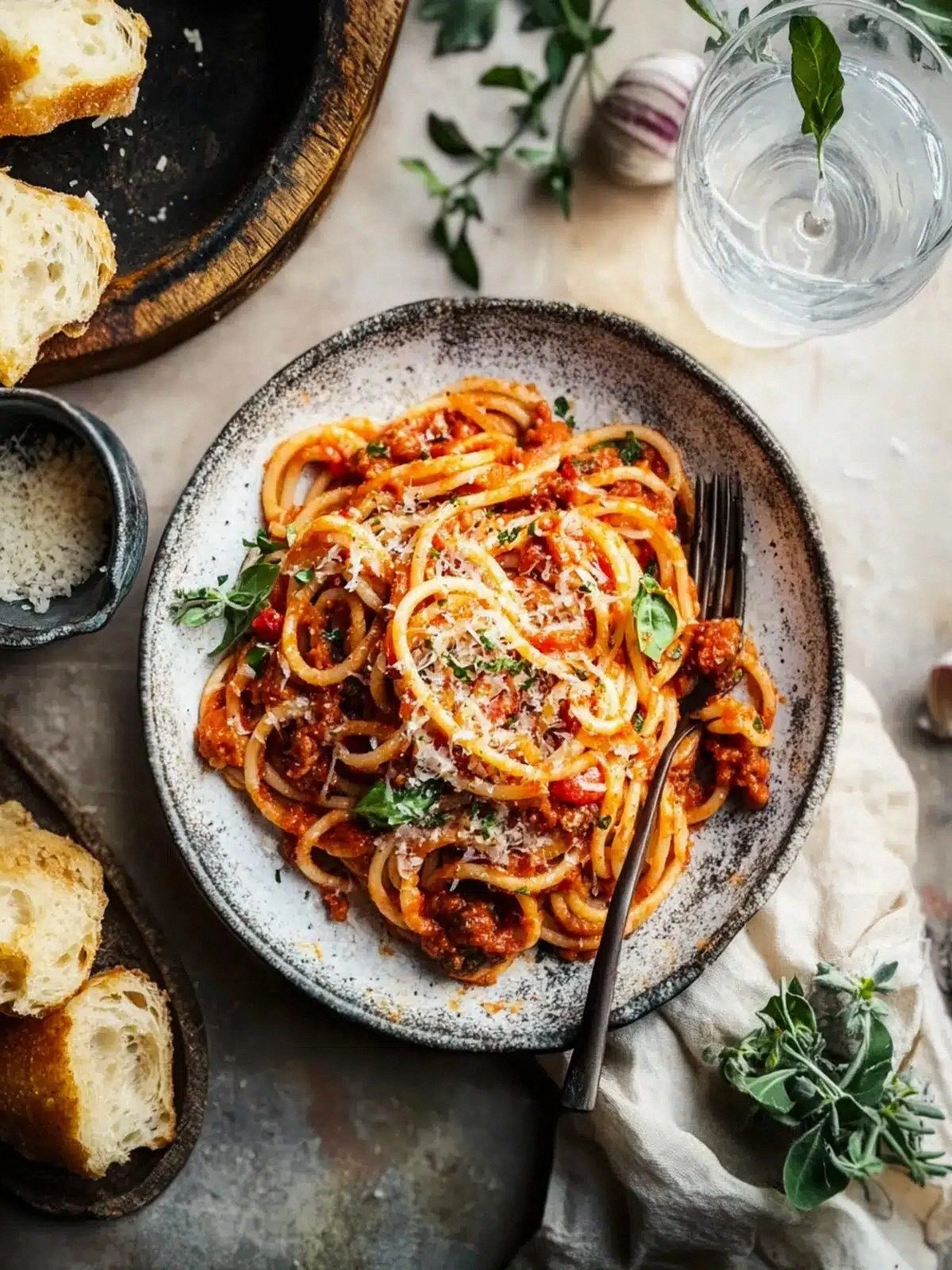
- Serve immediately, garnishing with extra grated Pecorino if desired. The dish should look glossy, the guanciale crisp, and the basil bright. This is the moment to enjoy the culmination of all the flavors.
- If you’re planning ahead, store the sauce separately from the pasta. Reheat the sauce gently over low heat, adding a splash of water to restore its silky texture. When reheating the pasta, toss it in a hot skillet for a minute to revive the coating.
That’s it — you did it. But hold on, I've got a few more tricks that'll take this to another level.
Insider Tricks for Flawless Results
The Temperature Rule Nobody Follows
The key to a silky sauce is low, steady heat. Most cooks instinctively crank the heat up, causing the tomatoes to break down too quickly and the sauce to become watery. Keep the simmer gentle, and the sauce will thicken naturally without losing its bright acidity. If you’re using a gas stove, a small flame is enough; on an electric stove, use the lowest setting that keeps a steady bubble.
Why Your Nose Knows Best
Before seasoning, let the sauce sit for a minute and smell it. A rich, meaty aroma is a good sign; if it smells flat, give it another few minutes to develop. Your nose is a reliable guide to flavor balance, so trust it. The aroma will also give you a hint about how much salt is needed.
The 5-Minute Rest That Changes Everything
After cooking, let the pasta rest for five minutes before serving. This allows the noodles to finish absorbing the sauce and the flavors to meld. It also gives the cheese a chance to melt into the sauce, creating a more cohesive bite. A quick rest can turn a good dish into a great one.
The Quick Heat Trick
If you’re reheating the sauce, add a splash of water and reheat over low heat. This prevents the sauce from drying out and keeps it silky. A pinch of extra olive oil can also help restore moisture and flavor. Keep the heat low to avoid scorching.
The Perfect Plate
Serve the pasta in a shallow bowl or wide skillet so the sauce can coat the noodles evenly. A simple garnish of grated Pecorino and a few basil leaves adds color and freshness. The presentation is simple, but it elevates the dish to a restaurant‑style experience.
Creative Twists and Variations
This recipe is a playground. Here are some of my favorite ways to switch things up:
Pancetta Swap
If guanciale is hard to find, use pancetta. The flavor will be slightly different, but the texture remains crisp. It’s a great option for those who prefer a milder taste.
Spicy Kick
Add a pinch of red pepper flakes to the sauce for a subtle heat. The spice pairs well with the richness of the guanciale and adds a layer of complexity. Adjust the amount to your heat preference.
Pesto Fusion
Stir in a spoonful of basil pesto at the end for an herbal burst. The pesto adds a fresh, creamy texture that contrasts with the tomato base. It’s a fun way to give the dish a modern twist.
Vegetarian Version
Replace the guanciale with sautéed mushrooms and add a splash of soy sauce for umami. The mushrooms will provide a meaty texture, and the soy sauce adds depth. This version is still hearty and satisfying.
Cheese Swap
Use aged Parmigiano‑Reggiano instead of Pecorino Romano for a nutty flavor. The cheese will melt into the sauce, creating a creamy coating. This swap gives the dish a slightly sweeter profile.
Herb Infusion
Add fresh oregano or thyme while simmering the sauce. The herbs infuse the sauce with earthy notes that complement the tomatoes. This variation is perfect for those who love aromatic flavors.
Storing and Bringing It Back to Life
Fridge Storage
Store the sauce in an airtight container in the refrigerator for up to four days. Keep the pasta separate to prevent it from soaking up the sauce. When ready to serve, reheat the sauce over low heat, adding a splash of water if it’s thickened.
Freezer Friendly
The sauce freezes well for up to two months. Portion it into individual servings for convenience. Thaw overnight in the refrigerator, then reheat gently over low heat, stirring occasionally.
Best Reheating Method
Reheat the sauce in a saucepan over low heat, adding a tablespoon of water or broth to keep it silky. For the pasta, toss it in a hot skillet for a minute to revive the coating. Finish with a sprinkle of fresh basil for a burst of aroma.