Love this? Pin it for later! 📌
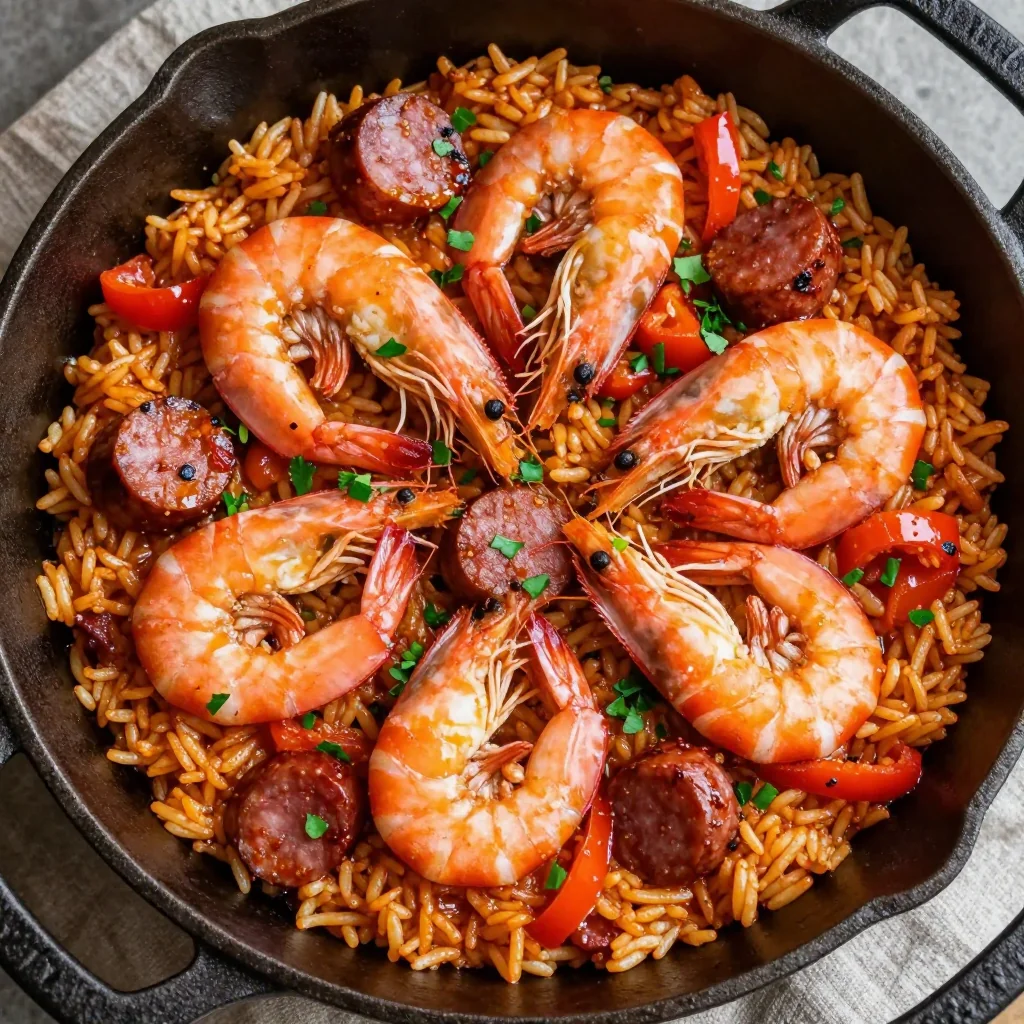
Every January, as Martin Luther King Day approaches, I find myself craving dishes that celebrate the vibrant tapestry of American cuisine—those recipes that tell stories of heritage, community, and the beautiful blend of cultures that define our nation. This jambalaya has become my annual tradition, a dish that pays homage to the rich culinary history of the American South while bringing family and friends together around one glorious pot of aromatic, spiced perfection.
The first time I made this jambalaya was during a particularly cold January weekend when my college roommates and I decided to host a "cultural potluck" to celebrate the long weekend. Being a broke student, I needed something that would feed a crowd without emptying my wallet. Little did I know that this improvised recipe would become the most requested dish in my culinary repertoire. The combination of succulent shrimp, smoky andouille sausage, and perfectly seasoned rice creates a symphony of flavors that transports you straight to the heart of New Orleans, even if you're cooking in a tiny apartment kitchen in the middle of winter.
What makes this recipe perfect for MLK Day is its celebration of diversity—much like Dr. King's vision of unity, jambalaya itself is a beautiful amalgamation of African, French, and Spanish influences. Each ingredient tells a story, each spice adds depth, and when it all comes together in one pot, it creates something far greater than the sum of its parts. Plus, as a busy parent now, I appreciate that this entire feast comes together in just one pot, meaning less cleanup and more time to spend with loved ones discussing the important legacy of this holiday.
Why This Recipe Works
- One-Pot Wonder: Everything cooks together in a single Dutch oven, developing layers of flavor while keeping cleanup minimal
- Perfectly Seasoned Rice: The rice absorbs all the incredible flavors from the holy trinity of vegetables, spices, and rich stock
- Restaurant-Quality at Home: Professional techniques broken down into simple steps that guarantee success every time
- Customizable Heat Level: Easily adjust the cayenne and hot sauce to suit your family's preference
- Feeds a Crowd: This recipe easily serves 8-10 people, perfect for holiday gatherings and potlucks
- Make-Ahead Friendly: The flavors actually improve overnight, making it ideal for busy holiday schedules
- Authentic Louisiana Taste: Combines traditional techniques with accessible ingredients for genuine New Orleans flavor
Ingredients You'll Need
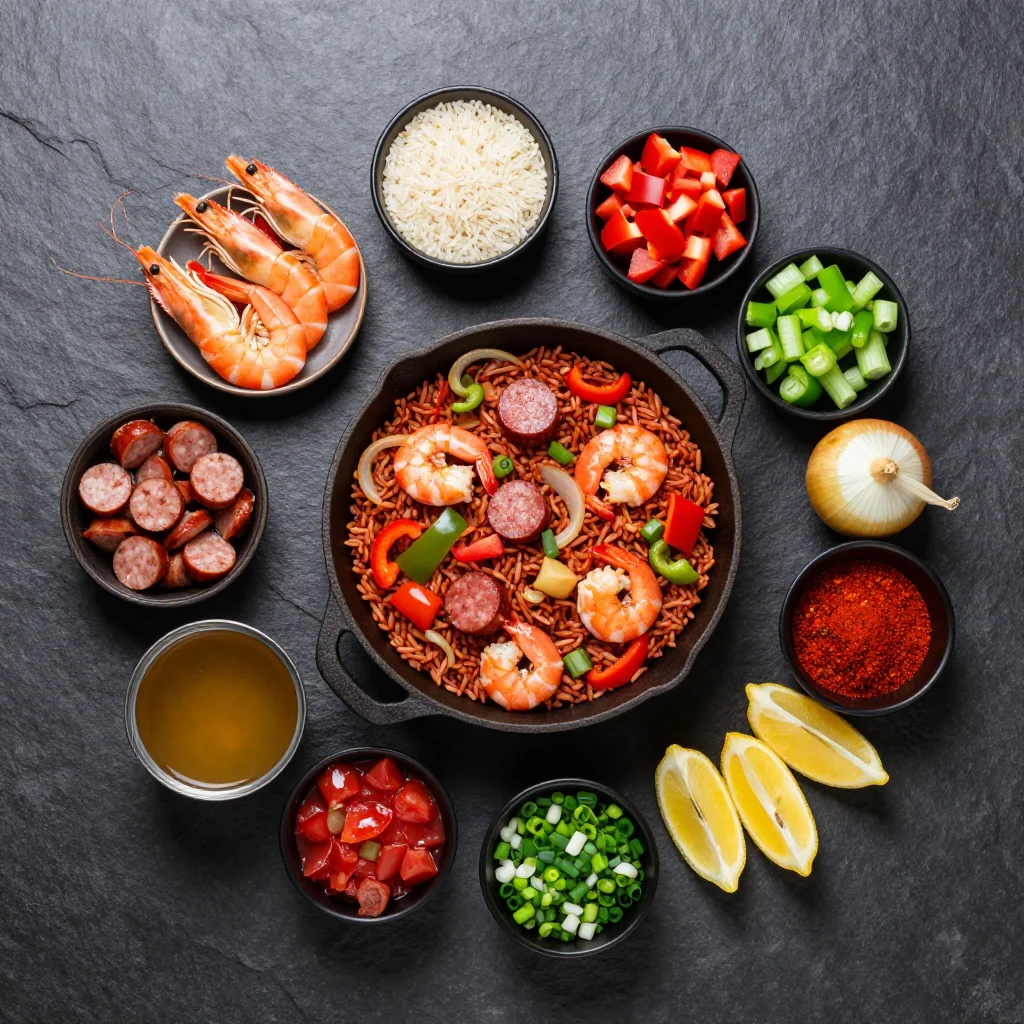
Creating an authentic jambalaya starts with understanding your ingredients. Each component plays a crucial role in building the complex layers of flavor that make this dish so beloved. Let's explore what you'll need and why each ingredient matters:
The Protein Trinity
Large Shrimp (1½ lbs, peeled and deveined): I prefer using 16-20 count shrimp for this recipe—they're substantial enough to hold their own against the bold flavors while cooking perfectly in the final minutes. Fresh Gulf shrimp are ideal if available, but high-quality frozen shrimp work beautifully. Just ensure they're completely thawed and patted dry to prevent excess moisture in your jambalaya.
Andouille Sausage (12 oz): This smoked pork sausage is the backbone of authentic jambalaya. Look for genuine Cajun andouille, which is coarser and more heavily spiced than regular smoked sausage. If you can't find andouille, a good quality smoked kielbasa with extra Cajun seasoning makes an acceptable substitute, though the flavor profile will be slightly different.
Chicken Thighs (1 lb, boneless skinless): Dark meat is essential here—it stays tender and juicy throughout the long cooking process. Chicken breasts tend to dry out, but thighs become more succulent as they simmer in the flavorful broth.
The Holy Trinity & Aromatics
Onion, Bell Pepper, and Celery (1 cup each, diced): Known as the "holy trinity" in Cajun and Creole cooking, this combination forms the aromatic base of countless Louisiana dishes. Use a mix of green and red bell peppers for both flavor and visual appeal. The celery should be fresh and crisp—avoid any limp stalks.
Garlic (6 cloves, minced): Fresh garlic is non-negotiable here. The pre-minced jarred variety simply doesn't provide the same punchy flavor that melds beautifully with the other aromatics.
The Rice & Liquids
Long-Grain Rice (2 cups): Traditional jambalaya uses Louisiana-grown long-grain rice, which stays separate and fluffy. Avoid medium or short-grain varieties, which will become mushy. I recommend brands like Mahatma or Carolina for consistent results.
Chicken Stock (4 cups): Homemade stock elevates this dish to restaurant quality, but a good quality low-sodium store-bought version works well. Warm stock is crucial—cold liquid will shock the rice and affect cooking time.
Crushed Tomatoes (14 oz can): This ingredient actually places our recipe in the Creole rather than strictly Cajun category, but I find the slight acidity and sweetness from tomatoes balances the richness of the meats perfectly.
The Spice Blend
Cajun Seasoning (2 tbsp): While store-bought blends work, I highly recommend making your own for the best flavor. Combine paprika, cayenne, thyme, oregano, black pepper, and white pepper. This allows you to control the heat level and salt content.
Bay Leaves, Thyme, and Smoked Paprika: These supporting players add depth and complexity. Fresh thyme is preferred, but dried works well in the long cooking process. Smoked paprika enhances the smokiness from the andouille.
How to Make MLK Day One Pot Jambalaya with Shrimp and Rice
Prep and Season Your Proteins
Start by patting your shrimp completely dry with paper towels and seasoning them with 1 teaspoon of Cajun seasoning, ½ teaspoon salt, and a pinch of black pepper. Let them marinate while you prepare the other ingredients. Cut the chicken thighs into 1-inch pieces and season with 1 tablespoon Cajun seasoning, ensuring each piece is well-coated. Slice the andouille sausage into ¼-inch thick rounds on the bias—this increases the surface area for better browning and presentation.
Pro tip: Let the seasoned proteins rest at room temperature for 15-20 minutes. This not only allows the flavors to penetrate but also ensures more even cooking.
Sear the Sausage and Build the Flavor Base
Heat 2 tablespoons of vegetable oil in a heavy-bottomed Dutch oven over medium-high heat. When the oil shimmers, add the sliced andouille in a single layer. Let it sear undisturbed for 2-3 minutes until deeply caramelized and the edges are crisp. Flip and repeat on the other side. Remove the sausage with a slotted spoon, leaving behind the rendered fat and those precious browned bits (fond) stuck to the bottom.
Why this matters: The Maillard reaction occurring here creates hundreds of new flavor compounds that will infuse your entire jambalaya with incredible depth.
Brown the Chicken to Golden Perfection
Working in batches to avoid overcrowding (which would steam rather than brown), add the seasoned chicken pieces to the hot Dutch oven. Cook for 4-5 minutes per side until they develop a rich, golden crust. Don't rush this step—proper browning equals flavor. If the pot seems dry between batches, add another teaspoon of oil. Remove the chicken and set aside with the andouille.
Chef's secret: Those dark brown bits stuck to the bottom? That's pure flavor gold. We'll deglaze these later to create an incredibly rich base.
Create the Holy Trinity Foundation
Reduce heat to medium and add the diced onion, bell pepper, and celery to the pot. The moisture from the vegetables will help loosen the fond. Cook for 6-8 minutes, stirring occasionally, until the vegetables are softened and the onions become translucent. Add the minced garlic and cook for another minute until fragrant. This is when your kitchen starts smelling like a Louisiana restaurant!
Timing tip: Don't rush the vegetables—they need time to release their natural sugars, which adds essential sweetness to balance the spicy elements.
Bloom the Spices and Deglaze
Push the vegetables to the sides of the pot and add the remaining Cajun seasoning, smoked paprika, and tomato paste to the center. Cook for 1-2 minutes, stirring constantly, until the spices become fragrant and the tomato paste darkens slightly. This process, called "blooming," releases the essential oils in the dried spices. Pour in ½ cup of the chicken stock and scrape the bottom vigorously with a wooden spoon to release all those flavorful browned bits.
Science moment: The acid in the tomato paste helps break down the fond, while the liquid carries these flavors throughout the entire dish.
Add Rice and Liquid, Then Simmer
Stir in the rice until each grain is coated with the spiced vegetable mixture. This ensures every bite will be flavorful. Add the remaining chicken stock, crushed tomatoes, bay leaves, thyme, Worcestershire sauce, and hot sauce. Return the browned chicken and andouille to the pot. Increase heat to high and bring to a boil, then immediately reduce to low, cover tightly, and simmer for 20 minutes.
Critical point: Once covered, resist the urge to peek! The steam trapped inside is essential for properly cooking the rice.
The Final Shrimp Addition
After 20 minutes, quickly lift the lid and scatter the seasoned shrimp over the surface of the jambalaya. Replace the lid immediately and cook for 5-7 minutes more, just until the shrimp turn pink and curl into a C-shape. Remove from heat and let stand, covered, for 10 minutes. The residual heat will finish cooking the shrimp while the rice absorbs any remaining liquid.
Perfect timing: Overcooked shrimp become rubbery. They should be just cooked through when you remove the pot from heat.
Fluff, Garnish, and Serve
Remove the bay leaves and discard. Using a fork, gently fluff the rice, being careful not to break up the tender shrimp. The rice should be perfectly tender with a slight bite, and the jambalaya should be moist but not soupy. Taste and adjust seasoning with salt, pepper, or additional hot sauce as desired. Garnish with sliced green onions and chopped parsley for freshness and color.
Presentation tip: Serve directly from the Dutch oven at the table for a rustic, communal dining experience that celebrates togetherness.
Expert Tips
Control Your Heat
Maintaining the correct temperature is crucial. Too high and your rice will burn on the bottom; too low and it will be mushy. Keep the liquid at a gentle simmer—you should see tiny bubbles breaking the surface, not a rolling boil.
Stock Temperature Matters
Always use warm or room temperature stock. Cold liquid will cause the rice to seize up and cook unevenly. I microwave my stock for 2-3 minutes before adding it to the pot.
Don't Rush the Browning
Those 15 minutes spent properly browning the meats and vegetables translate directly into flavor. This isn't the step to speed up—good things come to those who wait!
Rice-to-Liquid Ratio
Different rice brands absorb liquid differently. If your jambalaya seems dry after cooking, add hot stock ¼ cup at a time. If it's too wet, remove the lid and cook for 3-5 minutes more.
Make-Ahead Magic
Jambalaya actually improves overnight as the flavors meld. Make it a day ahead, refrigerate, and reheat gently with a splash of stock. It's perfect for entertaining!
Protein Balance
Feel free to adjust the protein ratios based on preference or budget. More shrimp, less chicken, or even substitute crawfish when in season—the technique remains the same.
Variations to Try
Seafood Lover's Deluxe
Replace the chicken with ½ pound each of crawfish tails and lump crabmeat. Add the crawfish with the shrimp and gently fold in the crabmeat at the very end to preserve those precious lumps.
Special OccasionVegetarian Bayou
Omit all meats and use vegetable stock. Add 2 cups diced zucchini, 1 cup corn, and 2 cans red beans. Use smoked paprika and liquid smoke to maintain that characteristic smoky flavor.
Meatless MondayGame Day Jambalaya
Add ½ pound diced alligator sausage or boudin for an authentic Louisiana experience. Serve in individual bread bowls for a fun party presentation that keeps the food warm longer.
Party FavoriteStorage Tips
Refrigeration Guidelines
Allow the jambalaya to cool completely before storing—never more than 2 hours at room temperature. Transfer to airtight containers and refrigerate for up to 4 days. The flavors actually intensify overnight, making leftovers something to look forward to. For best results, store in shallow containers to ensure rapid, even cooling.
Freezing Instructions
Jambalaya freezes beautifully for up to 3 months. Portion into freezer-safe bags, press out excess air, and label with the date. Thaw overnight in the refrigerator before reheating. Note: the texture of the shrimp may change slightly upon freezing, becoming firmer. For best results, you can remove shrimp before freezing and add fresh ones when reheating.
Reheating Perfection
Reheat gently in a covered pot over low heat, adding ¼-½ cup of chicken stock or water to restore moisture. Stir occasionally to prevent sticking. Microwave reheating works in a pinch—use 50% power in 1-minute intervals, stirring between each. Never reheat jambalaya more than once, and ensure it reaches 165°F internally.
Frequently Asked Questions
Yes, but with adjustments. Brown rice needs 45-50 minutes of cooking time and an additional ½-¾ cup of liquid. Add the shrimp only during the last 5-7 minutes to prevent overcooking. The texture will be nuttier and chewier than traditional jambalaya, but many find this a welcome variation.
While andouille is traditional, you can substitute with smoked kielbasa or Polish sausage plus ½ teaspoon each of thyme, oregano, and cayenne. For a closer match, add 1 teaspoon liquid smoke. Avoid Italian sausage—it has completely different seasonings that will clash with the Cajun spices.
First, rinse your rice until the water runs clear to remove excess starch. Use the correct rice-to-liquid ratio (1:2 for long-grain), and maintain a gentle simmer—not a boil. Once covered, don't stir or lift the lid, which releases steam and disrupts cooking. Finally, let it rest off heat for 10 minutes before fluffing.
Traditional jambalaya has a noticeable but not overwhelming heat. Start with less cayenne and hot sauce—you can always add more at the table. The beauty of homemade is controlling the spice level. For kids or spice-sensitive guests, serve with hot sauce on the side so everyone can customize their bowl.
Creole jambalaya (often called "red jambalaya") includes tomatoes, as in this recipe, and tends to be more common in New Orleans. Cajun jambalaya omits tomatoes and usually has a smokier, deeper flavor from extended browning. Both are authentic—the difference lies in regional preferences and available ingredients throughout Louisiana's history.
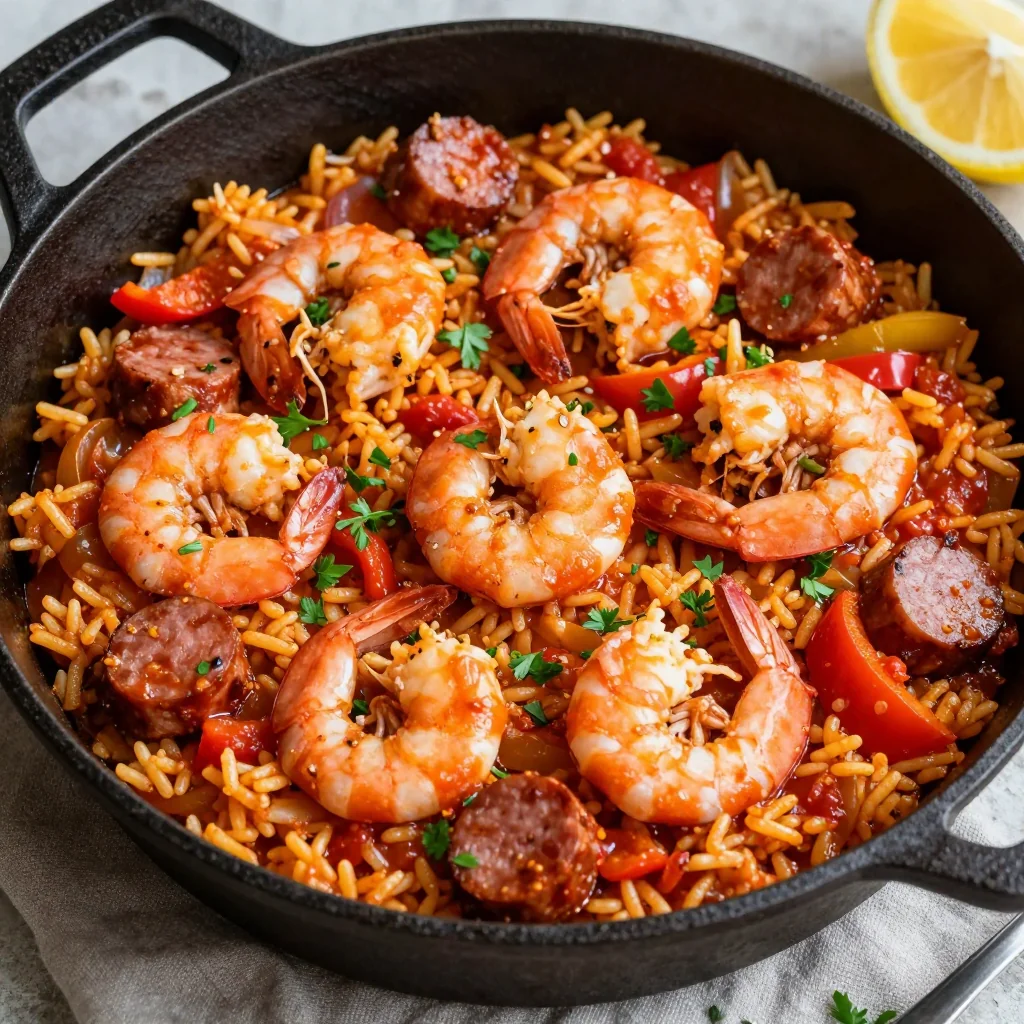
MLK Day One Pot Jambalaya with Shrimp and Rice
Ingredients
Instructions
- Season proteins: Pat shrimp dry and season with 1 tsp Cajun seasoning, salt, and pepper. Season chicken with 1 tbsp Cajun seasoning.
- Brown sausage: Heat 2 tbsp oil in Dutch oven over medium-high heat. Sear andouille until browned, about 4 minutes total. Remove and set aside.
- Sear chicken: In batches, brown chicken pieces until golden, 4-5 minutes per side. Remove and set aside with sausage.
- Build base: Cook onion, bell peppers, and celery until softened, 6-8 minutes. Add garlic and cook 1 minute more.
- Add spices: Stir in remaining Cajun seasoning, smoked paprika, and tomato paste. Cook 1-2 minutes until fragrant.
- Deglaze and simmer: Add rice, stirring to coat. Pour in stock, tomatoes, Worcestershire, hot sauce, bay leaves, and thyme. Return meats to pot. Bring to boil, then reduce to low, cover, and simmer 20 minutes.
- Add shrimp: Scatter shrimp over surface, cover, and cook 5-7 minutes more until shrimp are pink and curled.
- Rest and serve: Remove from heat and let stand 10 minutes. Remove bay leaves, fluff with fork, and garnish with green onions and parsley.
Recipe Notes
For authentic flavor, use Louisiana-grown rice and genuine andouille sausage. The jambalaya thickens as it stands—keep extra warm stock handy for reheating. Adjust hot sauce to taste; traditional jambalaya has a noticeable but not overwhelming heat.