I remember the night I tried to impress my roommates with a quick dinner after a grueling day of coding. I had a bag of ramen, a bottle of soy sauce, and a jar of peanut butter on hand, and I thought, “Why not blend the two?” The result was a bowl of noodles that tasted like a tropical storm in my mouth. The broth was silky, the peanut butter added a creamy crunch, and the miso gave it that umami punch that made everyone ask for seconds. I was so proud that I decided to refine the recipe until it was a masterpiece I could proudly serve at any dinner party.
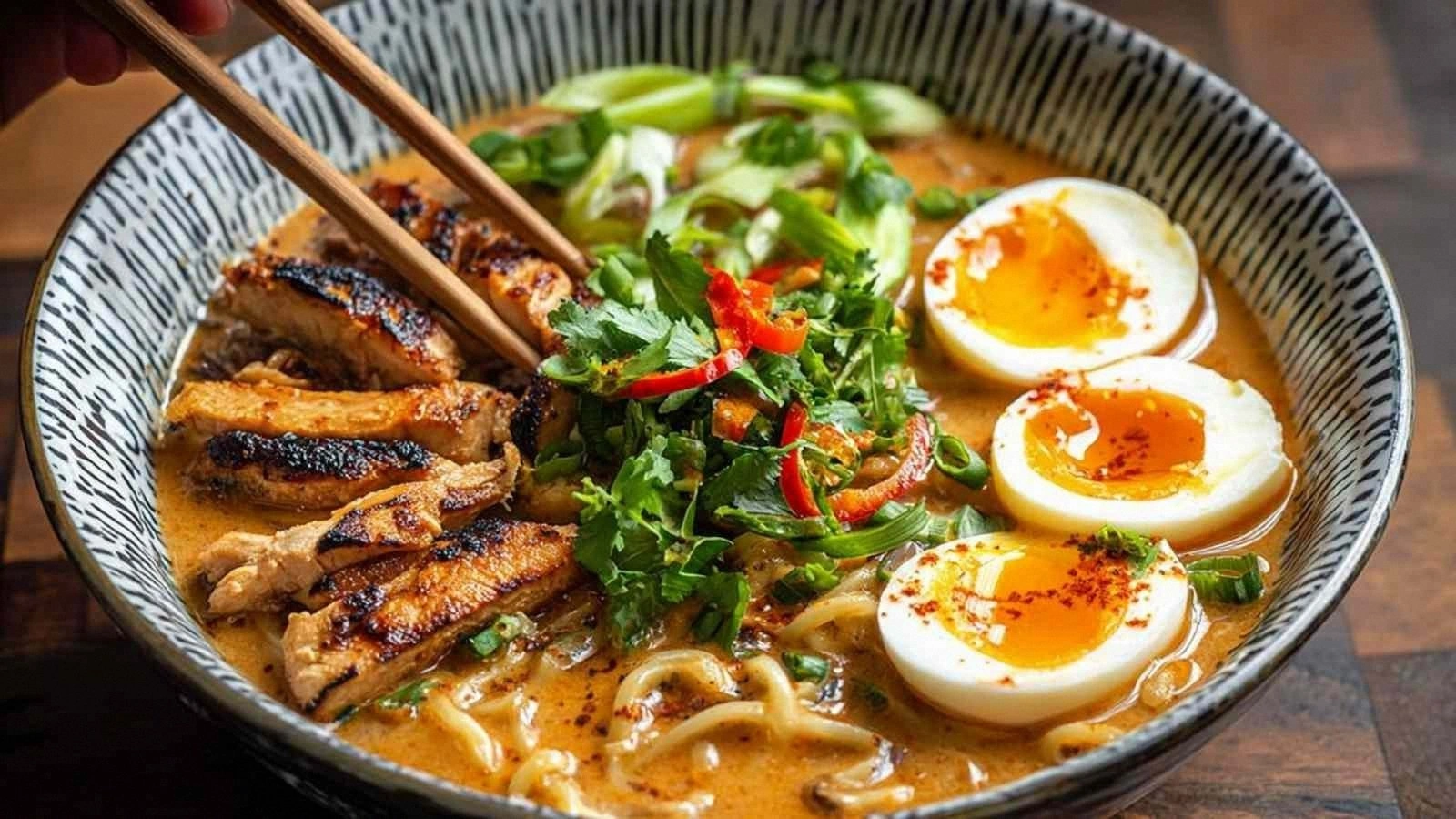
Picture the kitchen: the clatter of pots, the aroma of sizzling garlic, and the faint, comforting scent of miso that drifts through the air. I can almost hear the sizzle when the oil hits the pan, a sound that tells me everything is on track. The visual is a vibrant swirl of colors—deep mahogany broth, bright green bok choy, and the glossy sheen of sesame oil. The texture is a perfect dance of chewy ramen, tender chicken, and crisp beansprouts. And the taste? It’s a bold, nutty, umami-rich symphony that lingers long after the last slurp. This isn’t just another ramen; it’s a culinary revelation that turns a simple pantry into a gourmet playground.
What sets this version apart isn’t just the combination of peanut butter and miso; it’s the way each component is orchestrated to elevate the dish. I’ve tweaked the sauce to coat the noodles like velvet, ensuring every strand is drenched in flavor. The chicken is marinated to lock in moisture, so it stays juicy even after simmering. I’ve added a splash of chili crisp for a subtle heat that doesn’t overwhelm, and the fresh ginger gives a bright, zesty counterpoint to the richness. Most recipes get this completely wrong, focusing only on the noodles or the broth, but I’ve balanced all elements so that each bite is a harmonious experience. And the best part? It’s hands down the best version you’ll ever make at home.
I dare you to taste this and not go back for seconds. If you’ve ever struggled with ramen that feels thin or bland, you’re not alone—this recipe is the fix you’ve been looking for. Picture yourself pulling this out of the pot, the whole kitchen smelling incredible, and seeing friends light up as they take their first bite. This is more than a meal; it’s an invitation to savor a moment of pure culinary joy. Let me walk you through every single step—by the end, you’ll wonder how you ever made it any other way.
What Makes This Version Stand Out
- Bold Flavor: The marriage of peanut butter, miso, and chili crisp creates a sauce that’s simultaneously sweet, salty, and spicy. The nutty undertone from the peanut butter gives the broth a velvety texture that coats the noodles like silk.
- Texture Mastery: The ramen noodles are cooked al dente, providing a satisfying chew, while the shiitake mushrooms add a chewy, earthy bite that contrasts beautifully with the crisp beansprouts.
- Protein Perfection: Marinated chicken breasts remain juicy and tender, delivering a protein punch that balances the rich sauce.
- Ingredient Quality: Using fresh, high‑grade ingredients like fresh ginger and shiitake mushrooms elevates the dish to restaurant‑level flavor.
- Make‑Ahead Potential: The broth can be prepared a day in advance, allowing flavors to meld and making the cooking process even simpler on busy nights.
- Visual Appeal: The vibrant colors—from the emerald bok choy to the golden sesame oil drizzle—make the dish Instagram‑ready.
- Kid‑Friendly: The mild heat and creamy sauce make it a crowd‑pleaser that even the pickiest eaters will love.
- Health‑Friendly: With lean protein, plenty of veggies, and a sauce that uses natural sweeteners, it’s a balanced, wholesome meal.
Alright, let’s break down exactly what goes into this masterpiece…
Inside the Ingredient List
The Flavor Base
The foundation of this ramen is a savory broth that marries miso, soy sauce, and mirin. Miso provides depth and umami, while mirin adds a subtle sweetness that balances the saltiness of soy sauce. The chicken stock is the canvas that lets these flavors paint a rich, comforting backdrop for the noodles.
The Texture Crew
Chicken breasts are the star of the protein lineup. When marinated with soy sauce, mirin, and ginger, they absorb flavor and stay moist after simmering. Shiitake mushrooms contribute an earthy chew, while beansprouts add a satisfying crunch that breaks up the richness. Bok choy provides a tender, leafy contrast, and the green onions lend a fresh, aromatic finish.
The Unexpected Star
Peanut butter and tahini are the unsung heroes that bring creaminess and nutty depth to the broth. When blended with miso and chili crisp, they create a sauce that coats the noodles like velvet. The chili crisp introduces a gentle heat that keeps the dish from feeling flat.
The Final Flourish
Eggs are a classic ramen addition, providing a silky texture when poached or boiled to the desired doneness. Carrot adds a splash of color and a hint of sweetness that balances the savory broth. Sesame oil and vegetable oil are used at different stages to enhance aroma and mouthfeel without overpowering the delicate flavors.
Everything's prepped? Good. Let's get into the real action…
The Method — Step by Step
- Begin by heating the vegetable oil in a large stockpot over medium heat. Add the minced garlic and ginger, letting them sauté until fragrant—about 30 seconds. The aroma should be bright and citrusy, a prelude to the depth that follows. This step is the foundation; don’t rush it or you’ll miss the subtle sweetness that develops.
- Add the sliced shiitake mushrooms to the pot and cook until they release their juices and start to brown. The mushrooms should caramelize slightly, bringing an earthy richness to the broth. This caramelization is key—without it, the broth would taste flat and uninspired.
- Pour in the chicken stock and bring the mixture to a gentle boil. Lower the heat to maintain a simmer, allowing the flavors to meld for 10 minutes. The broth should look like a clear amber liquid, not cloudy, indicating that the stock has extracted maximum flavor from the ingredients.
- While the broth simmers, prepare the sauce. In a small bowl, combine the miso paste, peanut butter, tahini, soy sauce, mirin, chili crisp, and sesame oil. Whisk until the mixture is smooth and creamy. This sauce will coat the noodles like velvet, so make sure it’s lump‑free.
- Season the chicken breasts with a pinch of salt and pepper. Place them in the simmering broth and cook until they are just cooked through—about 8 minutes. The chicken should be tender and juicy, not dry, so keep an eye on it. A good test is to cut into the thickest part; it should be pink and moist.
- Add the ramen noodles to the pot and cook according to package instructions, usually 3–4 minutes for fresh noodles. Stir gently to prevent sticking. Once the noodles are al dente, drain them in a colander and rinse briefly under cold water to stop the cooking process.
- In a separate pan, bring a small pot of water to a rolling boil. Crack the eggs into the water and let them poach for 3–4 minutes for a runny yolk or 5–6 minutes for a firmer yolk. Remove with a slotted spoon and set aside.
- To assemble, divide the noodles into bowls. Pour the hot broth over the noodles, then top with the marinated chicken, sliced bok choy, beansprouts, green onions, and the poached eggs. Drizzle the prepared sauce over the top, and finish with a sprinkle of sesame seeds and a drizzle of sesame oil for an extra layer of aroma. Serve immediately, and watch the steam rise like a fragrant cloud.
- Watch Out: Don’t let the broth boil vigorously after adding the sauce, or the peanut butter can separate. Keep the heat low and stir gently until the sauce is fully incorporated.
That’s it—you did it. But hold on, I’ve got a few more tricks that’ll take this to another level…
Insider Tricks for Flawless Results
The Temperature Rule Nobody Follows
Keep the broth at a steady simmer rather than a rolling boil. A gentle simmer prevents the sauce from separating and keeps the chicken from overcooking. I once let my broth boil, and the sauce turned into a greasy sludge—lesson learned.
Why Your Nose Knows Best
Smell the broth as it simmers. If it smells too sharp, it’s probably over‑cooked; if it’s too mild, give it another 5 minutes. Your nose is a better judge of flavor balance than any timer.
The 5‑Minute Rest That Changes Everything
After cooking the noodles, let them rest in the drained bowl for 5 minutes before serving. This short rest lets the noodles absorb a bit of the broth, making each bite more flavorful.
The Quick Egg Poach Trick
Add a splash of vinegar to the poaching water. The acid helps the egg whites set faster, resulting in a silky, runny yolk that’s perfect for ramen.
The Freshness Check
Use fresh, high‑quality chicken breasts for maximum tenderness. If you’re using pre‑marinated or pre‑cooked chicken, the texture can feel rubbery. Freshness matters.
The Quick Sauce Fix
If the sauce thickens too much, stir in a tablespoon of hot broth to loosen it. This keeps the sauce silky without diluting the flavor.
Creative Twists and Variations
This recipe is a playground. Here are some of my favorite ways to switch things up:
Spicy Sriracha Twist
Swap the chili crisp for fresh sriracha and a dash of lime juice. The heat becomes sharper, and the citrus adds a bright, tropical zing that pairs beautifully with the peanut butter.
Vegan Version
Replace chicken with tofu cubes marinated in soy sauce and mirin. Use vegetable stock and a plant‑based protein source to keep it hearty and satisfying.
Miso‑Glazed Salmon
Swap the chicken for salmon fillets brushed with a miso glaze. The salmon’s richness complements the creamy sauce, creating a decadent, ocean‑inspired ramen.
Kale & Sweet Potato Boost
Add sautéed kale and roasted sweet potato cubes for a nutrient‑dense, earthy variation. The sweet potato adds natural sweetness that balances the savory broth.
Herb‑Infused Finish
Finish the ramen with a handful of fresh cilantro or basil. The herbs add a burst of freshness that cuts through the richness.
Breakfast Bowl
Serve the ramen over a bed of scrambled eggs instead of poached, and top with a fried egg. This creates a hearty breakfast bowl that’s both comforting and satisfying.
Storing and Bringing It Back to Life
Fridge Storage
Store the broth and cooked noodles separately in airtight containers for up to 3 days. Reheat the broth in a saucepan until steaming, then add the noodles and fresh toppings. The broth should be heated to 165°F before serving.
Freezer Friendly
Freeze the broth in portioned containers for up to 2 months. Thaw overnight in the refrigerator, then reheat on the stove. Add fresh noodles and toppings just before serving to preserve texture.
Best Reheating Method
Reheat the broth with a splash of water to maintain moisture. Once hot, add the noodles and let them sit for 1–2 minutes, then top with fresh veggies and eggs. This quick reheat keeps the dish fresh and flavorful.