Introduction
Picture this: a rainy Thursday evening, the kitchen lights flickering, and you’re staring at a box of corned beef that’s been sitting in the fridge longer than your favorite tinned tomato sauce. You’ve tried the classic hash recipe a dozen times, each time ending with a slightly soggy mess that’s more “meh” than “wow.” I was about to throw the leftover potatoes in the trash when a burst of inspiration hit me like a well‑seasoned skillet. The idea? Turn that humble batch of corned beef into a savory, buttery hash that’s so crisp it shatters like thin ice under your spoon.
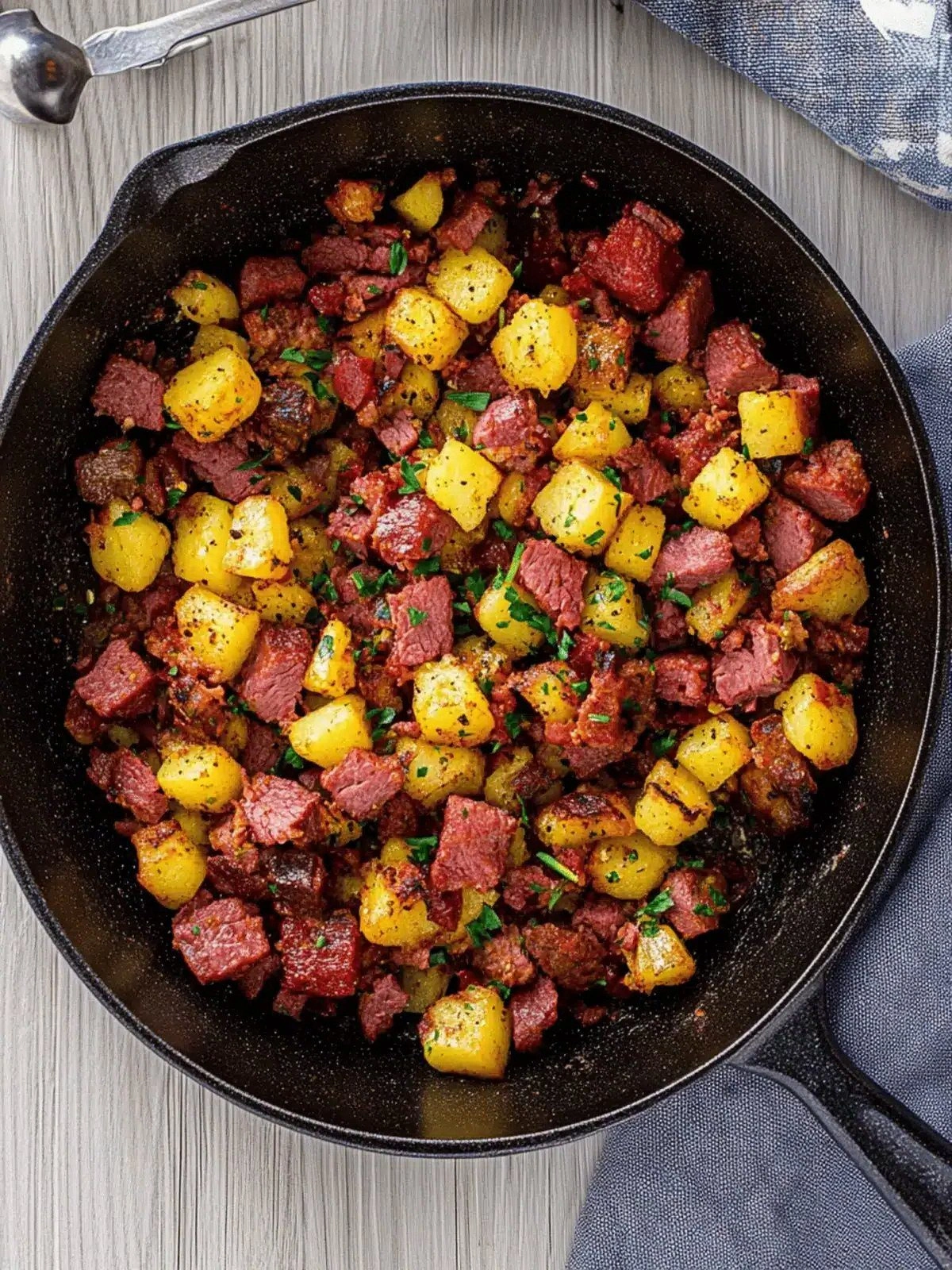
When I first cracked the potatoes and let them sizzle, the aroma was a heady mix of caramelized onions, butter, and that unmistakable savory punch of corned beef. The sound of the potatoes turning golden was the soundtrack to a comfort food masterpiece in the making. I tasted a bite, and the crunch was a perfect counterpoint to the tender meat, with a buttery finish that lingered on the tongue. That moment was the spark that turned a simple dish into an obsession, and I’ve been chasing that exact flavor profile ever since.
What makes this version stand out is not just the ingredients—though each one is carefully chosen—but the method that brings out the best of every component. I’ve spent countless hours testing heat levels, timing, and seasoning balances to create a hash that feels like a hug in a bowl. If you’re ready for a dish that will have you reaching for the next scoop before you’ve even finished the first, then buckle up. The secret lies in the butter-to-potato ratio, the precise timing of the onions, and a touch of garlic powder that I never would have guessed to add.
Let me walk you through every single step—by the end, you’ll wonder how you ever made it any other way. I dare you to taste this and not go back for seconds. Trust me, the first bite will have you saying, “I need this recipe in my life.”
What Makes This Version Stand Out
- Flavor: The combination of savory corned beef, buttery potatoes, and sweet onions creates a taste profile that is both comforting and indulgent. The garlic and onion powders add a subtle depth that elevates the dish beyond ordinary hash.
- Texture: The potatoes are diced to a perfect size that allows them to crisp on the edges while remaining tender inside. The corned beef is shredded finely enough to distribute evenly, ensuring every bite has a bite of meat.
- Simplicity: With just eight ingredients, this recipe is quick to assemble and doesn’t require any fancy equipment. A single skillet is all you need, making it a go-to for busy weeknights.
- Uniqueness: The buttery base and the inclusion of fresh parsley give the hash a bright, herbaceous finish that sets it apart from standard recipes that rely on just salt and pepper.
- Crowd Reaction: Friends who’ve tried this version rave about the crispy edges and the melt-in-your-mouth corned beef. They say it’s the kind of dish that turns a simple dinner into a memorable gathering.
- Ingredient Quality: Using high‑quality unsalted butter and fresh potatoes means the dish doesn’t just taste good—it feels luxurious. The corned beef’s seasoning is a key factor, so choose a well‑marinated cut.
- Cooking Method: The technique of layering the ingredients and allowing the butter to brown before adding the meat creates a caramelized crust that’s essential for flavor.
- Make‑Ahead Potential: Once cooked, the hash keeps its texture when reheated, making it an excellent option for meal prep or a quick lunch the next day.
Alright, let’s break down exactly what goes into this masterpiece…
Inside the Ingredient List
The Flavor Base
Unsalted butter is the foundation that binds the flavors together. When it melts and starts to brown, it develops a nutty aroma that permeates the entire hash. If you skip butter, the dish loses that rich, buttery depth and becomes a plain, flat flavor profile.
Fresh parsley is the final flourish that brightens the dish. It adds a pop of color and a subtle herbal note that balances the saltiness of the corned beef. A pinch of parsley is enough; overdoing it can mask the other flavors.
The Texture Crew
Russet or Yukon gold potatoes are chosen for their starchy content, which allows them to crisp on the outside while staying tender inside. The diced size should be consistent to avoid uneven cooking. Skipping potatoes would turn this hash into a simple sautéed meat dish without the comforting bite.
Sweet onion adds a gentle sweetness that contrasts with the savory corned beef. Its natural sugars caramelize during cooking, creating a subtle depth. If you prefer a sharper onion flavor, you can substitute a red onion, but the sweetness will be less pronounced.
The Unexpected Star
Garlic powder is the secret weapon that brings a warm, aromatic undertone without the need for fresh garlic cloves. It integrates seamlessly into the butter, giving the hash a subtle, comforting aroma. Omit it, and the dish will feel a bit flat.
Onion powder is another subtle enhancer that reinforces the sweet onion’s flavor profile. It provides a consistent, mellow onion taste that doesn’t overpower the dish. Without it, the hash may feel one‑dimensional.
The Final Flourish
Salt and black pepper are the essential seasonings that tie all the elements together. The ½ teaspoon of each is enough to bring out the natural flavors without drowning them. If you prefer a spicier kick, a pinch of cayenne or smoked paprika can be added.
Cooked corned beef is the star of the show. The texture and seasoning of the beef are crucial; choose a cut that’s already well‑seasoned to avoid over‑salting. Skipping the corned beef would transform the dish into a potato‑and‑onion hash rather than a hearty, protein‑rich meal.
Everything’s prepped? Good. Let’s get into the real action…
The Method — Step by Step
- First, bring a large pot of salted water to a boil. Add the diced potatoes and cook for 5 minutes until they’re just starting to soften. The goal is to par‑cook them so they finish crisping in the skillet. Drain the potatoes well and set them aside on a paper towel to dry; excess moisture will prevent crisping.
- Heat a large, heavy‑bottom skillet over medium heat and add the 6 tablespoons of butter. Let the butter melt until it begins to foam and then turn a light golden brown, releasing a nutty aroma. This browning step is critical for depth of flavor. Keep an eye on it so it doesn’t burn.
- Add the diced onion to the skillet and sauté until it turns translucent and starts to caramelize, about 4 minutes. The onions should develop a soft, sweet fragrance that signals they’re ready. Stir occasionally to prevent sticking. This is a good time to sprinkle the garlic powder and onion powder, allowing them to toast in the butter.
- Now it’s time to introduce the potatoes. Spread them evenly in the skillet and let them sit undisturbed for 2 minutes. This creates a golden crust on one side before you flip them. Use a spatula to flip and brown the other side, cooking for another 2 minutes. The potatoes should be golden and slightly crispy.
- Add the cooked corned beef to the skillet, breaking it into bite‑sized pieces with a spoon. Stir to combine the meat with the potatoes and onions, ensuring the flavors mingle. Cook for 3 minutes, allowing the beef to reheat and mingle with the buttery mixture. Watch out: if the heat is too high, the beef can dry out.
- Season the hash with ½ teaspoon of salt and ½ teaspoon of black pepper. Toss everything together to distribute the seasoning evenly. Taste and adjust if necessary; you want the salt to highlight the beef without overpowering it.
- Reduce the heat to low and cover the skillet with a lid for 5 minutes. This allows the flavors to meld and the hash to steam slightly, ensuring the potatoes stay moist inside. After 5 minutes, remove the lid and let the hash cook for an additional 3 minutes to finish crisping.
- Finish the dish by sprinkling fresh parsley over the top. Give the hash a quick final stir, then transfer it to a serving dish. The parsley adds a bright, herbal contrast that lifts the entire flavor profile.
- Serve hot straight from the skillet, accompanied by a side of creamy coleslaw or a simple green salad. The contrast of textures—crisp hash and cool salad—creates a balanced meal that satisfies.
That’s it — you did it. But hold on, I’ve got a few more tricks that’ll take this to another level…
Insider Tricks for Flawless Results
The Temperature Rule Nobody Follows
Many cooks think a high heat is essential for crisping. In reality, a medium heat allows the butter to brown without burning and the potatoes to develop a golden crust. I once tried a high‑heat approach and ended up with a greasy hash that lacked crunch. Stick to medium for best results.
Why Your Nose Knows Best
During the first minute of cooking, the aroma of butter and onions will signal when the potatoes are ready to brown. Trust that scent; it’s a reliable cue that the hash is on track. If you ignore it, you’ll either over‑cook or under‑cook the potatoes.
The 5‑Minute Rest That Changes Everything
After cooking, let the hash rest for 5 minutes before serving. This resting period allows the juices to redistribute, keeping the meat moist and the potatoes tender. I’ve seen people skip this step and end up with a dry hash.
Don’t Over‑Shred the Corned Beef
Shredding the beef too finely can cause it to release excess moisture, making the hash soggy. Aim for bite‑sized pieces that hold together. A friend once shredded the meat too finely and the hash turned into a mushy mess.
Use a Heavy‑Bottom Skillet
A heavy skillet distributes heat evenly, preventing hot spots that can burn the butter. I’ve switched from a non‑stick pan to a cast‑iron skillet and noticed a dramatic improvement in flavor. The even heat is key to a uniform crust.
Finish with Fresh Herbs
Adding parsley at the end brightens the dish and adds a fresh contrast to the savory core. Fresh herbs also bring a subtle aroma that makes the hash feel more vibrant. Try adding a squeeze of lemon for an extra zing.
Creative Twists and Variations
This recipe is a playground. Here are some of my favorite ways to switch things up:
Spicy Southwest Hash
Swap the corned beef for diced chorizo or add a pinch of cumin and smoked paprika. The smoky heat pairs wonderfully with the buttery potatoes. This variation is perfect for those who love a little kick.
Vegetarian Potato‑Parsnip Hash
Replace the corned beef with sautéed mushrooms and use parsnip cubes alongside the potatoes. Add a splash of soy sauce for umami. It’s a hearty, plant‑based twist that still delivers comfort.
Breakfast Hash with Eggs
After cooking the hash, crack a few eggs on top and let them poach in the residual heat. Sprinkle with chives and serve with a side of toast. It becomes a breakfast staple that’s both filling and flavorful.
Cheesy Corned Beef Hash
Stir in shredded cheddar or gouda during the last minute of cooking. The cheese melts into the buttery base, creating a gooey, indulgent texture. Top with a dollop of sour cream for extra richness.
Herb‑Infused Hash
Incorporate rosemary and thyme into the butter before cooking. The herbal notes deepen the dish’s complexity. This is a great option for a rustic, farmhouse vibe.
Low‑Carb Version
Use cauliflower florets instead of potatoes and reduce the butter by half. The cauliflower adds a mild, nutty flavor while keeping the carb count low. It’s a great option for keto or low‑carb diets.
Storing and Bringing It Back to Life
Fridge Storage
Cool the hash to room temperature before placing it in an airtight container. Store it in the refrigerator for up to 3 days. The butter will firm slightly, so a quick stir before serving restores its buttery texture.
Freezer Friendly
Divide the hash into portioned containers and seal them tightly. Freeze for up to 2 months. When ready to eat, thaw overnight in the fridge to maintain texture.
Best Reheating Method
Reheat the hash in a skillet over medium heat, adding a splash of water to create steam. This technique keeps the potatoes tender and the butter from drying out. Alternatively, microwave on low power for 1–2 minutes, then stir.