It started with a kitchen catastrophe that felt like a culinary apocalypse. I was trying to make a quick shrimp stir‑fry, but the shrimp over‑cooked, the sauce turned into a sticky mess, and the noodles were a sad, limp pile on the counter. I stared at the ruined pot, feeling the frustration creep up my neck, when my phone pinged with a notification from a foodie friend: “Try this shrimp pho, it’s a game changer.” I grabbed the recipe, laughed at my own culinary misstep, and decided that if I could salvage that evening, I would create the most unforgettable shrimp pho ever.
Picture the kitchen: the air thick with the scent of garlic and ginger, a bubbling pot of broth that turns from clear to amber in minutes, the clink of chopsticks against a ceramic bowl, the sizzle of shrimp hitting the hot pan, and the steam curling up like a fragrant cloud. The sound of the wok, the sight of the glossy noodles, the feel of the heat radiating from the stove, and the taste of the first spoonful—bright, savory, with a hint of citrus and a gentle heat that lingers—paint a vivid tableau that makes you forget every other recipe you've tried.
What makes this version stand out is not just the combination of flavors but the meticulous layering of aromas, textures, and the clever use of ingredients that most pho recipes overlook. This isn’t a generic take on a classic; it’s a refined, modern twist that elevates every component. The broth is a velvety canvas, the shrimp a tender pop, the noodles silky, and the fresh toppings a burst of color and crunch. The result is a bowl that feels both comforting and adventurous, a dish that will make your taste buds dance and your guests ask for the recipe—again and again.
And there’s a secret you won’t expect—an unexpected ingredient that turns the entire broth into a silky, aromatic masterpiece. I’ll walk you through every single step, from the first stir to the final garnish. By the end, you’ll wonder how you ever made it any other way. I dare you to taste this and not go back for seconds.
What Makes This Version Stand Out
- Flavor Depth: The broth is simmered with star anise, garlic, and ginger, creating a complex, aromatic base that feels like a warm hug.
- Texture Balance: Thin rice noodles glide smoothly through the broth, while the shrimp provide a juicy bite that contrasts with the silky liquid.
- Freshness: The lime, cilantro, and Thai basil add a bright, zesty finish that lifts the dish from ordinary to extraordinary.
- Heat Control: The jalapeño is sliced thin and added at the end, giving a gentle kick without overpowering the delicate flavors.
- Simplicity: With only thirteen core ingredients, the recipe is easy to follow, yet it delivers a restaurant‑quality experience.
- Make‑Ahead Friendly: The broth can be prepared a day in advance, allowing the flavors to deepen while you focus on the fresh shrimp.
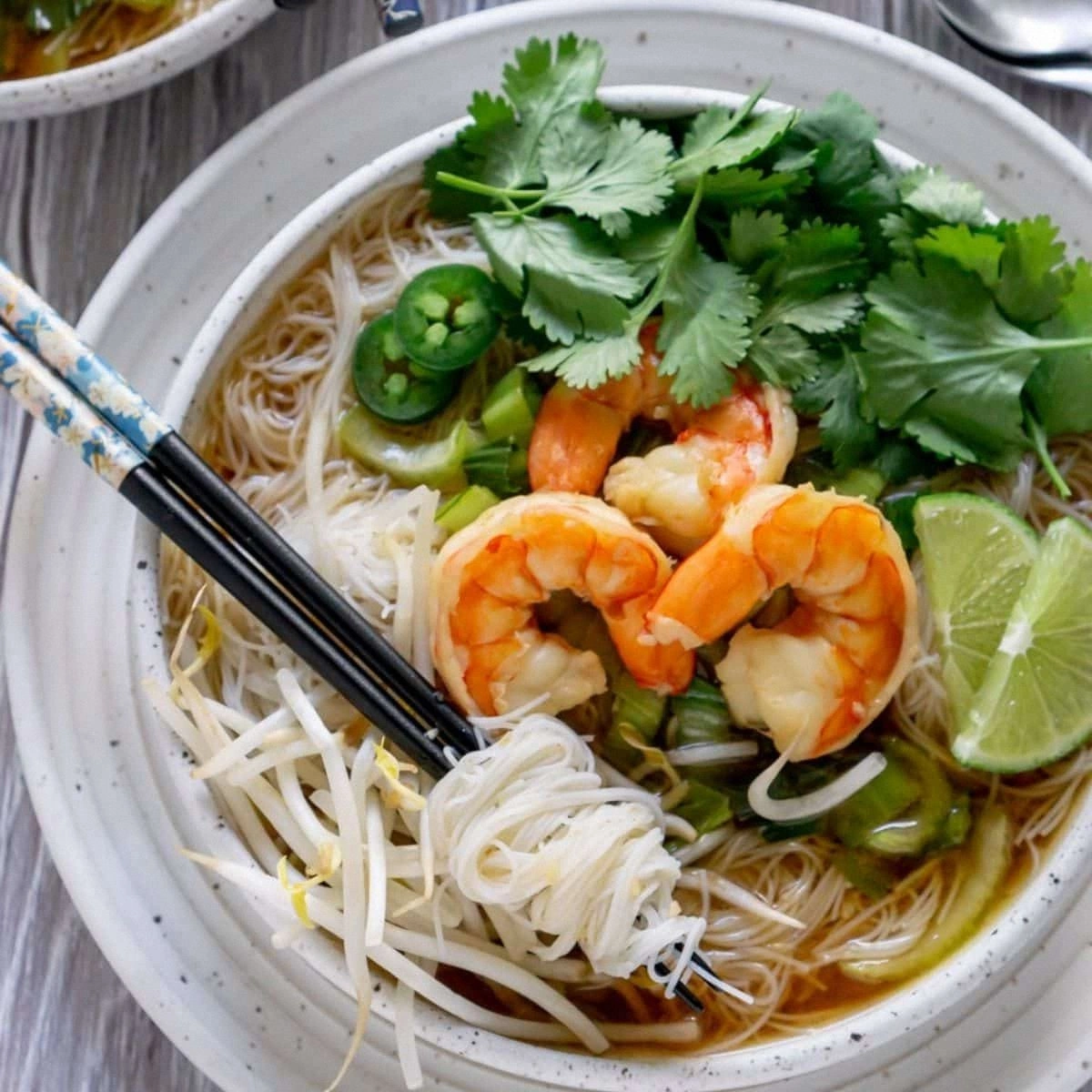
- Visual Appeal: The vibrant green bok choy and bright lime wedges create a bowl that looks as good as it tastes.
- Versatility: Swap shrimp for chicken or tofu, and you have a complete meal for any dietary preference.
Alright, let's break down exactly what goes into this masterpiece. And before we dive into the ingredient details, here's a quick kitchen hack that will save you time and keep your kitchen tidy.
Inside the Ingredient List
The Flavor Base
The star anise, garlic, and grated ginger form the aromatic foundation of the broth. Star anise brings a subtle licorice undertone that warms the palate, while ginger adds a peppery brightness. Garlic gives depth, and together they create a savory symphony that lingers long after the last spoonful. If you skip any of these, the broth loses its soul, becoming a bland, one‑dimensional liquid.
The Sweet‑Savory Balance
Low sodium soy sauce, hoisin sauce, and fish sauce work in harmony to balance sweetness, umami, and a touch of brine. Soy sauce provides the salty backbone, hoisin adds a sweet, slightly tangy depth, and fish sauce injects a marine richness that’s essential to authentic pho. Swapping hoisin for a splash of maple syrup will work in a pinch, but the distinct flavor profile will shift noticeably.
The Fresh Finish
Lime juice and jalapeño pepper bring brightness and heat. The lime’s acidity cuts through the richness of the broth, while the jalapeño’s heat adds a dynamic layer of flavor. If you’re not a fan of heat, reduce the jalapeño or use a milder pepper. The lime can be replaced with a splash of rice vinegar for a different citrus note.
The Texture Crew
Thin rice noodles and fresh bok choy provide the silky and crunchy textures that make every bite interesting. The noodles should be boiled until just tender, then drained and tossed with a splash of sesame oil to prevent sticking. The bok choy adds a fresh, slightly bitter bite that balances the sweet broth. If you prefer a vegetarian version, replace the shrimp with sliced mushrooms for an earthy alternative.
Everything's prepped? Good. Let's get into the real action.
The Method — Step by Step
- Build the Broth: In a large stockpot, heat 1/2 tablespoon of sesame oil over medium heat. Add 3 star anise, 2 minced garlic cloves, and 1 teaspoon grated ginger. Sauté until fragrant, about 2 minutes, watching the aroma rise like incense. This is the moment of truth; the aroma should be rich, not burnt. Then pour in 6 cups of chicken broth, 3 tablespoons low sodium soy sauce, 3 tablespoons hoisin sauce, and 1 teaspoon fish sauce. Bring to a gentle boil, then reduce to a simmer for 20 minutes to let the flavors meld. I dare you to taste this and not go back for seconds.
- Prepare the Shrimp: While the broth simmers, rinse 10 jumbo shrimp under cold water. Peel and devein if they aren’t already. Pat them dry with a paper towel; moisture is the enemy of sear. In a separate skillet, heat 1 teaspoon of sesame oil over high heat. Add the shrimp and sear for 30 seconds on each side until just pink and opaque. Remove and set aside. If you’re in a hurry, you can poach the shrimp directly in the broth for the last 2 minutes of simmering.
- Cook the Noodles: Bring a pot of salted water to a rolling boil. Add 8 ounces of thin rice noodles and cook for 3 minutes or until al dente. Drain and rinse under cold water to stop the cooking process. Toss the noodles with a splash of sesame oil to prevent sticking. Set aside until ready to serve.
- Trim the Bok Choy: Remove the stems from 2-3 heads of bok choy and cut the leaves into bite‑sized pieces. Blanch in boiling water for 30 seconds, then plunge into ice water to maintain their bright green color. Drain and set aside.
- Assemble the Bowl: In each serving bowl, place a handful of noodles, a few bok choy leaves, and a generous portion of seared shrimp. Pour the hot broth over the contents, allowing it to mingle with the ingredients. The broth should steam and sizzle as it hits the bowl, a cue that the heat is just right.
- Final Touches: Slice 1 lime into wedges and 1 jalapeño into thin rounds. Add a splash of lime juice, a drizzle of hoisin sauce, and a sprinkle of fish sauce to taste. Garnish with fresh cilantro, Thai basil, and bean sprouts. The final garnish should look vibrant, like a garden on a plate.
- Serve Immediately: The broth should still be steaming hot when served. The shrimp will be at peak tenderness, the noodles silky, and the bok choy crisp. This is the moment of truth; if you’re ready to eat, the dish is ready too.
- Optional Sriracha: For those who crave an extra kick, add a few drops of sriracha. The heat will dance across the palate, enhancing the overall flavor profile.
That's it—you did it. But hold on, I've got a few more tricks that'll take this to another level. Stay with me here—this is worth it.
Insider Tricks for Flawless Results
The Temperature Rule Nobody Follows
Many cooks keep the broth at a full boil, but the secret to silky broth is a low, steady simmer. Keep the heat low enough that the liquid just shivers. This prevents cloudiness and keeps the flavors concentrated. If you notice the broth starting to look cloudy, reduce the heat immediately.
Why Your Nose Knows Best
When the broth reaches the right depth, it will emit a sweet, garlicky aroma that signals it’s ready. If you’re unsure, trust your nose; a rich aroma means the flavors have melded. A weak aroma often means you need to simmer a bit longer.
The 5‑Minute Rest That Changes Everything
After simmering, let the broth rest for 5 minutes off the heat before serving. This allows the flavors to settle and the aromatics to distribute evenly. I’ve seen bowls that are too hot right off the pot, and that heat can scorch the delicate noodles.
Keep the Shrimp Juicy
If you’re searing shrimp, watch the time closely. Over‑searing dries them out. A quick 30 seconds on each side is all you need. If you’re poaching, keep the broth at a gentle simmer so the shrimp stay tender.
Use Fresh Lime for the Final Touch
Adding lime juice just before serving brightens the broth and balances the richness. A squeeze of fresh lime is far superior to bottled lime juice, which can taste flat. If you’re a fan of extra zest, add a thin slice of lime to the bowl as a garnish.
The Perfect Garnish Balance
Layer your garnishes thoughtfully: start with fresh herbs, then add bean sprouts, and finish with a lime wedge and a dash of sriracha. This creates a visual and flavor gradient that takes the dish from good to unforgettable. A friend tried skipping the basil, and the bowl felt incomplete; the basil is the final flourish.
Creative Twists and Variations
This recipe is a playground. Here are some of my favorite ways to switch things up:
Spicy Thai Twist
Replace the jalapeño with sliced Thai bird’s eye chilies and add a splash of coconut milk. The creamy base will turn the broth into a rich, tropical pho that feels like a beach vacation.
Herb‑Infused Green Pho
Swap the cilantro for a handful of fresh mint and add a few sprigs of Thai basil. The herbaceous notes will give the broth a fresh, almost minty finish that pairs beautifully with the shrimp.
Vegan Delight
Omit the shrimp and add sliced shiitake mushrooms or tofu cubes. Use vegetable broth instead of chicken broth, and keep the hoisin sauce to maintain the sweet‑savory balance. The result is a hearty, plant‑based pho.
Breakfast Pho
Serve the soup with a fried egg on top and a drizzle of soy sauce. The egg adds a rich, velvety texture that turns the dish into a comforting breakfast bowl.
Sake‑Infused Pho
Add a splash of sake to the broth during the last 5 minutes of simmering. The subtle sweetness and depth from the sake elevate the broth into a sophisticated, umami‑rich experience.
Winter Warm‑Up
Add a pinch of ground cinnamon and a splash of dark rum to the broth. The warm spices and subtle caramel notes make this pho a cozy winter favorite.
Storing and Bringing It Back to Life
Fridge Storage
Cool the broth completely before refrigerating. Store in an airtight container for up to 3 days. When ready to use, reheat gently on the stove, adding a splash of water if the broth has thickened. The noodles and shrimp should be added fresh each time to avoid sogginess.
Freezer Friendly
Freeze the broth in portioned containers for up to 2 months. Thaw overnight in the refrigerator, then reheat on the stove. Reheat the noodles separately to keep them from becoming mushy. The shrimp can be frozen before cooking and thawed just before searing.
Best Reheating Method
Reheat the broth over low heat, stirring occasionally. Add a tiny splash of water or broth to restore the original consistency. Once the broth is hot, add fresh noodles, shrimp, and bok choy for a quick, restaurant‑style bowl.