Picture this: a lazy Saturday afternoon, the kitchen humming with the distant chatter of the neighbor's kids playing outside, and me—armed with a half‑cracked skillet and a head of cauliflower that looks like it survived a minor earthquake. I was on a mission to turn that stubborn white veggie into something that could make even a die‑hard meat lover pause, raise an eyebrow, and whisper, “What on earth is that?” The first attempt was a disaster. I tossed raw florets into a bowl, drizzled a bland vinaigrette, and ended up with a soggy mess that tasted like watered‑down olive oil. I was ready to declare cauliflower a lost cause, but then I remembered that one time I watched a Sicilian grandmother coax flavors out of the simplest pantry staples, and I thought, “What if I channel that magic?”
The moment I added the first splash of extra‑virgin olive oil, the kitchen filled with a perfume that reminded me of sun‑kissed Mediterranean groves—green, peppery, with a whisper of earth. The red onion, thinly sliced, sizzled just enough to release a sweet, caramelized scent that made my mouth water. The olives, both Kalamata and green, brought a briny depth that sang in harmony with the capers’ sharp zing. When the cherry tomatoes finally joined the party, their bright juices burst like confetti, painting the salad with ruby‑red flecks that practically glowed against the pale cauliflower. And the herbs—parsley and a daring dash of basil—danced across the palate like a summer breeze through citrus trees.
What makes this version the undisputed champion of cauliflower salads? It’s not just the ingredients; it’s the choreography. I dare you to taste this and not go back for seconds. Most recipes get this completely wrong by either overcooking the cauliflower or drowning it in a vinaigrette that masks its natural crunch. Here, every component plays a starring role, and the dressing clings to each floret like a silk scarf—never too heavy, never too light. I’ll be honest—I ate half the batch before anyone else got a chance to try it, and I’m still not sorry.
Now, brace yourself for a technique that will change everything: I lightly roast the cauliflower florets just enough to bring out a caramelized edge while preserving a crisp interior. This step is the secret weapon that transforms a humble vegetable into a textural masterpiece. Okay, ready for the game‑changer? Let me walk you through every single step—by the end, you’ll wonder how you ever made it any other way.
What Makes This Version Stand Out
- Flavor Explosion: The combination of briny olives, tangy capers, and bright lemon creates a symphony that hits every taste bud, making each bite unforgettable.
- Texture Contrast: Roasted cauliflower offers a caramelized crunch that pairs perfectly with the juicy pop of cherry tomatoes and the snap of red onion.
- Simplicity: Despite the complex flavor profile, the recipe uses pantry staples and takes under an hour from start to finish.
- Uniqueness: The dual‑olive blend (Kalamata and green) adds depth rarely found in standard cauliflower salads.
- Crowd Reaction: Guests often claim this is the best side dish they’ve ever had, and it’s a guaranteed conversation starter at any gathering.
- Ingredient Quality: Using fresh, crisp cauliflower and high‑quality extra‑virgin olive oil elevates the entire dish.
- Cooking Method: Light roasting locks in flavor while keeping the florets sturdy enough for make‑ahead storage.
- Make‑Ahead Potential: The salad holds up beautifully for up to two days, making it perfect for meal prep or potluck planning.
Inside the Ingredient List
The Flavor Base
Cauliflower: Fresh and crisp florets serve as the salad’s star. Look for a medium head that feels firm, with tightly packed white buds that promise a satisfying bite. If you skip the cauliflower, you lose the backbone of the dish, and the salad becomes just a tossed herb medley.
Kalamata olives: These dark beauties are briny gems that add a rich, savory punch. Their deep, almost wine‑like flavor lifts the entire profile, making each forkful feel indulgent. In a pinch, you can swap them for black olives, but you’ll miss that signature Mediterranean depth.
Green olives: Their milder, buttery taste complements the Kalamata olives beautifully. Using a mix of both creates a layered salty experience that keeps the palate intrigued. If you’re allergic to olives, try capers plus a splash of soy sauce for a similar umami boost.
The Texture Crew
Red onion: Thinly sliced, it adds sweetness and a lovely crunch. For a milder taste, consider soaking the slices in cold water for 10 minutes—this removes some of the sharp bite without losing the crunch. Skipping the onion means losing a crucial layer of texture and a subtle sweetness that balances the brine.
Cherry tomatoes: Juicy and sweet, halved cherry tomatoes provide a pop of color and freshness. Their burst of acidity cuts through the richness of the olives and oil, keeping the salad lively. If you can’t find cherry tomatoes, grape tomatoes work just as well.
Capers: Small yet mighty, capers bring a tangy zing that ties all the flavors together. They add a burst of salty brightness that makes the dressing sing. Over‑capping can overwhelm, so a modest tablespoon or two is all you need.
The Unexpected Star
Fresh parsley: This herb brightens the salad and brings a garden‑fresh element. Flat‑leaf parsley offers a robust flavor, while curly parsley adds a visual flourish. Missing parsley would make the dish feel flat and less aromatic.
Fresh basil (optional): Oh‑so‑rewarding! It infuses a fragrant aroma and further enhances the Mediterranean spirit. If you’re not a basil fan, a sprinkle of mint can provide a similar fresh lift.
The Final Flourish
Extra virgin olive oil: A drizzle of high‑quality olive oil elevates the dressing and brings richness. The oil acts as a carrier for the flavors, ensuring each bite is coated evenly. Using a low‑grade oil will make the salad taste greasy and dull.
Red wine vinegar: This acidic element balances richness while giving a slight tang; it’s a must for any good salad dressing. It brightens the overall palate and helps the herbs shine. Substituting with apple cider vinegar works, but you’ll lose that classic Mediterranean note.
Lemon juice: A splash adds brightness; fresh is best, but bottled works in a pinch! The citrus lifts the flavors and adds a sunny finish. Too much lemon can dominate, so keep it balanced.
Dijon mustard: It creates a creamy texture in the dressing and a hint of spice. The mustard emulsifies the oil and vinegar, giving the vinaigrette that velvety coat. Skip it and you’ll end up with a watery dressing that slides off the cauliflower.
Dried oregano: A sprinkle of this dried herb brings warmth and depth. Oregano’s earthy notes complement the olives and capers perfectly. Fresh oregano can be used for a brighter pop, but the dried version is more concentrated.
Salt and pepper: Essential for seasoning and enhancing all the lovely flavors, so use them to taste. A pinch of sea salt can bring out the natural sweetness of the cauliflower, while fresh cracked pepper adds a subtle heat. Over‑salting can mask the delicate balance, so add gradually.
Everything's prepped? Good. Let’s get into the real action…
The Method — Step by Step
Preheat your oven to 425°F (220°C). While the oven warms, toss the cauliflower florets with a drizzle of olive oil, a pinch of salt, and a dash of black pepper. Spread them on a parchment‑lined baking sheet, making sure they’re in a single layer; crowding will steam them instead of roasting. Roast for 15‑20 minutes, shaking the pan halfway through, until the edges turn golden and start to caramelize. Tip: You’ll know they’re ready when the edges pull away from the pan like a shy lover.
While the cauliflower is roasting, prepare the dressing. In a medium bowl, whisk together the red wine vinegar, lemon juice, Dijon mustard, and dried oregano. Slowly drizzle in the extra‑virgin olive oil while whisking vigorously; this creates an emulsion that clings to every floret. Finish with a generous pinch of sea salt and freshly cracked black pepper, then taste and adjust. The dressing should have a bright, tangy snap that makes your mouth pucker just a little.
Slice the red onion as thinly as possible—think paper‑thin. If you’re sensitive to raw onion’s bite, place the slices in a bowl of ice water for 5 minutes, then pat dry. This step softens the sharpness while preserving the crunch, giving the salad a more balanced flavor profile.
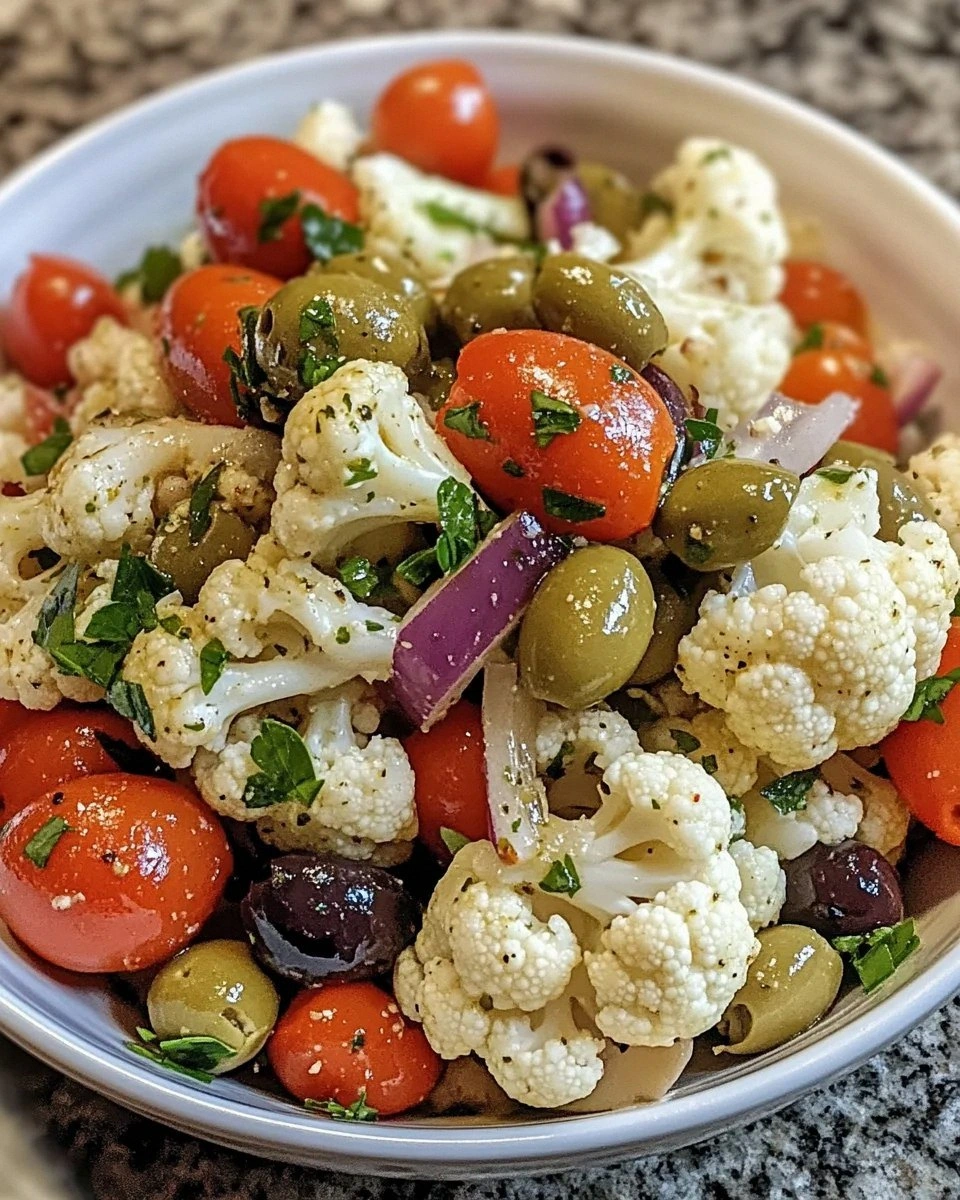
Combine the olives, capers, cherry tomatoes, parsley, and basil in a large mixing bowl. Toss gently to distribute the herbs and briny gems evenly. The colors should already look like a Mediterranean painting—deep purples, glossy greens, ruby reds, and vibrant greens.
When the cauliflower is done, let it cool for about 5 minutes—this is the moment of truth. You want it warm enough to absorb the dressing but not so hot that it wilts the fresh herbs. Transfer the roasted florets into the bowl with the olives and herbs.
Pour the prepared vinaigrette over the salad, then toss gently yet thoroughly. The goal is a glossy coating that hugs every floret, olive, and tomato without smothering the fresh herbs. As you toss, you’ll hear a faint “sizzle” as the warm cauliflower meets the cold dressing—a sound that signals flavor melding.
Let the salad sit for at least 10 minutes before serving. This rest period allows the flavors to marry, and the cauliflower continues to absorb the vinaigrette, becoming even more succulent. During this time, you’ll notice the parsley darkening slightly, a sign that it’s fully infused.
Give the salad one final gentle toss, taste, and adjust seasoning if needed. Serve at room temperature, perhaps with a crusty loaf or alongside grilled fish. And there you have it—Sicilian Cauliflower Salad that will make you the hero of any gathering.
Insider Tricks for Flawless Results
The Temperature Rule Nobody Follows
Never toss a hot dressing onto cold vegetables. The heat helps the oil emulsify and cling, while the warm cauliflower opens its pores to soak up the vinaigrette. I once tried making this salad entirely cold and ended up with a watery bowl that tasted like a missed opportunity. The trick? Let the cauliflower rest for just five minutes after roasting, then combine.
Why Your Nose Knows Best
Before you even taste, give the salad a quick sniff. If you detect a sharp, raw onion note, give it an extra minute of rest; the aromatics will mellow. Trusting your nose can save you from a mis‑balanced bite that would otherwise leave you reaching for more salt.
The 5‑Minute Rest That Changes Everything
Allowing the salad to sit for five to ten minutes after mixing is a game‑changer. The flavors meld, the herbs release their essential oils, and the cauliflower becomes tender without losing its bite. Skipping this step is like serving a song before the chorus—you’ll miss the best part.
Olive Oil Quality Matters
Invest in a good extra‑virgin olive oil with a peppery finish. The oil’s fruitiness is the backbone of the dressing; a cheap oil will taste flat and greasy. I once used a low‑grade oil and the salad felt like a wilted garden, not a Sicilian celebration.
Seasoning in Layers
Season each component individually—salt the cauliflower before roasting, then season the dressing, and finish with a pinch of sea salt at the end. This layered approach builds depth and prevents any single element from being over‑ or under‑seasoned. It’s the culinary equivalent of building a house brick by brick.
Creative Twists and Variations
This recipe is a playground. Here are some of my favorite ways to switch things up:
Spicy Sicilian
Add a pinch of red pepper flakes to the dressing and swap half the Kalamata olives for pepper‑infused olives. The heat will contrast with the sweet tomatoes, creating a lively palate that’s perfect for summer barbecues.
Roasted Garlic Boost
Roast a whole head of garlic alongside the cauliflower. Squeeze the soft, caramelized cloves into the vinaigrette for a mellow, sweet garlic note that deepens the overall flavor.
Nutty Crunch
Toast a handful of sliced almonds or pine nuts and sprinkle them over the finished salad. The nuts add a buttery crunch that pairs beautifully with the briny olives.
Herb‑Heavy Summer
Swap the parsley for a mix of fresh mint and dill, and add a tablespoon of chopped oregano leaves. This herbaceous version feels like a garden stroll on a warm day.
Protein‑Packed
Fold in cooked chickpeas or grilled shrimp for a heartier meal. The added protein makes the salad suitable as a main course while keeping the Mediterranean vibe intact.
Storing and Bringing It Back to Life
Fridge Storage
Transfer the salad to an airtight container and store it in the refrigerator for up to 48 hours. The dressing will continue to permeate the cauliflower, enhancing flavor. Before serving, give it a quick toss and a fresh drizzle of olive oil if it looks a bit dry.
Freezer Friendly
While fresh herbs don’t freeze well, you can freeze the roasted cauliflower separately. Portion it into freezer‑safe bags, label, and store for up to 2 months. Thaw in the fridge, then re‑assemble with fresh herbs and dressing.
Best Reheating Method
If you prefer a warm salad, gently reheat the cauliflower in a skillet over low heat, adding a tiny splash of water (about a teaspoon) to create steam. This revives the texture without drying it out, and the vinaigrette will re‑emulsify beautifully.