Love this? Pin it for later! 📌
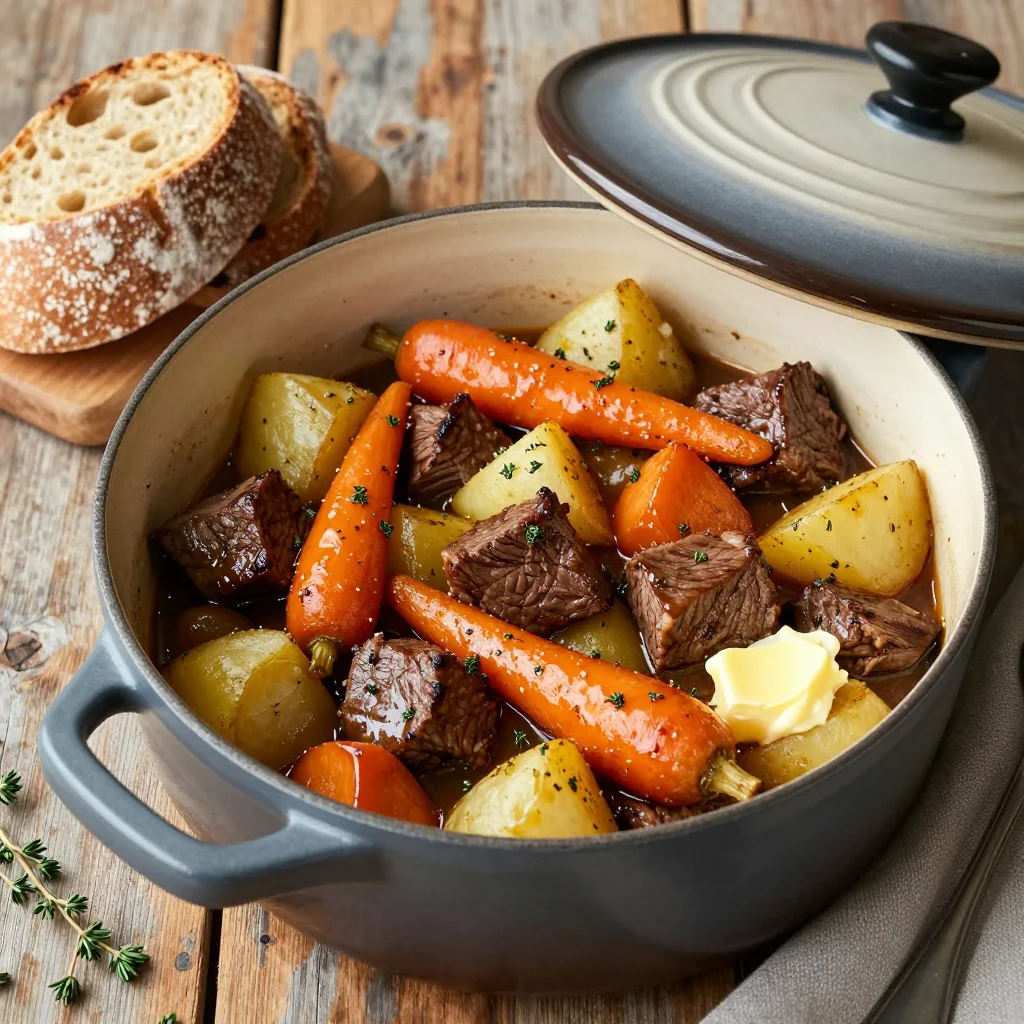
There’s a moment every January when the sky turns that particular shade of pewter and the wind rattles the maple branches against my kitchen windows that I quietly rejoice—not because I love cold weather, but because I know it is finally, unapologetically, beef-stew season. Growing up in northern Michigan, winter meant wood smoke curling from brick chimneys, mittens stiff with ice crystals on the back porch, and the low, steady gurgle of Mom’s avocado-green slow cooker bubbling away on the counter from dawn to dusk. The aroma that drifted through our tiny farmhouse was equal parts promise and patience: tough chunks of chuck roast surrendering to time, winter roots releasing their earthy perfume, and a bay leaf or two casting hints of eucalyptus into the air. When supper finally arrived, we’d crowd around the scratched oak table, knees touching, passing a loaf of crusty rye and ladling thick, mahogany stew until the bowls disappeared under a swirl of steam. That memory—of feeling warm, safe, and impossibly well-fed—was the first thing I chased when I moved south for college. Dorm kitchens didn’t allow slow cookers, so I bought a second-hand one at a yard sale, hid it under my bed, and smuggled it into the communal kitchen after 10 p.m. to recreate the ritual. The recipe has evolved over two decades—wine instead of water, a whisper of smoked paprika, a handful of pearl barley for body—but its purpose remains: to turn the cheapest cuts of beef and the humblest winter vegetables into something that tastes like home, no matter how far you roam. If you, like me, crave a meal that cooks itself while you sled with the kids, finish a jigsaw puzzle, or simply stare out the window at the snow globe world, this slow-cooker beef stew is your answer. Set it, forget it, and return to a supper that hugs you from the inside out.
Why This Recipe Works
- Hands-off luxury: Ten minutes of morning prep yields a complete one-pot dinner that simmers unattended all day.
- Flavour layering: A quick stovetop sear and deglaze before slow cooking creates fond that deepens the gravy to restaurant richness.
- Winter veg medley: Parsnips, rutabaga, and purple-top turnips roast gently without turning to mush.
- Gravy thickening trick: A slurry of potato starch added in the final half hour produces a silky, glossy sauce that clings to every cube of beef.
- Freezer-friendly: Doubles beautifully; leftovers freeze flat in zip bags for up to three months.
- Kid-approved vegetables: Sweet carrots and a touch of tomato paste tame the earthy notes, making it a stealthy way to serve root veggies.
- Budget hero: Uses economical chuck roast that breaks down into fork-tender bites after eight low, slow hours.
Ingredients You'll Need
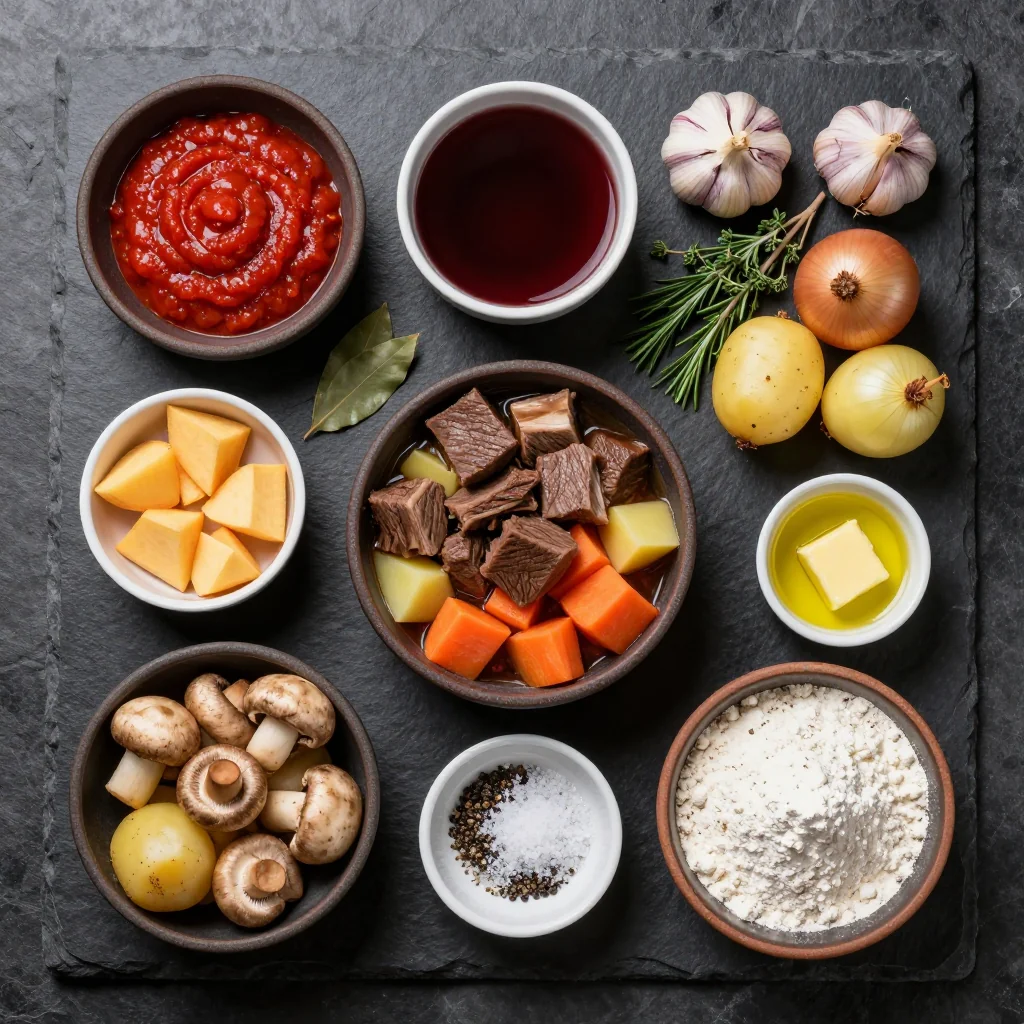
Great beef stew begins at the butcher counter. Ask for a well-marbled chuck roast—ideally the “chuck eye” portion—because the intramuscular fat translates to rich gelatin once it melts. Avoid pre-cubed “stew meat” unless you can inspect it; packages often contain a mix of trimmings that cook unevenly. Cut the roast into 1½-inch chunks yourself; uniformity ensures every cube emerges succulent.
Winter vegetables should feel heavy for their size. Choose parsnips that snap crisply at the tip; if they bend, they’re old and fibrous. Rutabagas (a cross between cabbage and turnip) develop a mellow golden flesh that sweetens as it cooks—look for ones coated in wax, a farmer’s trick to lock in moisture. Purple-top turnips, smaller than a tennis ball, stay mildly peppery without the bitterness of their larger cousins.
For the liquid, I prefer a 50-50 split between low-sodium beef stock and a fruity red wine such as Côtes du Rhône. The wine’s acidity balances the natural sweetness of onions and carrots while its tannins marry with beef proteins, intensifying meaty flavour. Tomato paste adds umami and colour; buy it in a tube so you can use tablespoon increments without opening a whole can.
Finally, keep potato starch on hand for thickening. Unlike flour, it’s gluten-free and activates at a lower temperature, preventing that raw starch taste that can plague slow-cooker gravies. If you can’t find it, substitute an equal amount of arrowroot.
How to Make Slow Cooker Beef Stew with Winter Vegetables for Cozy Family Meals
Pat and season the beef
Dry 3 lb (1.4 kg) chuck roast cubes with paper towels—moisture is the enemy of browning. Season generously with 2 tsp kosher salt, 1 tsp freshly ground black pepper, and ½ tsp smoked paprika. Let stand at room temperature while you prep the vegetables.
Sear for fond
Heat 2 Tbsp canola oil in a heavy skillet over medium-high until shimmering. Brown half the beef cubes 2 minutes per side; transfer to a 6-quart slow cooker. Repeat with remaining beef, adding more oil if needed. Leave the browned bits (fond) in the pan—those caramelized specks are liquid gold.
Build the aromatic base
Reduce heat to medium. Add 1 diced onion and 3 minced garlic cloves; sauté 2 minutes. Stir in 2 Tbsp tomato paste and 1 tsp anchovy paste (optional but transformative); cook 1 minute. Deglaze with ½ cup red wine, scraping the fond until the skillet looks almost clean.
Load the slow cooker
Scrape the onion mixture over the beef. Add 1 lb (450 g) quartered small purple-top turnips, 1 lb peeled rutabaga chunks, 3 large carrots cut into 2-inch batons, 2 parsnips sliced ½-inch thick, 2 bay leaves, 3 sprigs thyme, 1 tsp Worcestershire, 2 cups beef stock, and 1 cup red wine. The liquid should barely cover the solids.
Low and slow magic
Cover and cook on LOW 7½ hours. Resist lifting the lid; each peek drops the internal temperature 10–15 °F and adds 20 minutes to the cook time. The stew is ready when a fork slides through beef with zero resistance.
Thicken the gravy
In a small jar shake 3 Tbsp potato starch with ¼ cup cold water to create a slurry. Stir into the stew, cover, and cook on HIGH 30 minutes more. The gravy will turn glossy and coat the back of a spoon.
Brighten and serve
Taste and adjust salt. Remove bay leaves and thyme stems. Stir in 1 cup frozen peas for colour (optional) and a handful of chopped parsley. Ladle into deep bowls over buttery mashed potatoes or alongside crusty bread.
Expert Tips
Overnight marination
Toss raw beef with 1 Tbsp kosher salt the night before; cover and refrigerate. The salt penetrates deep, seasoning from within and helping retain moisture during the long cook.
Deglaze with stout
Swap the red wine for a dark Irish stout. The roasted malt adds coffee and caramel notes that pair beautifully with beef.
High-altitude tweak
Above 3,000 ft, water boils lower; extend low cook time by 1 hour to achieve the same meat tenderness.
Make-ahead mash
Spoon cooled stew into silicone muffin trays, freeze, then pop out “stew pucks” and store in a bag. Reheat two per person for a 5-minute lunch.
Gravy richness booster
Whisk 1 tsp soy sauce into the slurry; the glutamates amplify savoury depth without tasting overtly Asian.
Colour retention
Add frozen peas only in the final 5 minutes; they stay vivid and sweet rather than turning khaki and mushy.
Variations to Try
- Mushroom & Barley: Omit turnips and add 8 oz cremini mushrooms plus ½ cup pearl barley. Increase stock by 1 cup; cook 9 hours on low.
- Horseradish Cream Finish: Stir 2 Tbsp prepared horseradish into ½ cup sour cream; dollop on each serving for a bright, zippy contrast.
- Irish Cider Stew: Replace red wine with hard apple cider and add 1 tsp Dijon mustard; finish with chopped dill.
- Smoky Paprika & Olive: Swap smoked paprika for 2 tsp Hungarian sweet paprika and add ½ cup sliced green olives in the last hour for a Spanish vibe.
- Low-carb option: Replace potatoes and root veg with cauliflower florets and cubed celery root; cook on high 4 hours to prevent over-softening.
Storage Tips
Refrigerate: Cool completely, transfer to airtight containers, and refrigerate up to 4 days. The flavours meld beautifully overnight; many stew aficionados insist it tastes better on day two.
Freeze: Ladle into quart-size freezer bags, press out air, label, and freeze flat up to 3 months. Thaw overnight in the refrigerator, then reheat gently on the stove with a splash of stock to loosen.
Reheat: Warm slowly over medium-low heat, stirring occasionally, until the centre reaches 165 °F. Microwaving is fine for single portions; cover loosely to prevent splatter.
Make-ahead party trick: Cook the stew fully, refrigerate, then skim the solidified fat before reheating. You’ll get a cleaner mouthfeel and a glossy gravy every time.
Frequently Asked Questions
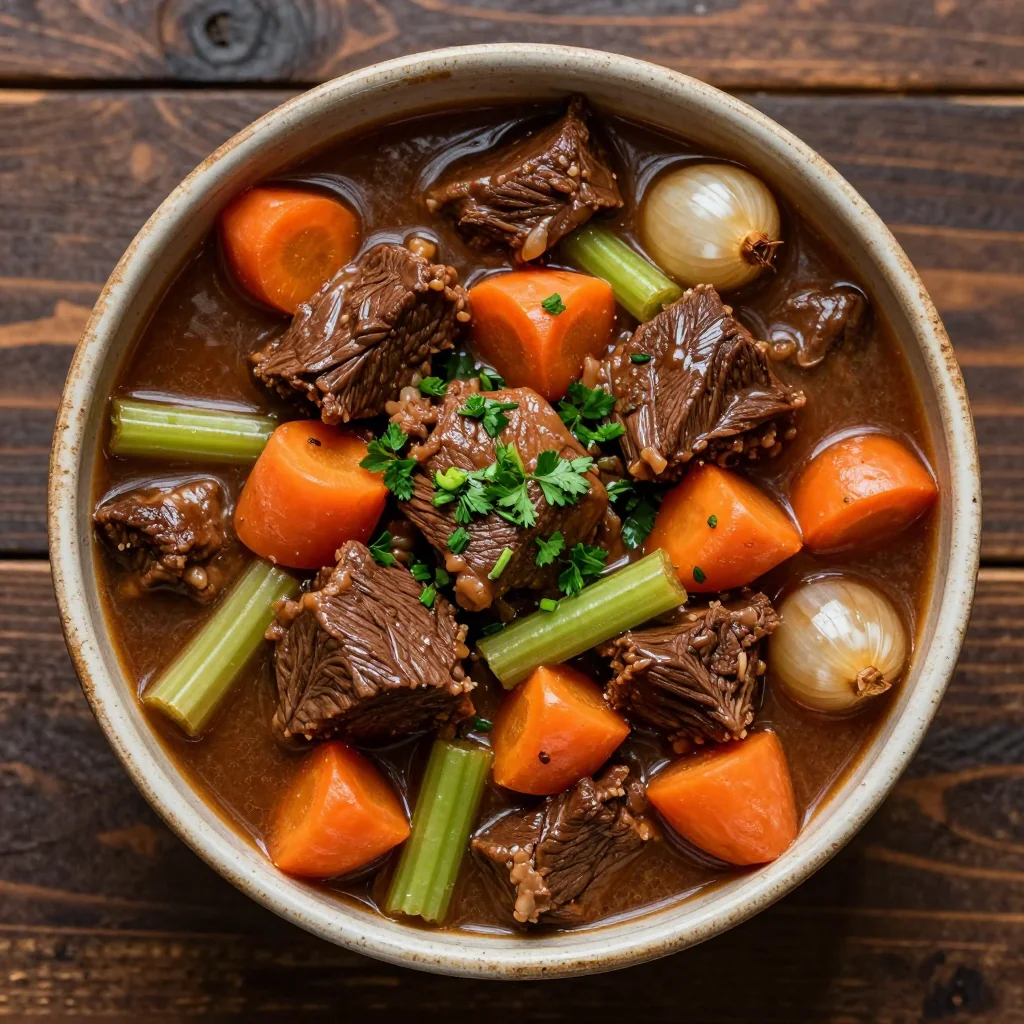
Slow Cooker Beef Stew with Winter Vegetables for Cozy Family Meals
Ingredients
Instructions
- Season beef: Pat meat dry; toss with salt, pepper, and smoked paprika.
- Sear: Heat oil in a skillet over medium-high. Brown beef in batches; transfer to slow cooker.
- Aromatics: In the same skillet, sauté onion and garlic 2 minutes. Stir in tomato paste and anchovy paste; cook 1 minute. Deglaze with wine, scraping up browned bits.
- Combine: Add skillet mixture to slow cooker along with turnips, rutabaga, carrots, parsnips, bay leaves, thyme, Worcestershire, stock, and remaining wine. Liquid should just cover vegetables.
- Cook: Cover and cook on LOW 7½ hours.
- Thicken: Whisk potato starch with cold water; stir into stew. Cover and cook on HIGH 30 minutes more until gravy is glossy.
- Finish: Remove bay and thyme. Stir in peas and parsley; adjust salt. Serve hot.
Recipe Notes
For deeper flavour, sear the beef the night before and refrigerate. The stew can be held on WARM up to 2 hours after cooking; thin with stock if needed.