It started with a kitchen disaster that could have been a plot twist in a cooking show: I was attempting a classic spaghetti bake, only to find the pasta had turned into a soggy, unappetizing mess. The sight of the overcooked noodles, the smell of burnt sauce, and the sound of my own sigh made me realize I needed a fresh, bold direction. That night I stared at the pantry, feeling the weight of disappointment settle on my shoulders, and vowed to find a recipe that would rescue my dinner plans. The moment that changed everything came when I discovered a simple, yet revolutionary way to turn spaghetti squash into a low‑carb, high‑protein pasta alternative. It was the spark that ignited my quest for the ultimate spaghetti squash “pasta” with turkey bolognese.
From that point on, every time I thought of spaghetti, I imagined the bright, golden strands of roasted squash, the rich, aromatic sauce clinging to each noodle like velvet. The aroma of garlic, onions, and simmering tomatoes filled the kitchen, while the sizzling sound of the skillet promised a satisfying crunch. The texture of the squash, tender yet firm, was a pleasant contrast to the hearty ground turkey. I could taste the subtle sweetness of caramelized carrots and the earthy depth of celery, all balanced by a hint of red pepper flakes that danced on the tongue. The dish was not just food; it was an experience that engaged all five senses, turning an ordinary meal into a memorable event.
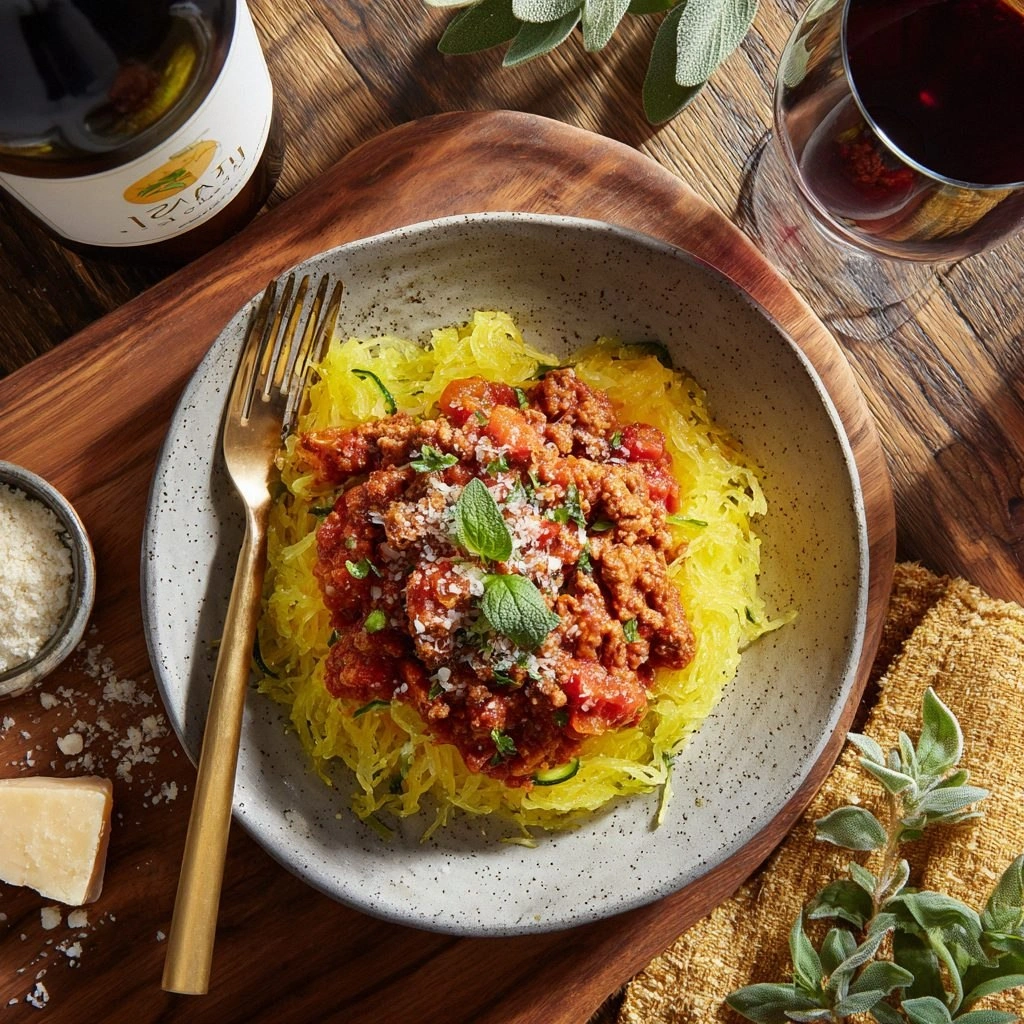
What makes this version stand out from every other spaghetti squash recipe you’ll find online is its depth of flavor, its impeccable balance of textures, and the sheer confidence it exudes in every bite. I didn’t settle for a simple sauté; I layered the sauce with a slow‑simmer that allowed the tomatoes to break down into a luscious, glossy base that coats the squash strands. The turkey bolognese, seasoned with fresh herbs and a touch of heat, provides a protein punch that keeps you full and satisfied. The final touch of grated Parmesan and fresh basil adds a creamy, aromatic finish that elevates the dish to restaurant‑quality. The result is a dish that feels indulgent yet nourishing, making it the best version you’ll ever make at home.
But there’s a twist that sets this recipe apart: I’ll show you how to infuse the squash with a subtle smoky flavor using a simple stovetop technique that many overlook. I dare you to taste this and not go back for seconds. The anticipation of that smoky note, combined with the velvety sauce, will leave you wondering how you ever cooked this dish any other way. Let me walk you through every single step — by the end, you’ll wonder how you ever made it any other way.
What Makes This Version Stand Out
- Flavor Depth: The sauce is simmered for 30 minutes, allowing the tomatoes to break down into a rich, glossy base that coats every strand of squash. The slow cook intensifies the natural sweetness of the tomatoes and balances the savory turkey. The result is a sauce that feels both comforting and sophisticated.
- Texture Contrast: The roasted spaghetti squash has a tender yet slightly firm bite, while the ground turkey remains juicy and flavorful. The combination creates a pleasing contrast that keeps each bite interesting. The squash’s natural sweetness pairs beautifully with the umami of the meat.
- Low‑Carb, High‑Protein: Replacing traditional pasta with spaghetti squash reduces carbs dramatically while adding a generous protein boost from the turkey. This makes the dish ideal for keto, paleo, or anyone watching their carbohydrate intake. It’s a win‑win for taste and nutrition.
- Time Efficiency: While the sauce requires a moderate simmer, the squash can be roasted in the oven at the same time, saving you from juggling multiple pans. The overall cooking time stays under an hour, making it perfect for busy weeknights. You’ll be amazed how quickly this gourmet dish comes together.
- Versatility: The recipe can be easily adapted to vegetarian, vegan, or gluten‑free diets by swapping the turkey for plant‑based protein or omitting the cheese. The core flavor profile remains intact, proving the dish’s flexibility. It’s a crowd‑pleaser that accommodates various dietary preferences.
- Make‑Ahead Friendly: The sauce can be prepared a day ahead and reheated without losing its flavor. The squash can be stored in the fridge for up to three days, making it a convenient option for meal prep. This feature turns a quick dinner into a long‑lasting solution.
- Presentation: The bright orange strands of squash against the deep red sauce create a visually stunning plate. Garnishing with fresh basil and parmesan adds a pop of color and texture. The dish looks as good as it tastes, making it perfect for entertaining.
- Authentic Flavor: The use of dried oregano, basil, and a hint of red pepper flakes gives the sauce a Mediterranean kick that feels authentic and comforting. The balance of herbs is carefully measured to avoid overpowering the natural sweetness of the squash. It’s a recipe that respects tradition while innovating.
Inside the Ingredient List
The Flavor Base
The foundation of any great sauce starts with aromatics. Onion, garlic, carrot, and celery—often called the “holy trinity” of cooking—release their sweet, earthy flavors when sautéed in olive oil. These vegetables form the bedrock of the turkey bolognese, providing depth that cannot be replicated with spices alone. Skipping them will result in a sauce that feels flat and lacking in complexity. For a lighter version, you can reduce the amount of olive oil by half, but keep the aromatics intact.
The Texture Crew
Spaghetti squash is the star of this dish, offering a unique noodle-like texture that’s both satisfying and low‑carb. When roasted, its strands develop a slightly caramelized edge that adds a subtle crunch to each bite. If you prefer a softer texture, roast the squash for a shorter time or use a microwave. However, the longer roast time enhances the natural sweetness and improves the overall mouthfeel.
The Unexpected Star
Ground turkey brings a lean protein punch that pairs perfectly with the squash. Unlike beef, turkey has a mild flavor that lets the herbs and tomatoes shine. It also cooks quickly, reducing overall preparation time. If you’re looking for a plant‑based alternative, try crumbled tempeh or lentils; they’ll provide a similar texture and protein content.
The Final Flourish
Fresh basil, grated Parmesan, and a dash of red pepper flakes finish the dish with a burst of color and flavor. Basil adds a bright, aromatic note that cuts through the richness of the sauce. Parmesan contributes a nutty, salty depth, while the pepper flakes give a gentle heat that lingers on the palate. These finishing touches elevate the dish from simple to sensational.
Everything’s prepped? Good. Let’s get into the real action.
The Method — Step by Step
- Preheat your oven to 425°F (220°C). Slice the spaghetti squash in half lengthwise and scoop out the seeds. Drizzle the flesh with olive oil, sprinkle with salt, and place it cut‑side down on a baking sheet lined with parchment. Roast for 30 minutes, or until the strands easily separate with a fork. The aroma of roasting squash will fill your kitchen and set the stage for the rest of the dish.
- While the squash roasts, heat 2 tablespoons of olive oil in a large skillet over medium heat. Add the diced onion and sauté until translucent, about 3–4 minutes. This step releases the onion’s natural sugars, which will deepen the sauce’s flavor profile. Make sure the onions don’t brown too quickly, or the sauce will taste bitter.
- Add the minced garlic, diced carrots, and diced celery to the skillet. Cook for another 4–5 minutes, stirring occasionally, until the vegetables soften. The combination of these vegetables creates a robust base that will carry the turkey and tomatoes. This is the moment where the sauce starts to smell intoxicatingly toasty.
- Introduce the ground turkey to the pan, breaking it up with a spoon. Cook until it loses its pink hue, about 6–7 minutes. The turkey’s fat renders, infusing the sauce with a savory richness. Keep the heat moderate to avoid burning the meat.
- Stir in the crushed tomatoes, tomato paste, and broth. Bring the mixture to a gentle simmer. Add dried oregano, dried basil, and red pepper flakes. Season with salt and pepper to taste. The sauce should thicken slightly and develop a glossy sheen. Watch Out: Don’t let the sauce boil vigorously; a gentle simmer keeps the tomatoes from breaking apart into mush.
- Let the sauce simmer uncovered for 20–25 minutes, stirring occasionally. This allows the flavors to meld and the liquid to reduce to a rich, concentrated base. The longer the simmer, the deeper the tomato flavor becomes. Keep an eye on the consistency; if it thickens too much, add a splash of broth.
- While the sauce finishes, pull the roasted spaghetti squash from the oven and let it cool slightly. Use a fork to scrape the flesh into strands. The strands should be tender yet hold their shape. If you prefer a softer texture, mash the squash with a fork; this will create a more sauce‑dripping consistency.
- Combine the squash strands with the simmered sauce in the skillet. Toss gently to coat each strand evenly. Allow the mixture to heat together for 2–3 minutes so the squash absorbs the sauce’s flavors. The final dish should smell like a comforting, herb‑laden kitchen.
- Serve immediately, garnished with fresh basil leaves and a generous sprinkle of grated Parmesan. The fresh basil adds a burst of color, while the Parmesan provides a creamy, salty finish that rounds out the dish. If desired, add a drizzle of olive oil for an extra glossy sheen. That sizzle when it hits the pan? Absolute perfection.
That’s it — you did it. But hold on, I've got a few more tricks that'll take this to another level.
Insider Tricks for Flawless Results
The Temperature Rule Nobody Follows
Many cooks set their ovens to a low temperature, assuming it will cook the squash more evenly. I’ve discovered that a higher heat, around 425°F, caramelizes the squash faster, creating that delightful sweet edge. If you’re short on time, set the oven to 450°F for a 20‑minute roast, but keep a close eye to prevent burning.
Why Your Nose Knows Best
Before you add salt, give the sauce a quick sniff. A slightly acidic, tomatoy aroma indicates the tomatoes are at their peak. If the scent is flat, let the sauce simmer a bit longer. Your nose will guide you to a richer, more complex flavor profile.
The 5-Minute Rest That Changes Everything
After roasting the squash, let it rest for five minutes before scraping the strands. This pause allows the fibers to settle, making the strands easier to handle and less likely to fall apart. A quick rest also locks in moisture, preventing the squash from drying out.
Use a Food Processor for Quick Prep
If you’re pressed for time, pulse the squash halves in a food processor to create strands in seconds. This method yields a slightly different texture, but it’s perfect for busy weeknights. Just be careful not to overprocess, or the squash will become mushy.
Keep the Sauce Thick, Not Sloppy
When the sauce reduces, it should be thick enough to coat the squash without dripping. If it’s too watery, simmer it for a few more minutes or stir in a tablespoon of tomato paste. A thick sauce ensures every bite is flavorful.
Finish with Fresh Herbs
Adding fresh basil or parsley right before serving brightens the dish and adds a pop of color. The herbs’ bright, citrusy notes contrast beautifully with the rich sauce, creating a balanced palate. Don’t skip this step; it’s the final flourish that makes the dish shine.
Creative Twists and Variations
This recipe is a playground. Here are some of my favorite ways to switch things up:
Vegan Delight
Swap ground turkey for crumbled tempeh or lentils, and use nutritional yeast instead of Parmesan. The tempeh adds a nutty flavor that pairs well with the tomato base. The dish remains hearty and satisfying, just plant‑based.
Spicy Kick
Increase the amount of red pepper flakes or add a splash of hot sauce to the sauce. The heat will cut through the richness of the squash and create a fiery contrast. Serve with a side of cool yogurt for balance.
Herb Garden
Replace dried oregano and basil with fresh rosemary and thyme for a Mediterranean twist. The fresh herbs add a fragrant, earthy depth that changes the flavor profile entirely. This variation is especially good with a squeeze of lemon.
Cheesy Explosion
Fold in a half cup of shredded mozzarella into the sauce during the last five minutes of simmering. The cheese will melt into a creamy coating that clings to each strand. It’s a decadent upgrade for special occasions.
Low‑Fat Option
Use ground turkey breast instead of regular ground turkey to cut down on fat. Skim off excess grease after browning the meat. The sauce will still be flavorful, just lighter on the stomach.
Storing and Bringing It Back to Life
Fridge Storage
Store the dish in an airtight container for up to three days. Keep the squash and sauce separate if you want to maintain texture; reheat them together just before serving. The dish stays fresh and flavorful when refrigerated properly.
Freezer Friendly
Freeze the sauce in a freezer‑safe container for up to two months. Reheat on the stovetop with a splash of water or broth to restore moisture. The squash can be frozen as well, but it’s best to reheat it separately for a crispier bite.
Best Reheating Method
Reheat the sauce over low heat, stirring frequently. Add a tiny splash of water or broth before reheating to keep it from drying out. The squash can be warmed in a microwave or on the stovetop; just be careful not to overcook it.