I was standing in my kitchen at 7 a.m., half‑asleep, with a pan that still smelled like last night’s burnt toast. I had a steak in the fridge, a sack of Yukon Gold potatoes that were begging to be diced, and an existential dread that only a proper breakfast could cure. I dared a friend to make a “regular” hash while I was still in my pajamas, and she laughed, saying “you’ll never get it right.” Spoiler: she was wrong, and I’m about to prove it. This isn’t just another hash; this is the kind of dish that makes you forget the alarm clock, the traffic, even the fact that you have to go to work later.
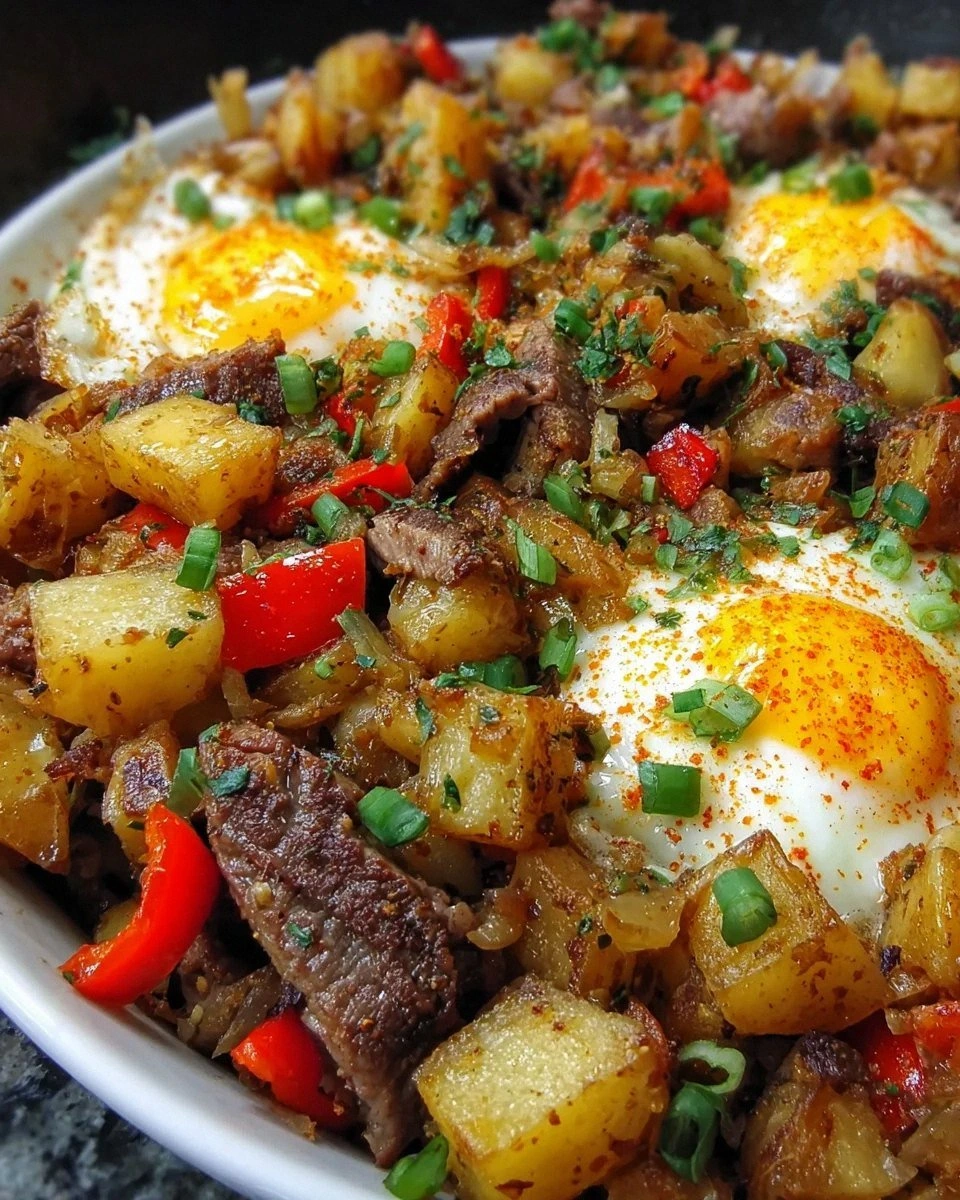
Picture the scene: the skillet is hot enough to make a sizzle that sounds like a tiny fireworks show, the potatoes are hitting the oil and instantly turning golden, the steak is searing and releasing a buttery aroma that makes the whole house feel like a steakhouse on a Sunday morning. You can hear the crackle, smell the faint smokiness of paprika, feel the heat radiating from the stovetop, and already your tongue is tingling in anticipation. The colors are a riot—golden potatoes, ruby‑red peppers, deep‑green bell peppers, and that beautiful caramelized crust on the steak. It’s a sensory overload that feels like a hug from the culinary gods.
Most recipes I’ve tried either drown the steak in oil, over‑cook the potatoes into mush, or forget the crucial “finish with an egg” moment that turns a hearty hash into a breakfast masterpiece. This version, however, balances every element like a seasoned DJ mixing tracks—each ingredient gets its spotlight, then blends into a flawless groove. I’m talking about a crispy edge on the potatoes that shatters like thin ice, a steak that stays juicy inside while the outside is a caramelized crust, and eggs that sit like golden crowns on top. I dare you to taste this and not go back for seconds.
You’ll notice a secret weapon tucked in the ingredient list: a pinch of red pepper flakes that I add right at the end, just before serving. It’s the whisper of heat that makes your palate sit up straight and say, “Whoa, did you really just do that?” And if you’re wondering why I’m using Yukon Gold instead of russet, stay tuned—there’s a chemistry lesson coming up that explains why those buttery potatoes are the perfect canvas. Let me walk you through every single step — by the end, you’ll wonder how you ever made it any other way.
What Makes This Version Stand Out
- Flavor Explosion: The combination of steak juices, caramelized onions, and smoked paprika creates a depth that feels like a five‑course brunch in one bite.
- Texture Symphony: Crispy potato edges meet buttery steak strips and a velvety egg yolk that runs like liquid gold over everything.
- Simplicity Meets Sophistication: Only ten ingredients, but each is treated with a technique that elevates it from pantry‑basic to restaurant‑grade.
- Unexpected Twist: A finishing splash of red pepper flakes adds a surprise kick that most hash recipes skip entirely.
- Crowd‑Pleaser Factor: Whether you’re feeding a family, a brunch crew, or just yourself, the dish gets rave reviews and empty plates.
- Ingredient Quality: Using Yukon Gold potatoes and a good cut of steak (New York, ribeye, or sirloin) makes the flavor shine without needing fancy sauces.
- One‑Pan Efficiency: All the magic happens in a single skillet, meaning less cleanup and more time to admire your creation.
- Make‑Ahead Potential: You can prep the potatoes and veggies the night before, making the morning rush feel like a breeze.
Alright, let's break down exactly what goes into this masterpiece...
Inside the Ingredient List
The Flavor Base
The onion and garlic are the unsung heroes that lay the groundwork for every great hash. A medium yellow onion, when sautéed until translucent, releases natural sugars that caramelize into a sweet, nutty backdrop. Minced garlic adds an aromatic punch that cuts through the richness of the steak, ensuring the dish never feels heavy. If you skip these, you’ll end up with a flat‑tasting hash that feels like a blank canvas—unforgivable.
The Texture Crew
Yukon Gold potatoes are the star of the texture department. Their buttery interior and thin skin mean they crisp up beautifully while staying tender inside. Cut them into uniform ½‑inch dice for even cooking; uneven pieces will either burn or stay soggy. The steak—whether you pick a New York strip, ribeye, or sirloin—provides a meaty chew that contrasts the potatoes. Slice it thinly against the grain to keep it tender; slicing the wrong way makes it rubbery.
The Unexpected Star
Red and green bell peppers bring a pop of color and a crisp bite that balances the softness of the potatoes. The red pepper adds a subtle sweetness, while the green pepper adds a grassy freshness that cuts through the richness. If you’re out of bell peppers, try diced zucchini or even a handful of cherry tomatoes for a juicy twist.
The Final Flourish
Paprika and red pepper flakes are the finishing touches that turn a good hash into a great one. Paprika adds a smoky, slightly sweet note that deepens the overall flavor profile, while the flakes deliver a controlled heat that awakens the palate. Salt and black pepper, of course, are essential for seasoning; think of them as the conductors that bring the entire orchestra together. A splash of vegetable oil ensures everything gets that perfect sear without sticking.
Everything's prepped? Good. Let's get into the real action...
The Method — Step by Step
Heat a large cast‑iron skillet over medium‑high heat until it’s hot enough that a drop of water sizzles and evaporates instantly. Add 2 tablespoons of vegetable oil and swirl to coat the bottom. Once the oil shimmers, it’s ready for the potatoes. Toss the diced Yukon Gold potatoes in, spreading them in a single layer. Let them sit untouched for 3‑4 minutes; you’ll hear a satisfying sizzle that tells you the crust is forming.
After the potatoes develop a golden‑brown edge, flip them with a spatula and let the other side brown. Sprinkle a generous pinch of salt, ½ teaspoon of black pepper, and 1 teaspoon of paprika over the potatoes. Stir gently to coat, then continue cooking for another 5 minutes until the potatoes are tender inside but still crisp on the outside.
Kitchen Hack: Use a splatter guard when flipping potatoes; it keeps oil from jumping while still allowing steam to escape, preserving crispness.While the potatoes are finishing, season the steak. Pat the steak dry with paper towels, then season both sides with a pinch of salt, black pepper, and a dash of paprika. Slice the steak thinly against the grain—this ensures each bite stays juicy. Set the steak aside for a moment while you prep the veggies.
In the same skillet (yes, the same one—this is where the flavor builds), push the potatoes to the edge and add a little more oil if the pan looks dry. Toss in the diced onion, and sauté for 2‑3 minutes until it turns translucent and starts to caramelize. Add the minced garlic (about 3 cloves) and cook for another 30 seconds—watch closely, because garlic burns faster than you think.
Watch Out: If you hear the garlic start to sputter aggressively, lower the heat immediately; burnt garlic turns bitter and will ruin the entire hash.Now add the red and green bell peppers to the skillet. Stir everything together and let the peppers soften for about 3 minutes. Their color should stay vibrant, and you’ll notice a faint sweetness emerging as they caramelize slightly. This is the moment where the dish starts looking like a rainbow on a plate.
Time to bring the steak into the party. Add the thinly sliced steak strips to the pan, spreading them evenly. Cook for 2‑3 minutes, stirring occasionally, until the meat is just cooked through but still pink in the center. The steak will release its juices, which will mingle with the potatoes and veggies, creating a glossy coating that looks like a restaurant‑style glaze.
Make a little well in the center of the hash and crack four large eggs directly into it. Reduce the heat to medium‑low, cover the skillet with a lid, and let the eggs poach in their own steam for about 4‑5 minutes. The whites should set while the yolks stay runny—think of them as golden suns waiting to burst over the hash.
Just before serving, sprinkle a pinch of red pepper flakes over the entire skillet for that final kick. Give everything a gentle toss, being careful not to break the yolks. Taste and adjust salt or pepper if needed. Slide the skillet onto a serving board, and watch the steam rise—picture yourself pulling this out of the pan, the whole kitchen smelling incredible, and everyone reaching for seconds.
That's it — you did it. But hold on, I've got a few more tricks that'll take this to another level...
Insider Tricks for Flawless Results
The Temperature Rule Nobody Follows
Most home cooks crank the heat to “max” hoping for instant crispiness, only to end up with burnt potatoes and a smoky kitchen. The secret is to start medium‑high, let the oil heat, then drop to medium once the potatoes hit the pan. This steady temperature gives the potatoes time to form a crust without scorching. I once tried the “max heat” method; the result was a blackened mess that tasted like regret. Trust the thermometer, not the hype.
Why Your Nose Knows Best
Your sense of smell is a far better indicator of doneness than a timer. When the potatoes start to turn a deep golden‑brown, you’ll notice a nutty, slightly sweet aroma that signals they’re ready to flip. Similarly, the steak will give off a rich, beefy scent once the Maillard reaction kicks in. If you ever doubt a step, trust that nose—it's your built‑in kitchen gauge.
The 5‑Minute Rest That Changes Everything
After you pull the hash from the stove, let it sit for five minutes before serving. This short rest allows the juices from the steak and potatoes to redistribute, preventing a soggy bottom. I used to serve it immediately and noticed the bottom getting soggy within seconds. That five‑minute pause is the difference between a restaurant‑style plate and a home‑cooked disappointment.
Egg Placement Precision
Cracking the eggs directly into a well in the hash, rather than scattering them, ensures they stay centered and the yolks stay intact. This technique also lets the egg whites set against the heat of the hash while the yolks stay luscious. A friend once tried to whisk the eggs into the mix; the result was a scrambled mess that lost the dramatic “runny yolk” effect.
Seasoning Layers, Not One Blast
Season in stages: first the potatoes, then the veggies, and finally the steak. Each layer builds flavor depth, preventing the dish from tasting flat. If you dump all the salt at once, you risk over‑salting the potatoes while the steak remains under‑seasoned. I’ve learned that incremental seasoning is the secret to a balanced hash.
Creative Twists and Variations
This recipe is a playground. Here are some of my favorite ways to switch things up:
Southwest Heatwave
Swap the paprika for smoked chipotle powder, add a handful of black beans, and finish with a drizzle of avocado crema. The result is a bold, smoky hash that pairs perfectly with a cold margarita.
Mediterranean Breeze
Replace the steak with cubed halloumi cheese, add sliced olives, and sprinkle crumbled feta on top. A squeeze of lemon juice right before serving brightens the dish and adds a fresh tang.
Herb‑Infused Garden
Stir in fresh rosemary and thyme when sautéing the onions, and finish with a handful of chopped parsley. The herbaceous notes lift the earthiness of the potatoes and give the hash a spring‑time vibe.
Spicy Korean Twist
Add a tablespoon of gochujang (Korean chili paste) to the skillet after the steak, and top with a fried egg and toasted sesame seeds. The sweet‑spicy glaze transforms the dish into a Korean‑inspired comfort bowl.
Breakfast Burrito Wrap
Take the finished hash, spoon it onto a warm flour tortilla, add some shredded cheese, and roll it up. Grill the burrito for a minute per side for a portable, handheld version of this breakfast masterpiece.
Storing and Bringing It Back to Life
Fridge Storage
Allow the hash to cool to room temperature (no more than two hours), then transfer it to an airtight container. It will keep nicely for up to three days. When reheating, add a splash of water or broth to the pan to create steam, which revives the crispiness without drying out the potatoes.
Freezer Friendly
Portion the hash into freezer‑safe bags, removing as much air as possible. It freezes well for up to two months. To reheat, thaw overnight in the fridge, then heat in a skillet over medium heat, adding a drizzle of oil and a tablespoon of water to restore that fresh‑cooked texture.
Best Reheating Method
The skillet method wins every time. Heat a tablespoon of oil over medium heat, add the hash, and cover for two minutes to steam the interior. Then uncover and press down gently with a spatula; let it sit for another three minutes to re‑crisp the edges. If you’re in a hurry, the microwave works, but you’ll lose the signature crunch.