Picture this: it’s a sweltering Saturday afternoon, the kind where the heat clings to the back of your neck like a clingy ex, and you’re staring at an empty fridge that feels more like a desert than a kitchen. I was halfway through a marathon of Netflix true‑crime documentaries when a sudden craving for something cool, creamy, and vaguely exotic struck me like a lightning bolt. I rummaged through the pantry, found a lone bag of chia seeds, a half‑full coconut milk carton, and a bruised mango that had clearly seen better days. I thought, “Why not turn this into a tropical oasis in a bowl?” and the rest is a deliciously messy story of trial, error, and a triumphant bite that made me gasp, “This is hands down the best version you’ll ever make at home.”
The kitchen was a symphony of sounds: the clink of the spoon against the glass jar, the soft thud of chia seeds hitting the liquid, and the faint hiss of the blender as I pureed mango and pineapple into a sun‑kissed puree. The air smelled like a beachside smoothie bar – sweet mango, tangy lime, and a whisper of coconut that made my nostrils do a little happy dance. My hands felt the cool slickness of the coconut milk as it swirled around the tiny seeds, each one puffing up like a tiny, gelatinous cloud. When I finally tasted the first spoonful, the texture was a perfect marriage of pudding‑like smoothness and a subtle, pleasant crunch, while the flavors sang a tropical chorus that made my taste buds do the hula.
Most chia pudding recipes get this completely wrong – they either end up gritty, overly sweet, or as bland as unsalted rice. The secret? A balance of acidity, natural sweetness, and a dash of tropical flair that elevates the whole thing from “just another breakfast” to “the centerpiece of a lazy brunch.” I’m about to reveal a technique that most recipes skim over: the gentle tempering of the chia seeds with warm coconut milk before chilling, which unlocks a silkier mouthfeel without sacrificing that signature bite. Trust me, this tiny tweak changes the entire game.
So, buckle up. I dare you to taste this and not go back for seconds. Let me walk you through every single step — by the end, you’ll wonder how you ever made it any other way.
What Makes This Version Stand Out
- Flavor Explosion: The combination of mango‑pineapple puree with a splash of lime creates a bright, tangy backdrop that cuts through the richness of coconut milk, delivering a balanced sweet‑sour profile that dances on the palate.
- Texture Perfection: Soaking the chia seeds in warm coconut milk before chilling ensures they bloom evenly, giving the pudding a luxuriously creamy consistency with just the right amount of bite.
- Simplicity Meets Sophistication: Only ten ingredients, all pantry‑friendly, yet the result feels like something you’d order at a high‑end café on a beachside balcony.
- Ingredient Quality: Using full‑fat coconut milk and fresh tropical fruit (or high‑quality frozen if out of season) adds depth and authenticity that cheap substitutes simply can’t mimic.
- Crowd‑Pleaser: Whether it’s a family breakfast, a post‑workout snack, or a dessert for guests, this pudding consistently earns rave reviews and empty bowls.
- Make‑Ahead Magic: The pudding holds its texture beautifully for up to three days in the fridge, making it perfect for meal‑prepping without turning gummy.
- Health Boost: Chia seeds pack omega‑3s, fiber, and protein, while the fruit adds vitamins A and C, turning indulgence into nourishment.
- Visual Appeal: Layered with bright fruit and a sprinkle of toasted coconut, it looks as Instagram‑worthy as it tastes.
Inside the Ingredient List
The Flavor Base
Coconut Milk (2 cups): This is the luscious foundation that carries the tropical vibe. Full‑fat coconut milk gives a rich, buttery mouthfeel that low‑fat versions lack. If you skip it for almond milk, you’ll lose the authentic island aroma and the pudding may turn watery. Pro tip: Shake the can vigorously before opening to blend the cream and water for an even texture.
Mango Puree (½ cup): Fresh mango adds natural sweetness and a silky body. Its high pectin content helps thicken the pudding subtly. If you don’t have fresh mango, frozen chunks blended with a splash of water work just as well. Skipping mango means losing that sunshine‑kissed flavor that makes this pudding sing.
The Texture Crew
Chia Seeds (½ cup): Tiny powerhouses that absorb up to ten times their weight in liquid, creating the pudding’s gelatinous texture. Using old or stale chia can result in a gritty mouthfeel, so always check the expiration date. If you’re allergic to chia, ground flaxseed can substitute, but expect a slightly different texture.
Honey (2 tbsp): A natural sweetener that complements the fruit without overpowering it. It also helps the chia seeds bind a little better. In vegan mode, swap for maple syrup; the flavor will shift to a caramel note, which is still delicious.
The Unexpected Star
Lime Juice (2 tbsp): The acid cuts through the richness, brightening every bite and preventing the pudding from feeling cloyingly sweet. A squeeze of lime also enhances the chia’s ability to gel, thanks to the slight acidity. If you forget the lime, the pudding will taste flat and overly sweet.
Vanilla Extract (1 tsp): Adds depth and rounds out the tropical flavors, giving a warm undercurrent that balances the bright fruit. Pure vanilla is best; imitation can introduce a metallic aftertaste.
The Final Flourish
Fresh Pineapple (½ cup, diced): Adds a juicy, slightly tart pop that contrasts the creamy base. It also introduces a pleasant texture variation. If you use canned pineapple, drain it well to avoid excess liquid.
Sea Salt (pinch): Just a pinch amplifies the sweet and sour notes, making the flavors pop. Too much, and you’ll ruin the dessert; too little, and the pudding may taste dull.
Shredded Coconut (2 tbsp, toasted): Sprinkled on top for a crunchy, nutty finish that adds visual appeal. Toasting the coconut brings out a caramelized aroma that elevates the dish from ordinary to extraordinary.
Fresh Mint Leaves (4 leaves, optional): A garnish that adds a refreshing herbal note and a pop of green color. If you’re not a fan, basil or cilantro can provide an adventurous twist.
Everything's prepped? Good. Let’s get into the real action…
The Method — Step by Step
Start by warming the coconut milk in a small saucepan over low heat. You want it just barely steaming – think of the gentle sigh of a summer breeze, not a rolling thunderstorm. As soon as you see tiny bubbles forming around the edges, remove it from the heat. This warm liquid will coax the chia seeds into blooming evenly, preventing those dreaded clumps.
While the milk is warming, grab a blender and combine the mango puree, pineapple chunks, lime juice, honey, and vanilla extract. Blend on high until the mixture is smooth and glossy, resembling a tropical sunrise in a glass. Pause and taste – you should feel a bright zing from the lime balanced by the mango’s mellow sweetness. Adjust the honey if you like it sweeter; remember, the chia will mute the sweetness slightly as it sets.
Now, pour the warm coconut milk into a large mixing bowl. Sprinkle the chia seeds over the surface and whisk vigorously for about 30 seconds. This is the moment of truth: the seeds should start to look like they’re disappearing into the liquid, forming a slightly gelatinous sheen.
Kitchen Hack: If you have a hand‑held frother, give the mixture a quick spin after whisking; it creates an ultra‑smooth base.Stir the fruit‑lime‑honey blend into the chia‑coconut mixture until fully incorporated. The color should turn a soft, pastel coral, and you’ll notice a faint aroma that makes you think of a beachside cabana. This is where the flavors truly marry – the chia’s neutral canvas lets the tropical notes shine.
Cover the bowl with plastic wrap and transfer it to the refrigerator. Let it chill for at least 30 minutes, but for the best texture, aim for a full 2‑hour rest. During this time, the chia seeds will absorb the liquid, swelling to create that pudding‑like consistency.
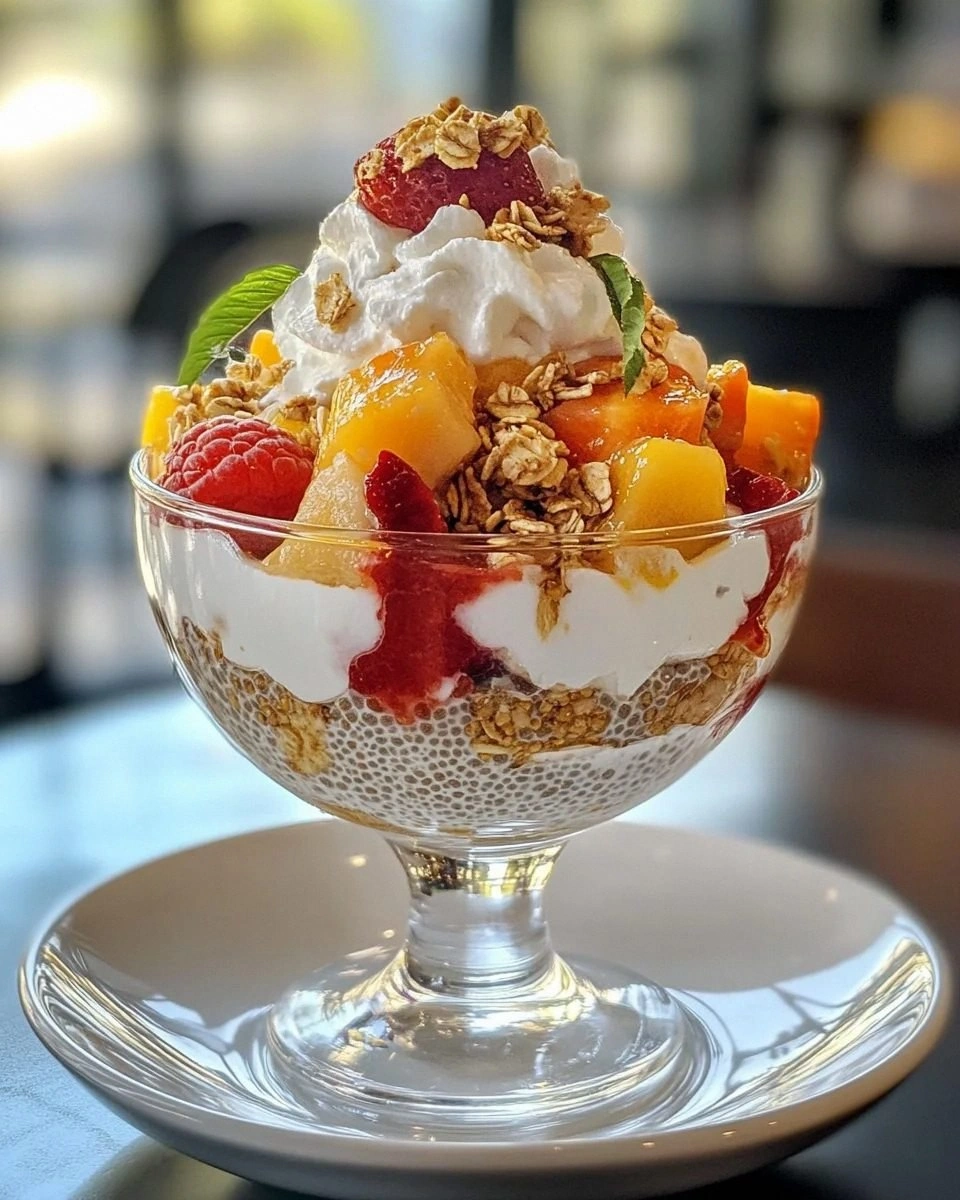
Watch Out: Do not skip the chilling step; serving the pudding immediately will result in a runny, unsatisfying texture.After the pudding has set, give it a quick stir to ensure any settled chia seeds are evenly distributed. Then, spoon the pudding into serving glasses or bowls. The visual is key – a smooth, creamy layer topped with a bright fruit medley looks as good as it tastes.
Toast the shredded coconut in a dry skillet over medium heat for 3‑4 minutes, stirring constantly. You’re listening for a faint, nutty crackle; once it turns golden‑brown, remove from heat to avoid burning. Sprinkle the toasted coconut over each serving, adding a crunchy contrast that makes each bite exciting.
Finish with a garnish of fresh mint leaves for a pop of color and a refreshing aftertaste. If you’re feeling extra playful, drizzle a thin ribbon of extra honey or a sprinkle of lime zest. This final flourish not only elevates the presentation but also adds a subtle aromatic layer that lingers.
Serve immediately, or keep the bowls sealed and store in the fridge for up to three days. The pudding will stay thick and creamy, while the fruit may release a little extra juice, which you can stir back in or drain for a firmer texture. Either way, you’ve got a ready‑to‑eat tropical treat that’s perfect for any time of day.
That's it — you did it. But hold on, I've got a few more tricks that'll take this to another level...
Insider Tricks for Flawless Results
The Temperature Rule Nobody Follows
Most home cooks think “room temperature is fine” when mixing chia, but the truth is that a warm base (around 40‑45°C) accelerates the gelatinization process, giving you a smoother pudding in half the time. I once tried a cold method and ended up with a gritty mess that clumped at the bottom. Warm it up, and you’ll hear that subtle “swoosh” as the seeds swell uniformly. This tiny temperature tweak is the secret sauce behind a professional‑grade texture.
Why Your Nose Knows Best
Before you even taste the pudding, trust your nose. The moment the lime juice hits the coconut milk, you should catch a bright citrus snap that makes you think of a tropical rainstorm. If the aroma feels muted, your fruit might be past its prime, and the final flavor will suffer. Always give the puree a whiff; a fragrant blend guarantees a lively palate experience.
The 5‑Minute Rest That Changes Everything
After whisking the chia into the coconut milk, let the mixture sit uncovered for exactly five minutes before adding the fruit puree. This short pause lets the chia settle and prevents air bubbles from getting trapped, which can cause an uneven texture. I once rushed this step and ended up with a pudding that had tiny “pockets” of liquid – not pretty, not tasty.
Layering for Visual Impact
Instead of mixing everything together, try a layered approach: a base layer of plain chia pudding, a middle layer of fruit puree, and a top layer of toasted coconut. When you dig in, each spoonful gives you a different flavor combo, turning a simple dessert into a multi‑sensory adventure. This technique also makes the dish look Instagram‑ready without any extra effort.
Freeze‑Proofing the Fruit
If you plan to make a batch ahead of time, freeze the diced pineapple and mango separately on a tray before adding them to the pudding. This prevents the fruit from releasing excess water during storage, keeping the pudding’s consistency intact. I tried a batch where the fruit went soggy, and the whole thing turned into a soupy mess – lesson learned.
Creative Twists and Variations
This recipe is a playground. Here are some of my favorite ways to switch things up:
Berry‑Burst Bliss
Swap the mango and pineapple for equal parts mixed berries (strawberries, blueberries, raspberries). The berries add a tart edge and a gorgeous purple hue, perfect for a summer brunch. Pair with a drizzle of almond butter for a nutty finish.
Chocolate Coconut Dream
Stir in 2 tablespoons of cocoa powder and a pinch of espresso powder into the coconut‑chia base. Top with shaved dark chocolate and toasted coconut. The result is a decadent, yet still light, dessert that feels like a tropical chocolate mousse.
Spicy Mango Kick
Add a pinch of cayenne pepper or a dash of finely chopped jalapeño to the fruit puree. The heat pairs surprisingly well with the sweet mango, creating a flavor profile that’s both bold and refreshing. Great for those who love a little adventure.
Protein‑Power Boost
Mix in a scoop of vanilla whey or plant‑based protein powder after the chia has bloomed. This turns the pudding into a post‑workout snack that’s both satisfying and nutritious, without compromising the tropical taste.
Green Goddess
Blend a handful of spinach or kale with the mango puree for a vibrant green version. The veggies add a subtle earthiness and a boost of vitamins, while the fruit masks any vegetal flavor. Top with sliced kiwi for extra zing.
Storing and Bringing It Back to Life
Fridge Storage
Transfer the pudding to airtight containers or mason jars. It will keep for up to three days, retaining its creamy texture. If you notice a thin liquid layer on top, simply stir it back in – that’s the chia releasing a bit more moisture, which is perfectly normal.
Freezer Friendly
For longer storage, portion the pudding into freezer‑safe containers and freeze for up to one month. Thaw overnight in the fridge, then give it a good stir. Adding a splash of coconut milk (about a tablespoon) before serving re‑hydrates the chia and restores the original silkiness.
Best Reheating Method
While this pudding is typically served cold, you can warm it gently for a comforting dessert. Place a serving in a microwave‑safe bowl, add a teaspoon of coconut milk, and heat for 20‑30 seconds, stirring halfway. The added liquid prevents the pudding from becoming gummy, and the warm version feels like a tropical custard.