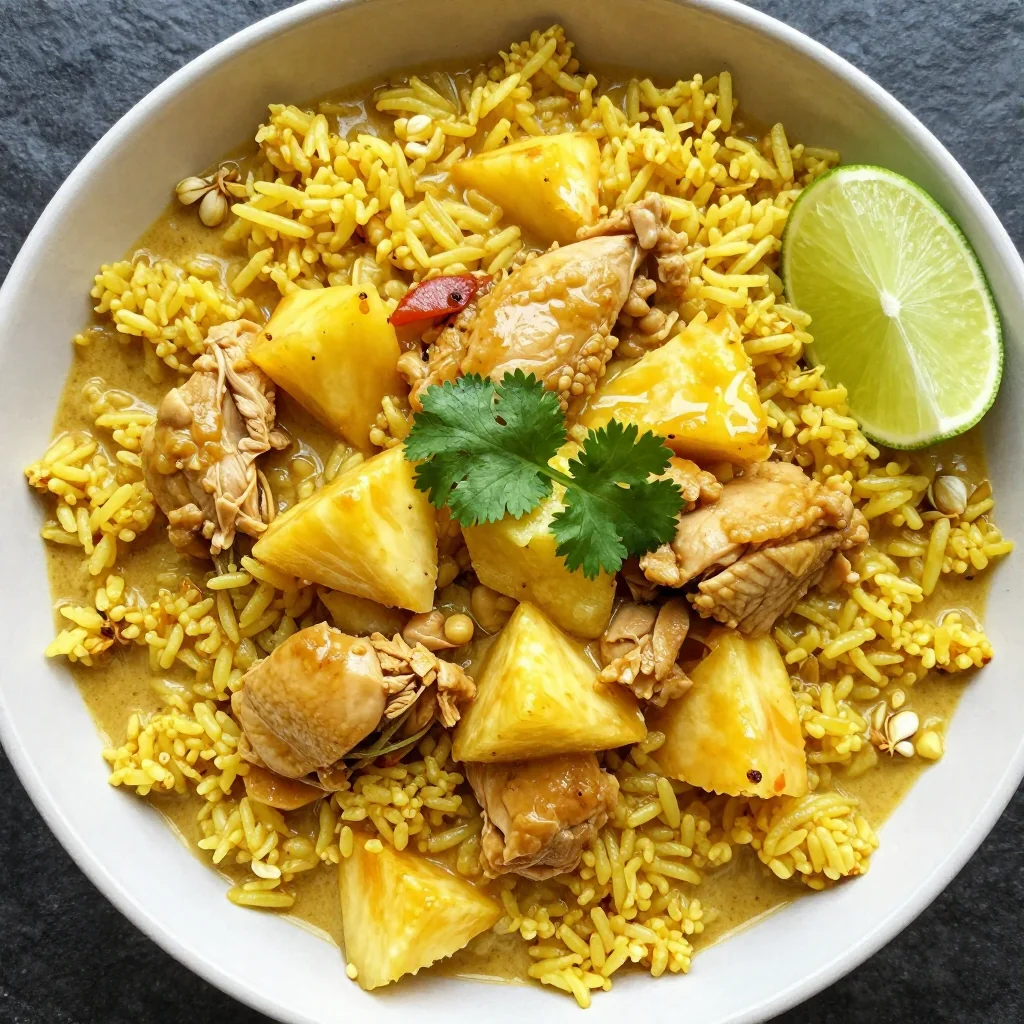
Love this? Pin it for later! 📌
What makes this recipe special isn't just the perfect balance of heat and sweetness – it's how approachable it is for home cooks. Despite the complex flavor profile, this curry comes together in under 45 minutes, making it perfect for both weeknight dinners and special occasions. The jasmine rice provides the ideal canvas for soaking up every drop of that luscious curry sauce, while fresh herbs add brightness to each bite.
Whether you're cooking for spice enthusiasts or those who prefer milder flavors (the heat level is easily adjustable!), this curry delivers restaurant-quality results in your own kitchen. The addition of pineapple might seem unconventional, but trust me – it adds a natural sweetness that perfectly complements the curry spices and creates a dish that feels both exotic and comforting.
Why This Recipe Works
- Perfect Flavor Balance: The sweetness of fresh pineapple counteracts the heat from red curry paste, creating a harmonious blend that keeps you coming back for more
- Quick Weeknight Dinner: Ready in just 40 minutes from start to finish, making it perfect for busy weeknights when you want something special
- One-Pot Wonder: Minimal cleanup required as everything cooks in one skillet, leaving you more time to enjoy your meal
- Customizable Heat Level: Easily adjust the spice level by varying the amount of curry paste and fresh chili peppers
- Restaurant-Quality Results: Using authentic ingredients like fish sauce and fresh curry paste delivers complex flavors typically found in Thai restaurants
- Make-Ahead Friendly: The curry actually tastes better the next day as flavors meld together, perfect for meal prep
- Nutrient-Dense: Packed with lean protein, vitamin-rich vegetables, and metabolism-boosting spices for a healthy, satisfying meal
Ingredients You'll Need
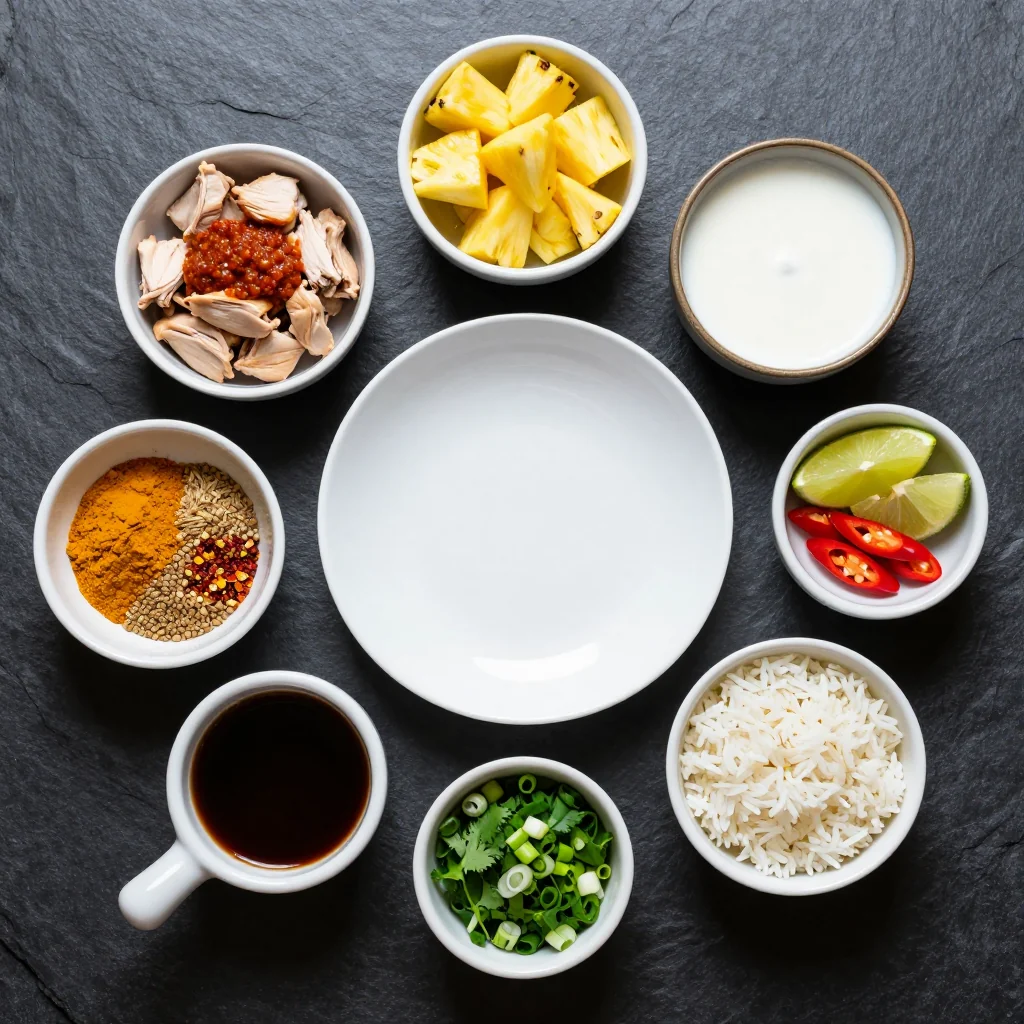
Let's talk about what makes each ingredient special in this curry. Starting with the chicken – I prefer using boneless, skinless chicken thighs instead of breast meat. Thighs stay incredibly tender and juicy even after simmering in the curry sauce, whereas breast meat can become dry and stringy. If you only have chicken breast on hand, that's fine too – just be careful not to overcook it.
The pineapple is truly the star of this dish. Fresh pineapple is absolutely worth the extra effort here – it has a vibrant, tangy sweetness that canned pineapple simply can't match. When selecting a pineapple, look for one that has a sweet aroma at the base and yields slightly to pressure. The leaves should pull out easily when gently tugged. If fresh pineapple isn't available, look for pineapple packed in 100% juice, not syrup, and drain it well.
For the curry base, I use a combination of red curry paste and coconut milk. Not all curry pastes are created equal – look for authentic Thai brands like Mae Ploy or Thai Kitchen. The paste should be fragrant and vibrant in color. Coconut milk adds luxurious creaminess, but I use the "lite" version to keep things healthier without sacrificing flavor. The key is to shake the can vigorously before opening to combine the cream and liquid.
Jasmine rice is essential here – its distinctive floral aroma and slightly sticky texture make it the perfect vehicle for the curry sauce. When cooked properly, each grain should be separate but tender. If you can't find jasmine rice, basmati is an acceptable substitute, though the flavor profile will be slightly different.
Fresh herbs make all the difference. Thai basil has a distinctive anise-like flavor that really elevates the dish, but regular basil works in a pinch. Fresh cilantro adds brightness, while Thai chilies provide authentic heat. Fish sauce might seem intimidating if you've never used it, but it adds an irreplaceable umami depth that you simply can't achieve with salt alone.
How to Make Spicy Chicken and Pineapple Curry with Jasmine Rice
Prepare the Jasmine Rice
Start by rinsing 2 cups of jasmine rice in cold water until the water runs clear – this removes excess starch and prevents clumping. In a medium saucepan, combine the rinsed rice with 3 cups of water and a pinch of salt. Bring to a boil over high heat, then immediately reduce heat to low, cover with a tight-fitting lid, and simmer for 15 minutes. Remove from heat and let stand, covered, for another 10 minutes. Fluff with a fork just before serving. This perfect rice technique ensures each grain is tender but separate.
Prep Your Ingredients
While the rice cooks, prepare all your ingredients. Cut 1.5 pounds of chicken thighs into 1-inch pieces, trimming excess fat. Cut your fresh pineapple into bite-sized chunks (about 2 cups). Mince 4 cloves of garlic and a 1-inch piece of ginger. Slice 1 red bell pepper into thin strips. Chop 1 bunch of green onions, separating white and green parts. This mise en place approach ensures everything comes together smoothly once you start cooking.
Sear the Chicken
Heat 2 tablespoons of coconut oil in a large, heavy-bottomed skillet over medium-high heat. When the oil shimmers, add the chicken pieces in a single layer. Let them cook undisturbed for 3-4 minutes to develop a golden-brown crust. This caramelization adds incredible depth of flavor to your curry. Flip and cook another 2-3 minutes until just cooked through. Remove chicken to a plate – we'll add it back later to prevent overcooking.
Build the Aromatic Base
In the same skillet, reduce heat to medium and add a bit more oil if needed. Add the white parts of green onions, garlic, and ginger. Stir-fry for about 30 seconds until fragrant but not browned. Add 2-3 tablespoons of red curry paste (depending on your spice preference) and cook for another minute, stirring constantly. This toasting step awakens the spices in the curry paste and creates a flavor foundation that permeates the entire dish.
Create the Curry Sauce
Pour in one can of coconut milk, stirring to combine with the curry paste. Add 1 cup of chicken broth, 2 tablespoons of fish sauce, 2 tablespoons of brown sugar, and 1 tablespoon of lime juice. Bring to a gentle simmer and let it bubble for 5 minutes to allow flavors to meld. The sauce should be luxuriously creamy with a beautiful coral color. Taste and adjust seasoning – you want a balance of spicy, sweet, and savory.
Add Vegetables and Pineapple
Add the sliced red bell pepper and pineapple chunks to the simmering sauce. Cook for 3-4 minutes until the peppers are tender-crisp and the pineapple is heated through. The pineapple will infuse the sauce with natural sweetness while absorbing the curry flavors. Don't overcook – you want the pineapple to maintain its shape and juicy texture.
Finish with Chicken and Herbs
Return the seared chicken to the skillet, along with any accumulated juices. Simmer gently for 2-3 minutes until chicken is heated through. Stir in Thai basil leaves and half of the green onion tops. The residual heat will wilt the herbs, releasing their aromatic oils. If using regular basil instead of Thai basil, add it just before serving as it's more delicate.
Serve and Garnish
Fluff the jasmine rice with a fork and divide among serving bowls. Ladle the hot curry over the rice, ensuring each serving gets plenty of chicken, pineapple, and vegetables. Garnish with remaining green onions, fresh cilantro leaves, and sliced Thai chilies if desired. Serve immediately with lime wedges on the side – a squeeze of fresh lime just before eating brightens all the flavors and ties everything together beautifully.
Expert Tips
Control Your Heat
Start with less curry paste and add more to taste. You can always add heat, but you can't take it away. For mild curry, use 1 tablespoon of paste. For authentic Thai heat, use 3-4 tablespoons.
Don't Overcook Pineapple
Add pineapple in the final stages of cooking. Overcooking makes it mushy and it loses its bright, fresh flavor. You want it heated through but still holding its shape.
Toast Your Curry Paste
Cooking the curry paste in oil for a minute before adding liquids awakens the spices and creates deeper flavor. Don't skip this crucial step!
Use Cold Rice for Leftovers
Day-old rice actually makes better fried rice if you have leftovers. Store rice and curry separately for best texture when reheating.
Variations to Try
Seafood Version
Substitute shrimp or firm white fish for the chicken. Add seafood in the final 3-4 minutes of cooking to prevent overcooking. Scallops work beautifully too!
Vegetarian Option
Replace chicken with firm tofu or chickpeas. Use vegetable broth instead of chicken broth. Add extra vegetables like zucchini or sweet potatoes.
Different Fruits
Try mango chunks or lychees instead of pineapple. Green mango adds a tart note, while ripe mango increases sweetness. Adjust sugar accordingly.
Extra Veggies
Add snap peas, baby corn, or bamboo shoots for extra crunch and nutrition. Add heartier vegetables earlier in the cooking process.
Different Curry Pastes
Experiment with green or yellow curry paste. Green curry is typically spicier, while yellow curry offers a milder, more aromatic profile.
Add Crunch
Top with toasted cashews or peanuts for extra texture. Toast nuts in a dry pan until fragrant, then roughly chop before sprinkling on top.
Storage Tips
Refrigerator Storage
Store leftover curry in an airtight container in the refrigerator for up to 4 days. The flavors actually improve overnight as they meld together. Store rice separately in a sealed container. When reheating, add a splash of water or coconut milk to loosen the sauce, as it will thicken in the fridge.
Freezer Instructions
This curry freezes beautifully for up to 3 months. Let it cool completely, then transfer to freezer-safe containers. Leave about an inch of space at the top for expansion. Thaw overnight in the refrigerator before reheating. Note that the pineapple texture may change slightly after freezing, becoming softer, but the flavor remains excellent.
Reheating Guidelines
Reheat gently on the stovetop over medium-low heat, stirring occasionally. Add liquid as needed to achieve desired consistency. Microwave reheating works in a pinch, but do so in 30-second intervals, stirring between each, to prevent hot spots and overcooking the chicken.
Frequently Asked Questions
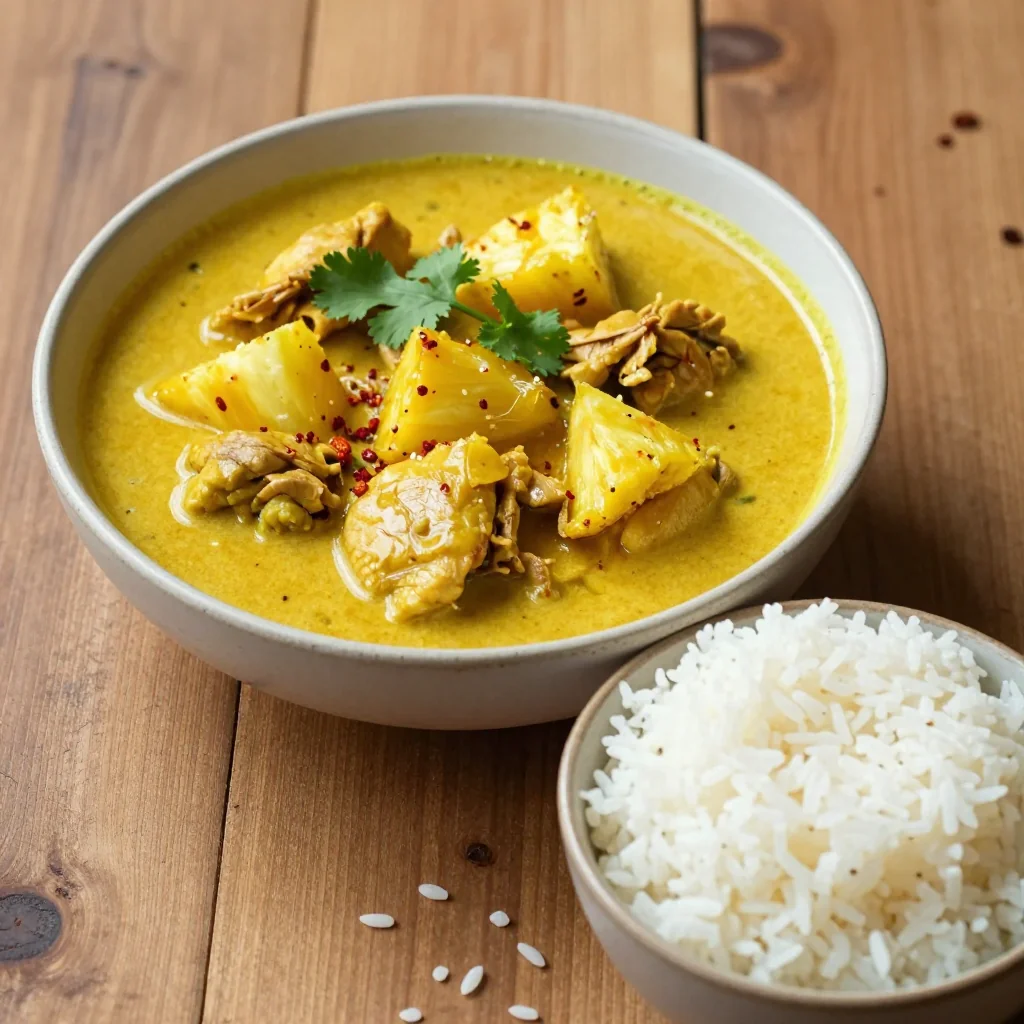
Spicy Chicken and Pineapple Curry with Jasmine Rice
Ingredients
Instructions
- Prepare rice: Rinse jasmine rice until water runs clear. Cook with 3 cups water according to package directions or use rice cooker.
- Sear chicken: Heat coconut oil in large skillet over medium-high heat. Season chicken with salt and pepper, then sear until golden on all sides. Remove to plate.
- Build aromatics: In same skillet, sauté white parts of green onions, garlic, and ginger for 30 seconds. Add curry paste and cook 1 minute.
- Create sauce: Whisk in coconut milk, chicken broth, fish sauce, brown sugar, and lime juice. Simmer 5 minutes.
- Add vegetables: Stir in pineapple chunks and bell pepper. Cook 3-4 minutes until tender-crisp.
- Finish curry: Return chicken to skillet with juices. Simmer 2-3 minutes. Stir in Thai basil and green parts of onions.
- Serve: Fluff rice with fork. Serve curry over rice, garnished with cilantro and lime wedges.
Recipe Notes
Adjust curry paste amount to control heat level. Fresh pineapple is highly recommended over canned for best flavor and texture. Store leftovers separately in refrigerator for up to 4 days.